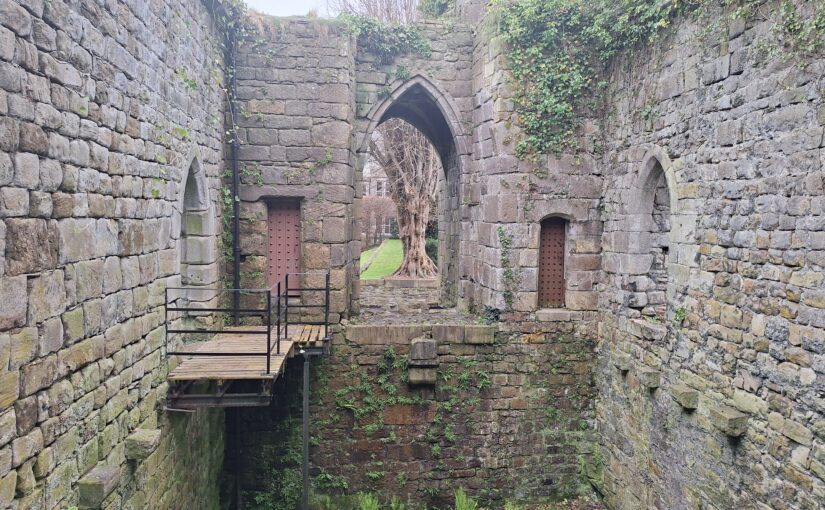
Project Lead Tom Addyman gives an update on how the survey of Cockermouth Castle’s inner ward is progressing following the team’s second visit in April
The survey team returned to Cockermouth in mid-April to carry out the follow-on stage of the analytical survey of the inner ward. The processed base photogrammetric data from the first survey visit was marked up with analytical data such as construction breaks and other interpretative information. The opportunity was taken to extend survey coverage to other areas such as the mural chambers within the gatehouse and to re-survey parts of the exterior that had been better revealed following continuing trimming of obscuring ivy.
Subscribe to our quarterly newsletter
A general review was made of the complexities of the fabric, paying particular attention to structural discontinuities and changes in masonry coursing, character, stone type and alignment. The site assessment particularly benefited from the expert insights of Dr Edward Impey and Prof Richard Oram. Significant progress was made on understanding the evolutionary history of the inner ward buildings:
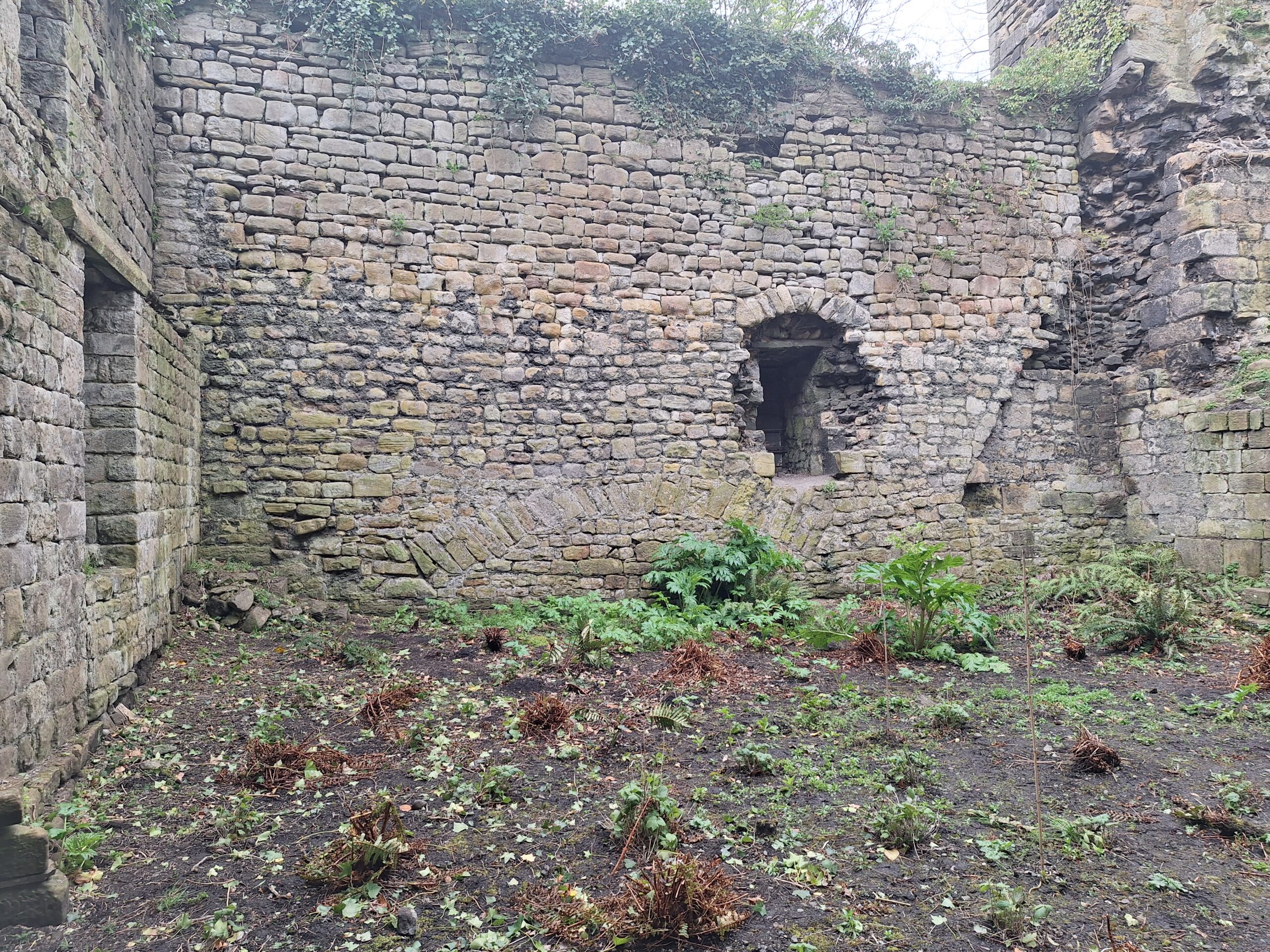
- Evidence supporting the idea that the gatehouse range occupied the site of a pre-existing ditch in the form of a broad structural relieving arch within the south curtain
- Confirmation that the eastern gatehouse range incorporated the part-built remains of a predecessor of likely mid-late 14th century date that featured evidence for an intended 3-chamber rib-vaulted lower storey. Construction resumed to a somewhat modified design within a decade or two.
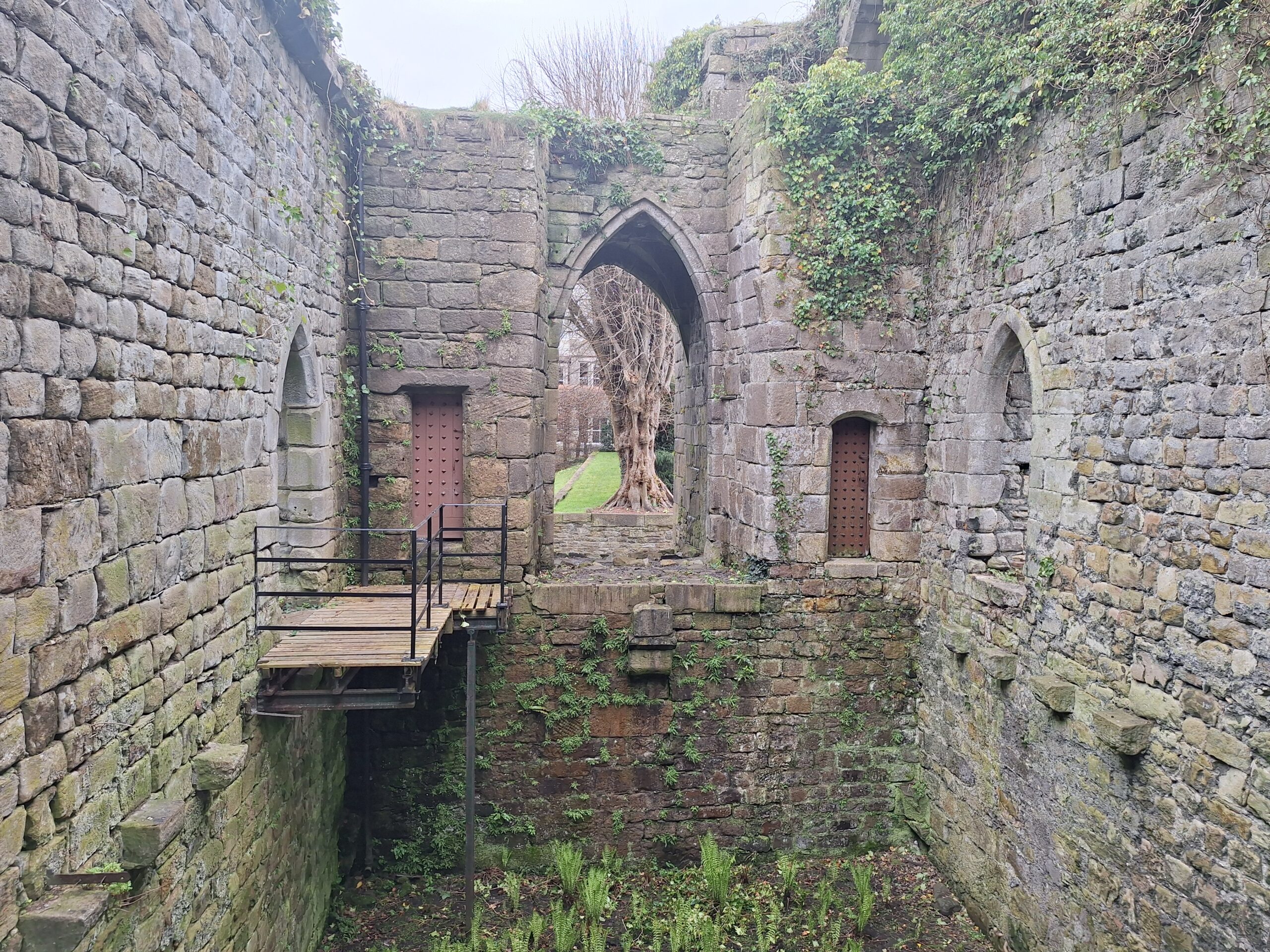
- The architectural peculiarities of the gatehouse itself were better understood, including the possibility of a draw-bridge pit within the pend, details of the pend’s octopartite vault that was found to feature decorative collars and bosses at its main junctions, and the relationship of the large vestibule chamber within to the lodging ranges to either side to which direct access was provided.
- The narrow Bell Tower, located at the south-east angle of the inner ward, was concluded to be of early date, possibly of the early 13th century
- The south curtain was found to incorporate many finely-worked, diagonally-tooled blocks of a predecessor building, with a number of examples displaying a narrow sunken roll of keeled profile, perhaps c.1200. These provide the earliest date for the construction of the curtain – perhaps in the early-mid 13th century.
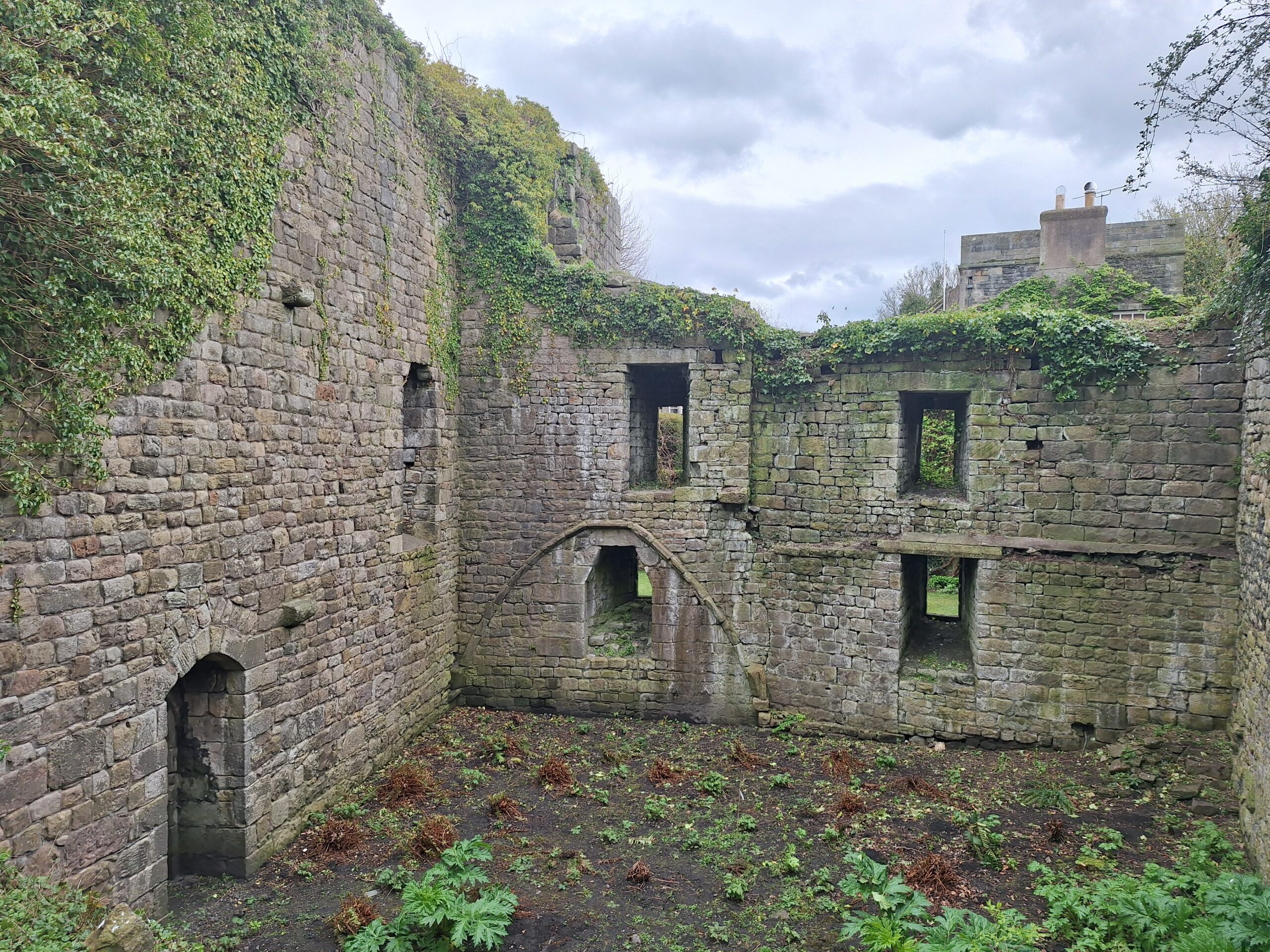
- The south curtain also provided evidence for a former range of two stories with lean-to roof built against it – joist sockets and corbels, an inserted fireplace at first floor level, and indications of cross–walls. The structure had likely been narrow and at the upper level may have provided gallery-like access between the private apartments of the hall range and the lodging block.
Subscribe to our quarterly newsletter
The work was coordinated with the Cockermouth Castle volunteer archive group, overseen by Alison McCann, Consultant Archivist to the Leconfield Estates. Review of archival materials relating to the castle identified a number of significant items such as estate drawings for the various castle buildings, inventories relating to the later 17th century occupation of the site, and a number of early views including some depicting the excavation of the infilled cellarage of the inner ward in the mid-19th century. Tom Addyman presented the ongoing work of the CST-funded survey to the archive group who were very positive in their response.
In May, the upgraded photogrammetric record is being digitised to form a line drawing set that will then be enhanced with analytical and phasing data.
Subscribe to our quarterly newsletter
You can read the first update here: Cockermouth Castle – Building Survey Diary Stage 1 – Update – Castle Studies Trust Blog