Cockermouth Castle Building Survey Diary – Update 2

Project Lead Tom Addyman gives an update on how the survey of Cockermouth Castle’s inner ward is progressing following the team’s second visit in April

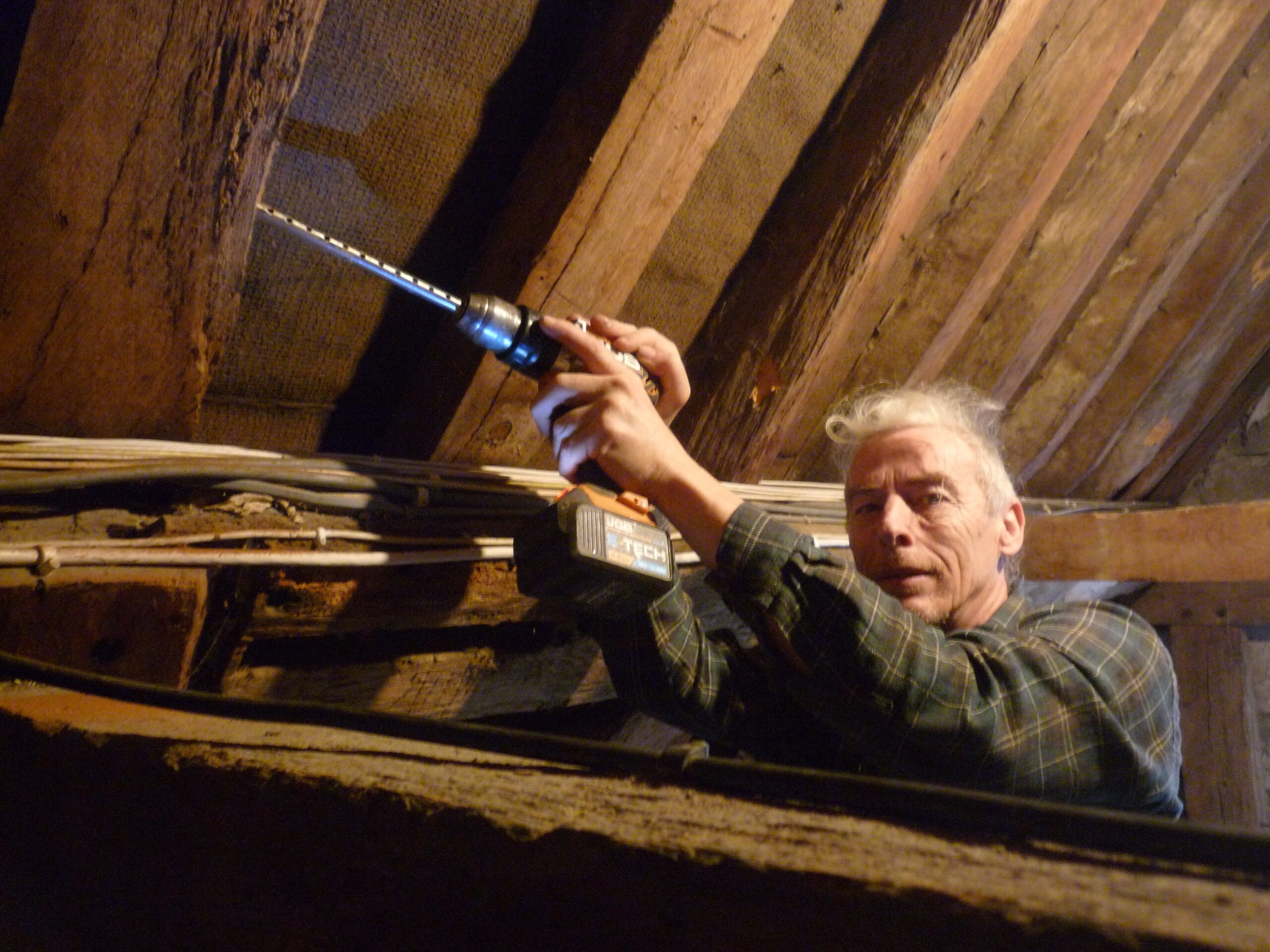
The survey team returned to Cockermouth in mid-April to carry out the follow-on stage of the analytical survey of the inner ward.  The processed base photogrammetric data from the first survey visit was marked up with analytical data such as construction breaks and other interpretative information.  The opportunity was taken to extend survey coverage to other areas such as the mural chambers within the gatehouse and to re-survey parts of the exterior that had been better revealed following continuing trimming of obscuring ivy.

Subscribe to our quarterly newsletter
A general review was made of the complexities of the fabric, paying particular attention to structural discontinuities and changes in masonry coursing, character, stone type and alignment.  The site assessment particularly benefited from the expert insights of Dr Edward Impey and Prof Richard Oram.  Significant progress was made on understanding the evolutionary history of the inner ward buildings:

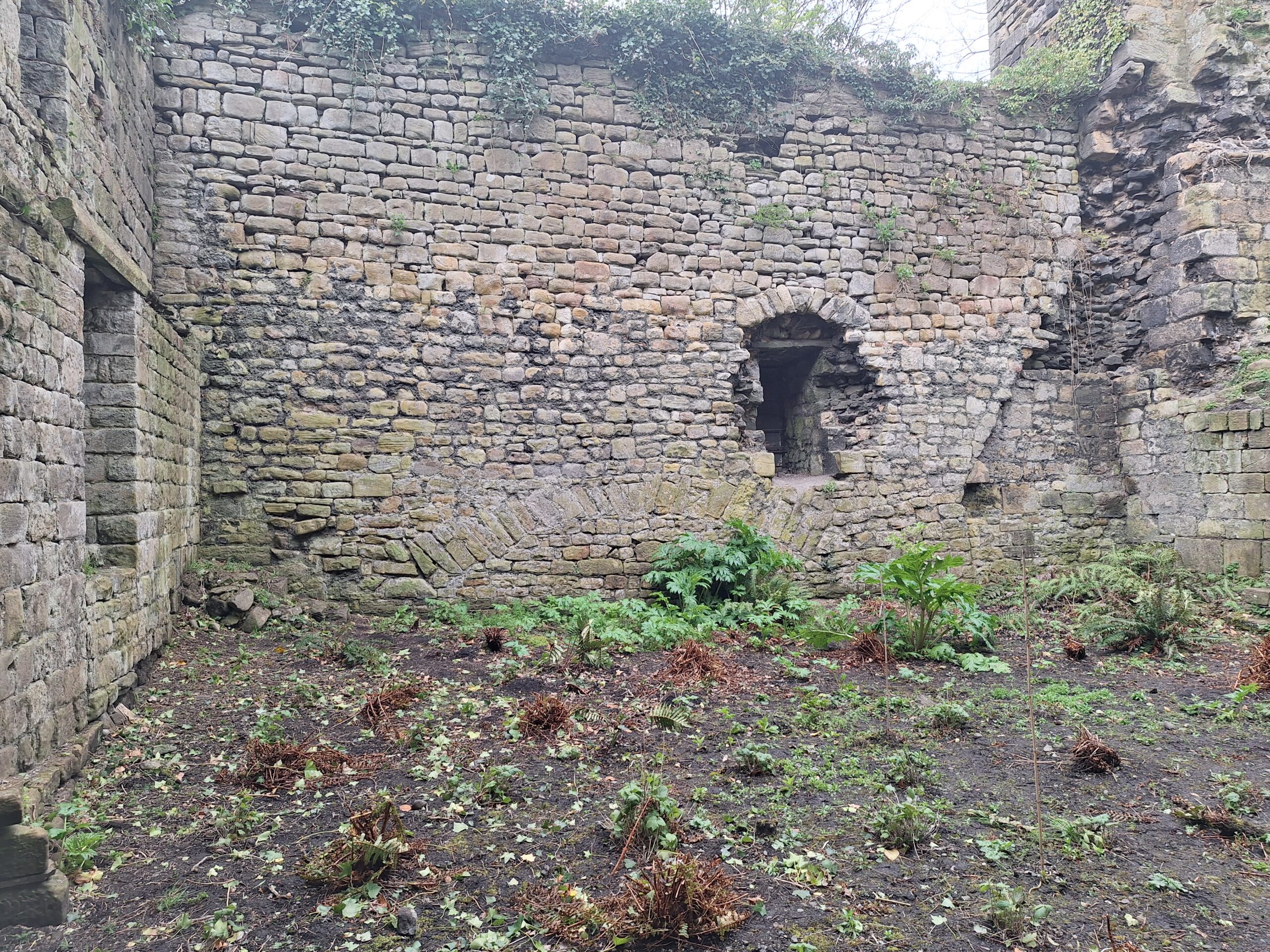
Interior of the south curtain wall showing relieving arch – possibly bridging unstable ground relating to a pre-existing defensive ditch Copyright Tom Addyman
  • Evidence supporting the idea that the gatehouse range occupied the site of a pre-existing ditch in the form of a broad structural relieving arch within the south curtain
  • Confirmation that the eastern gatehouse range incorporated the part-built remains of a predecessor of likely mid-late 14th century date that featured evidence for an intended 3-chamber rib-vaulted lower storey.  Construction resumed to a somewhat modified design within a decade or two.
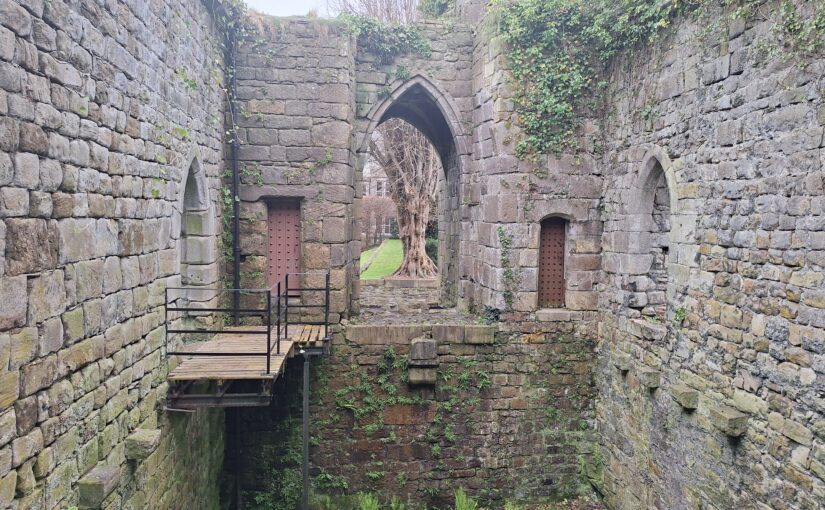
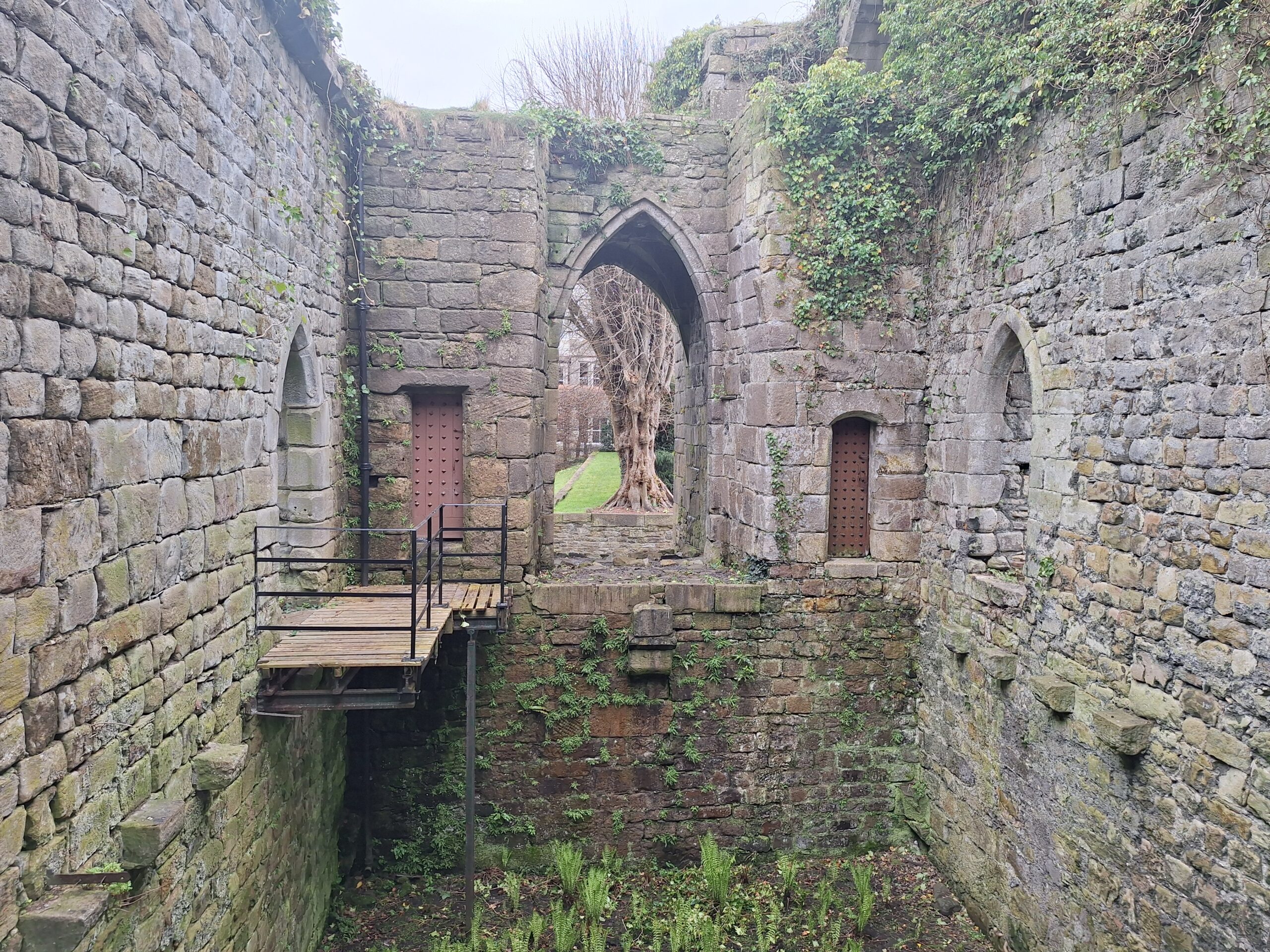
Interior of the gatehouse looking east to the pend copyright Tom Addyman
  • The architectural peculiarities of the gatehouse itself were better understood, including the possibility of a draw-bridge pit within the pend, details of the pend’s octopartite vault that was found to feature decorative collars and bosses at its main junctions, and the relationship of the large vestibule chamber within to the lodging ranges to either side to which direct access was provided.
  • The narrow Bell Tower, located at the south-east angle of the inner ward, was concluded to be of early date, possibly of the early 13th century
  • The south curtain was found to incorporate many finely-worked, diagonally-tooled blocks of a predecessor building, with a number of examples displaying a narrow sunken roll of keeled profile, perhaps c.1200.  These provide the earliest date for the construction of the curtain – perhaps in the early-mid 13th century.
  • The south curtain also provided evidence for a former range of two stories with lean-to roof built against it – joist sockets and corbels, an inserted fireplace at first floor level, and indications of cross–walls.  The structure had likely been narrow and at the upper level may have provided gallery-like access between the private apartments of the hall range and the lodging block.
Interior of the lodging block to the south side of the gatehouse, looking east – showing the outline of the intended vaulted cellar. Copyright Tom Addyman

Subscribe to our quarterly newsletter

The work was coordinated with the Cockermouth Castle volunteer archive group, overseen by Alison McCann, Consultant Archivist to the Leconfield Estates.  Review of archival materials relating to the castle identified a number of significant items such as estate drawings for the various castle buildings, inventories relating to the later 17th century occupation of the site, and a number of early views including some depicting the excavation of the infilled cellarage of the inner ward in the mid-19th century.  Tom Addyman presented the ongoing work of the CST-funded survey to the archive group who were very positive in their response.

In May, the upgraded photogrammetric record is being digitised to form a line drawing set that will then be enhanced with analytical and phasing data.

Subscribe to our quarterly newsletter

You can read the first update here: Cockermouth Castle – Building Survey Diary Stage 1 – Update – Castle Studies Trust Blog

Edlingham – the 13th–14th century Northumbrian house of a well-travelled knight of the royal household

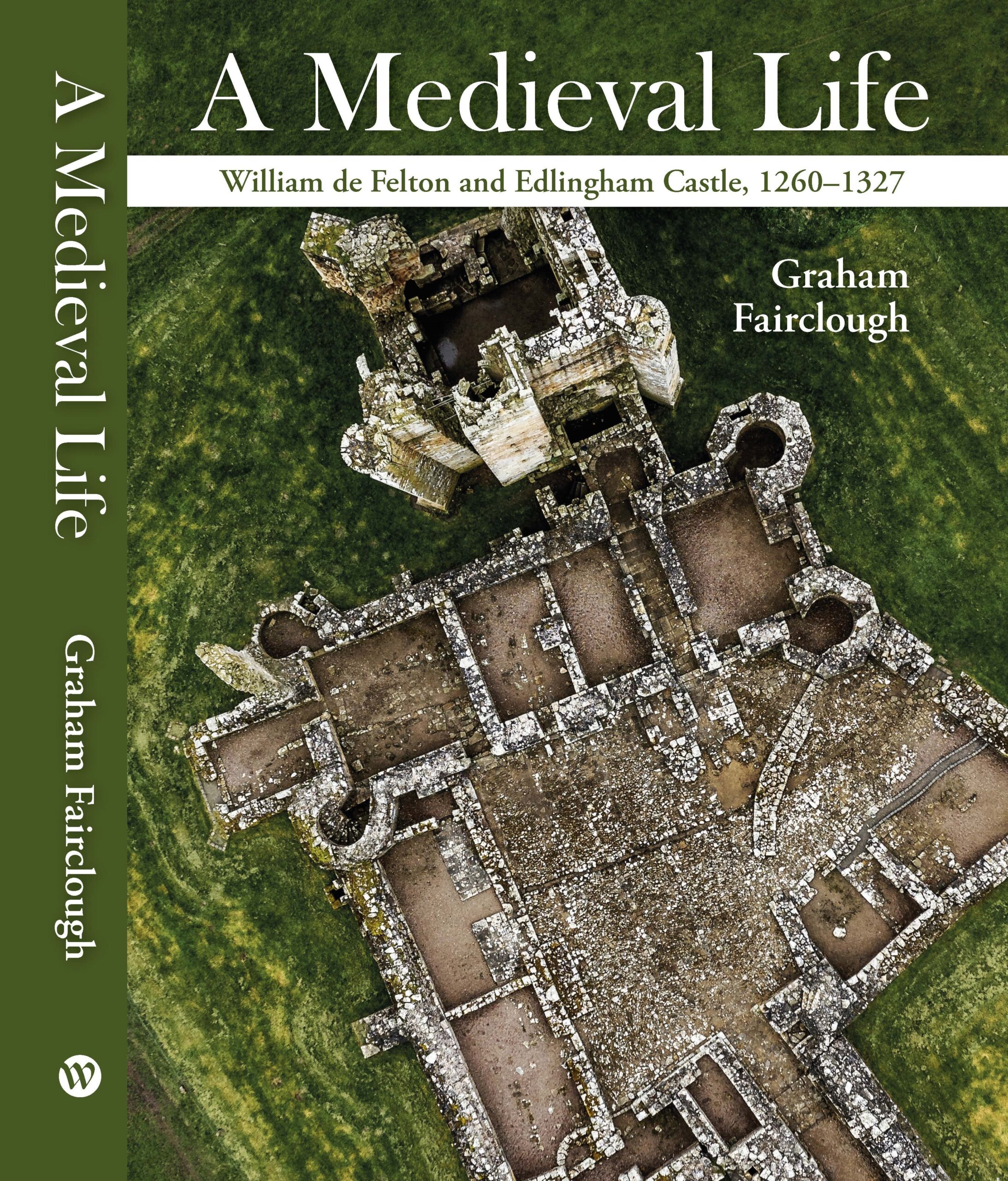
Between 1978-1982 Graham Fairclough led the excavation of Edlingham Castle, Northumberland. Rather than write up a traditional excavation report in his new book he takes a different and fascinating approach to understanding more about this castle.

Subscribe to our quarterly newsletter

Edlingham Castle, in Northumberland between Rothbury and Alnwick, comprises the remains of a medieval fortified house excavated for the predecessor of English Heritage between 1978 and 1982, and freely open to the public from the mid-1980s. The earliest known building is a hall-house (to use a slightly contested term) of c.1295-1300, probably originally inside a palisaded moated enclosure, but to this was added a chamber tower in the 1330s or ‘40s and a stone gatehouse. Its enclosing walls were rebuilt on several occasions until by the sixteenth century the place resembled a small courtyard house, which was finally abandoned by the 1650s. Edlingham thus shows in microcosm the impact of Anglo-Scottish border warfare in the fourteenth and fifteenth centuries, and of endemic lawlessness in the sixteenth, centuries. Another narrative, however, from a sociological perspective, first places the site and its owners in a national or even European context, and only in its later centuries into a more local, county-scale, world. A third Edlingham story would take most account of its architecture, notably the distinctive hall-house which before excavation was only guessed-at, and its imposing later tower that has usually been seen as part of the border ‘pele tower’ narrative – but both demand wider notice.

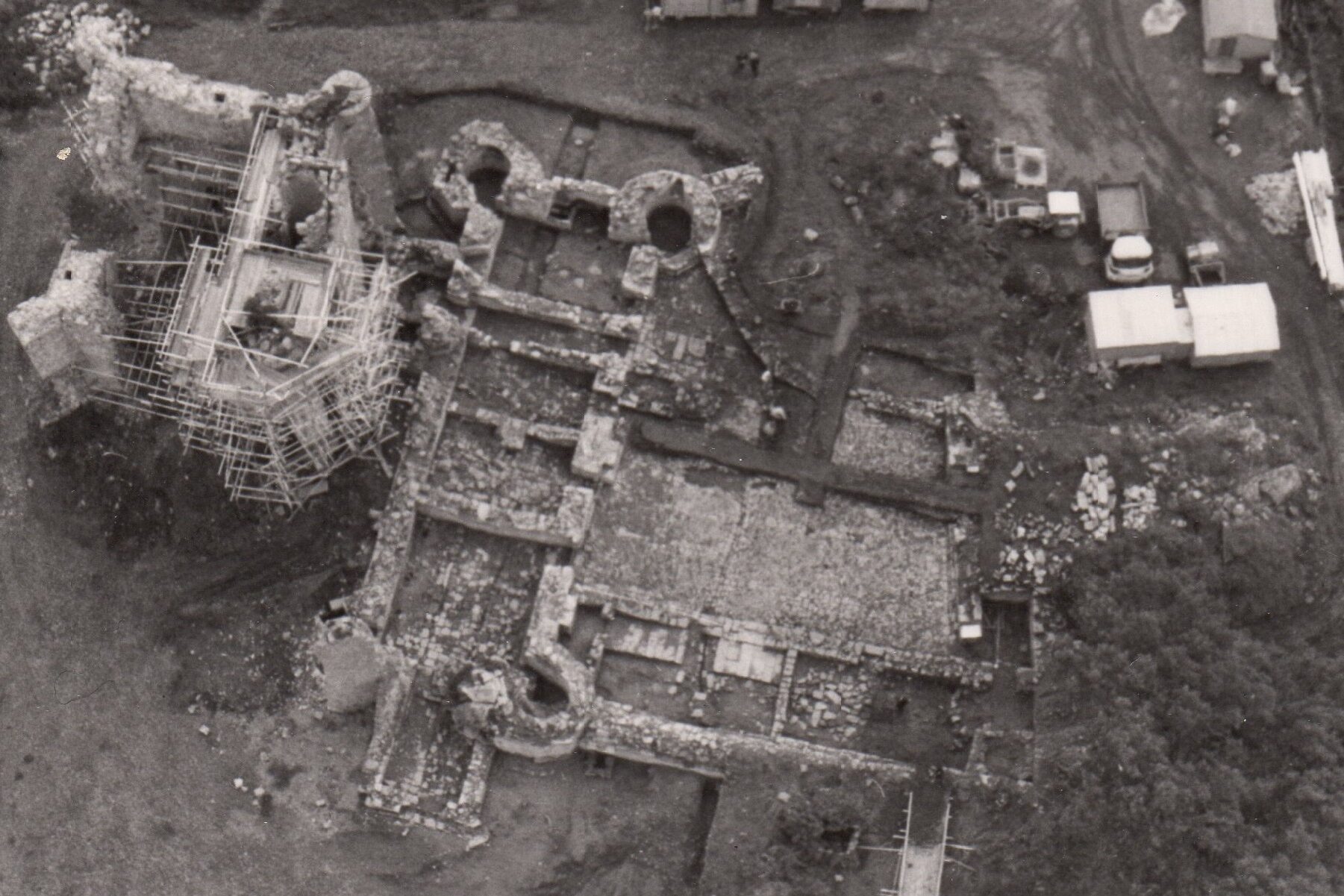
Air photo (with help from RAF Boulmer and one of their air-sea rescue helicopters) showing Edlingham Castle during excavation in 1979, from left, tower, hall-house, courtyard and walls of vaious dates (half-unexcavated) and gatehouse (unexcavated)

The excavations of 1978-82 focussed on the buried material remains of the site, which were described archaeologically and architecturally in summary interim articles prepared during the excavation and shortly afterwards. In my recent book, I took a different approach, and used biography – predominantly that of the castle’s first builder William de Felton, but also at some periods his peers, neighbours and family, as far as they are known – to inquire into Edlingham’s context and origins, and what might have influenced William in building the hall-house at Edlingham.

Subscribe to our quarterly newsletter

Born and probably raised in Shropshire, in some uncertain way an offshoot of the large Lestrange clan of Shropshire and Norfolk, William de Felton’s first small landholding was in Northamptonshire; he acquired land in Northumberland in the late 1270s on marriage to a Northumbrian heiress, Constance de Pontop, and he acquired Edlingham only in 1295. By then he had been a member of the royal household since c. 1278, as a personal usher (husser) in Edward I’s private chamber. He travelled the length and breadth of England and Wales with the king, spending three years in France, mainly in Gascony and Béarn. His duties included supervising the king’s personal building works, but he was also a soldier, and had fought in Wales, Flanders and Scotland. He was constable of a succession of royal castles in Wales, Scotland and England, notably, in company with the famous James of St George, Beaumaris and Linlithgow while they were under construction. Given his travels and experience, therefore, it is not surprising that whatever William was to build at Edlingham was not necessarily going to have a regional or local inspiration.

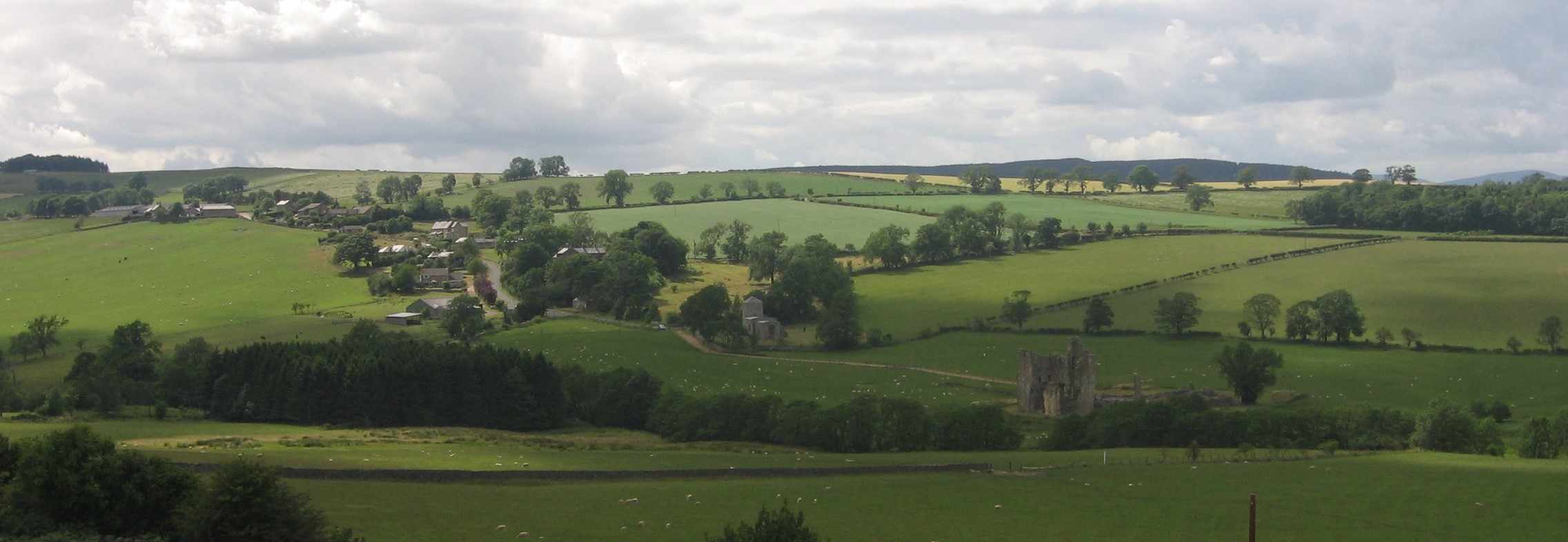
The valley of the Edlingham Burn: village, church and the castle showing its valley bottom location, copyright Graham Fairclough

The biographical approach taken in ‘A Medieval Life’ illuminates Edlingham’s origins in several ways. It is a current maxim in castle studies that castles and other elite houses should be considered in the context of their territories or landscapes, but this involves more than land and its affordances but more widely the social affinities, perceptions and abilities of their builders and inhabitants. Knowing a little of the events and travels of William’s life thus becomes significant in how we see Edlingham. My book therefore reflects on the accuracy or desirability of seeing Edlingham as a ‘Northern’ castle, coloured by a perception of Northumberland as a violent, vulnerable and distant (indeed different) border region. For William (and probably for his son and at least his first grandson), the house at Edlingham belonged to a much wider psychological and emotional landscape. Understanding the origins and early decades of the castle’s life reveals the mentality of a social and geographical network far beyond Northumberland.

Finally, let us not forget modern biography. The excavation and my early work on it occurred when I was an Inspector of Ancient Monuments, my work focussed on the material remains of the past. Since, roughly speaking, the middle 1990s, however, my work turned increasingly towards landscape ways of seeing the past. ‘A Medieval Life’, therefore, as well as being a biography, and an archaeology and history book, is also at least in intention a landscape book.

Subscribe to our quarterly newsletter

A Medieval Life: William de Felton and Edlingham Castle, 1260-1327 was published by Windgather Press (Oxbow books) in March 2025. A paper for Archaeologia Aeliana is also in preparation, and on 30 September 2026, Graham Fairclough is scheduled to give a talk about Edlingham and the book to the Society of Antiquaries of Newcastle upon Tyne.

Graham Fairclough, latterly of Newcastle University and before that Historic England and its predecessors, https://www.ncl.ac.uk/hca/people/profile/grahamfairclough.html, led five years of excavation at Edlingham Castle in Northumberland between 1978 and 1982. Early full publication of excavation results is a goal much-desired, but there is an argument for longer periods of reflection, and the recent book ‘A Medieval Life’ is a more matured discussion of the castle and the excavation framed primarily as a biography of its first builder, William de Felton.

Investigating the Twelfth-Century Entranceway of Durham Castle

Dr Andrew Ferrara of Durham University, and project co-lead for investigating the Romanesque entrance looks at what they are doing and also hoping to learn from this detailed study of this spectacular doorway.

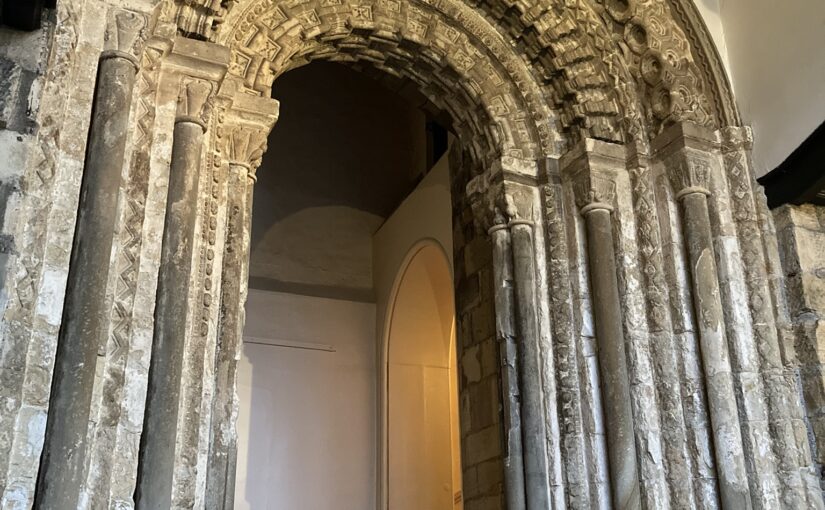
Durham Castle is one of the most prominent and renowned twelfth-century episcopal castles in Britain, sitting in the wider Durham UNESCO World Heritage site along with the cathedral. Construction is recorded as beginning in 1072, and the site has been in continuous occupation ever since. It operated as one of the bishop’s principal residences, right up until the nineteenth century when it was given to Durham University. As such, the complex has undergone multiple changes and alterations through the centuries, including significant interior and exterior works in the seventeenth and eighteenth centuries, with many of the medieval structures enclosed or adjusted by later development. Amongst the most significant building phases was the work undertaken during the episcopate of Bishop Hugh de Le Puiset (1153-95) and one of the most dynamic features from that period is the grand archway entrance inserted into the south façade of the castle’s North Range. Despite its longevity and pedigree, the castle has received surprisingly limited investigation or scholarly attention over the past century.

Subscribe to our quarterly newsletter

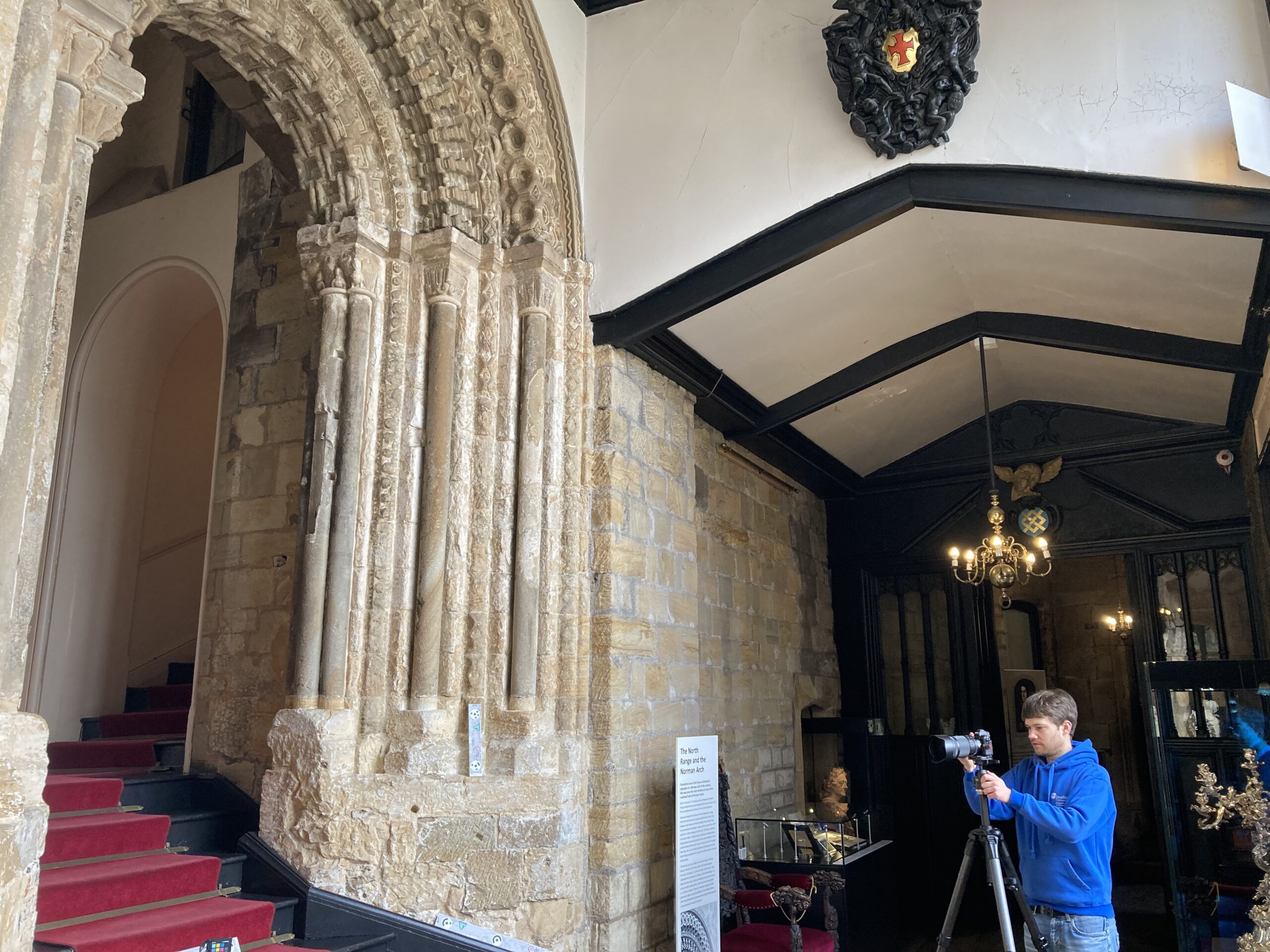
The current project, made possible through generous funding by the Castle Studies Trust, and led by Dr Andrew Ferrara and Professor Giles Gasper, is undertaking non-destructive photogrammetry of the Le Puiset archway. This methodology will result in a highly-detailed 3D model of the structure, ideal for detailed remote study. The same 3D data can then be used to generate orthographic projections, functioning as highly accurate blueprints of the arch. In addition, targeted high-resolution photography of details and additional 3D laser scans of the capitals will be undertaken. These combined methods will result in the most detailed and state-of-the-art records of this part of the castle for wider research and dissemination.

Durham Castle: Door scanning in action, copyright Dr Andrew Ferrara

This research focus has emerged from a renewed interest in the castle complex, catalysed by recent conservation and refurbishment works around the site which have revealed previously unknown architectural features. While the archway is exceptionally elaborate, it has never been subject to in-depth examination and set within the wider context of both Romanesque sculpture and the understanding of Durham Castle. The detailed modelling will allow for a thorough inspection of the features to be undertaken, in particular of diagnostic sculpture elements, enabling thorough comparison with other contemporary architectural outputs across the region and country. It is hoped that this will help tighten the chronology of the archway and set it in the context of other building projects undertaken by Bishop Le Puiset and other elite patrons. This will then further help inform understanding of the movement and concurrent projects of different master masons, and the sharing of architectural templates between secular and ecclesiastical sites and patrons in that milieu.

The project will also examine how the archway would have operated with the wider complex, to enable or restrict access and movement between the courtyard and internal spaces. This is crucial for better understanding the layout of the castle site in the late twelfth century, and how it would have looked and operated as the bishop’s See seat and one of the core centres of his palatine administration.  The project will also explore the Durham archway within the context of ceremonial and embellished entranceways at contemporary castle structures like Newcastle, helping to understand where Le Puiset’s sponsored work sits within the wider corpus of elite buildings across the region.

All of this should result in a better comprehension of the layout and operation of the Durham castle in the late-twelfth century, and also of how this archway feature compares with other contemporary and preceding royal and local castle sites.

Subscribe to our quarterly newsletter

Unearthing Stories Beneath Crookston Castle: A Community Geophysics Project

Dr Nick Hannon of Historic Environment Scotland, project lead and Head of Geophysical Survey, takes a look at the community geophysical survey of Crookston Castle.

Nestled just 15 miles southwest of Glasgow, Crookston Castle stands as a beacon of Scotland’s layered past. But in August, this historic site became more than a monument—it transformed into a hub of community-led archaeological discovery. Thanks to a collaboration between heritage professionals, local volunteers, and schoolchildren, the Crookston Castle Community Geophysics Project brought the castle’s history to life.

Subscribe to our quarterly newsletter

A Castle, A Community, A Cause

The project was led by Historic Environment Scotland (HES) Archaeological Survey staff—Dr Nick Hannon, Dr Hazel Blake, and Paul Bethune—in partnership with “The Friends of Crookston Castle,” a passionate local group dedicated to preserving and celebrating their heritage. With full funding from the Castle Studies Trust, the initiative aimed to explore what lay beneath the castle’s grounds and surrounding area using non-invasive geophysical survey techniques.

But this wasn’t just a technical exercise. It was a community-driven effort that welcomed volunteers from all walks of life. Students from the University of Glasgow, pupils from five local primary and secondary schools, and residents from the surrounding area all joined forces to uncover the hidden stories buried beneath their feet.

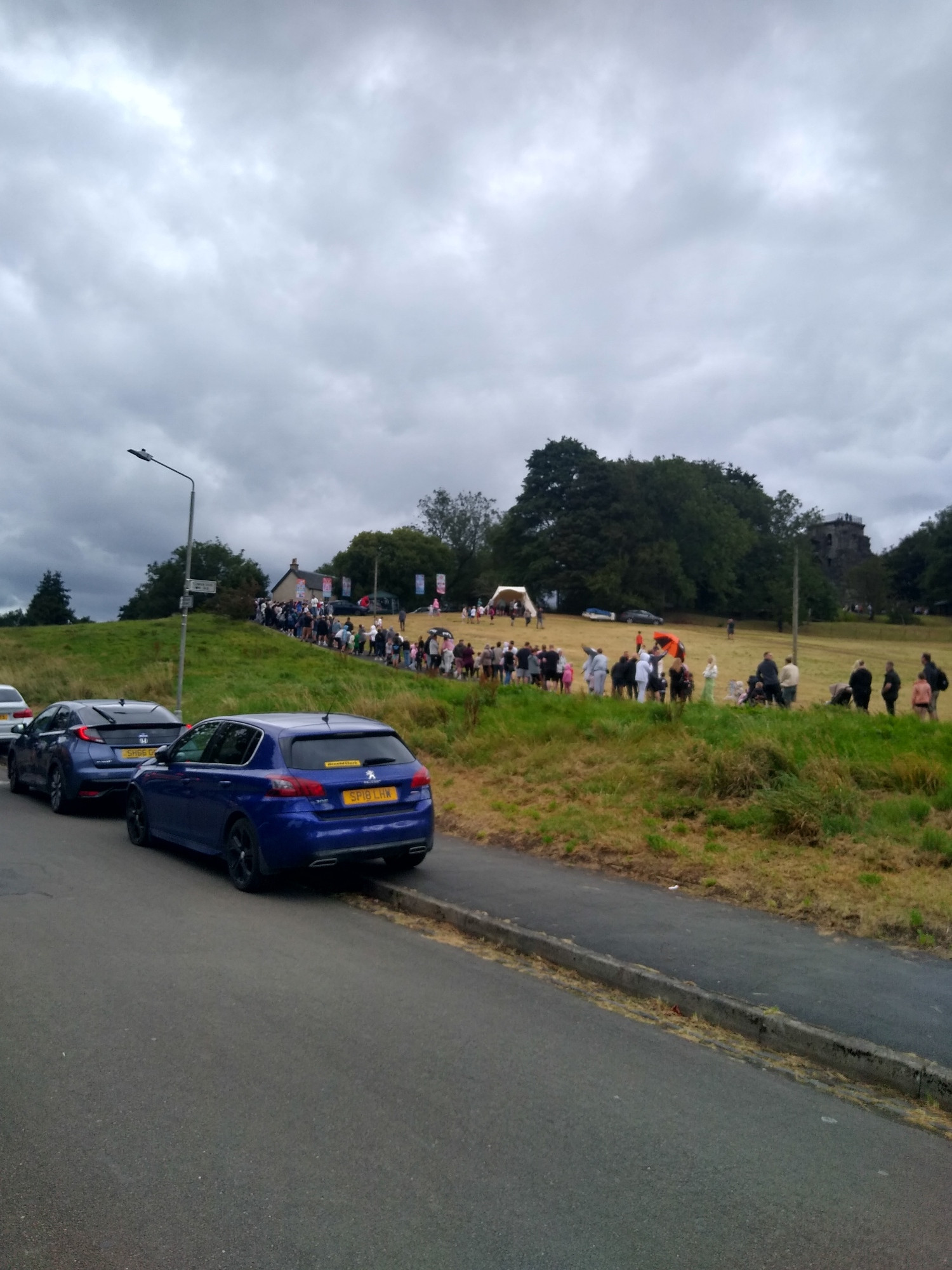
Queue to enter Friends of Crookston Castle Fun Day August 2025 copyright Castle Studies Trust

Science meets Storytelling

Geophysical surveys are a powerful tool in archaeology. They allow researchers to detect buried features without disturbing the ground—ideal for sites like Crookston Castle, where preservation is paramount. Under expert supervision, volunteers learned how to use these tools to scan the ground, searching for traces of ancient structures and activities.

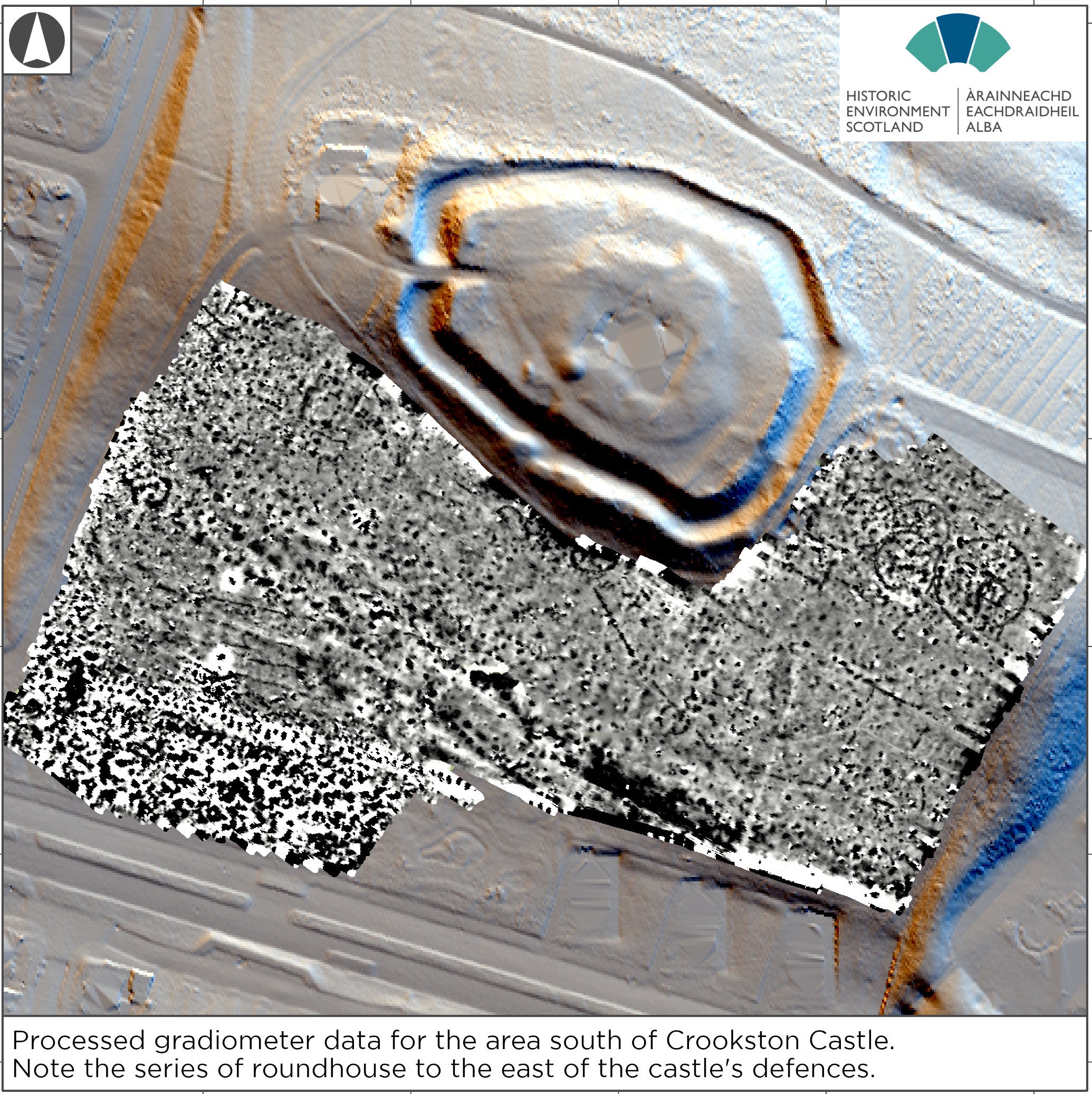
The results were great. The surveys revealed a range of previously unknown archaeological features, including later prehistoric roundhouses, a palisaded enclosure, medieval settlement remains contemporary with the castle’s occupation, and even signs of 17th-century coal mining. These discoveries added new chapters to Crookston’s story, enriching our understanding of the site’s long and varied history.

Subscribe to our quarterly newsletter

A report detailing the full results of the survey is available free to download through Trove.scot and our website: Geophysical surveys at Crookston Castle | Castle Studies Trust
Heritage as a catalyst for Connection

At the heart of this project was a belief that heritage can be a force for positive change. “The Friends of Crookston Castle” exemplify this philosophy. Their mission is to use local history as a way to bring people together, foster pride, and build bridges between communities.

Their dedication was evident not only in the fieldwork but also in the community open day they organised at the castle. Over 900 visitors attended, engaging with the archaeological team, exploring the site, learning about the discoveries, and more importantly having fun. It was a celebration of place, memory, and shared curiosity.

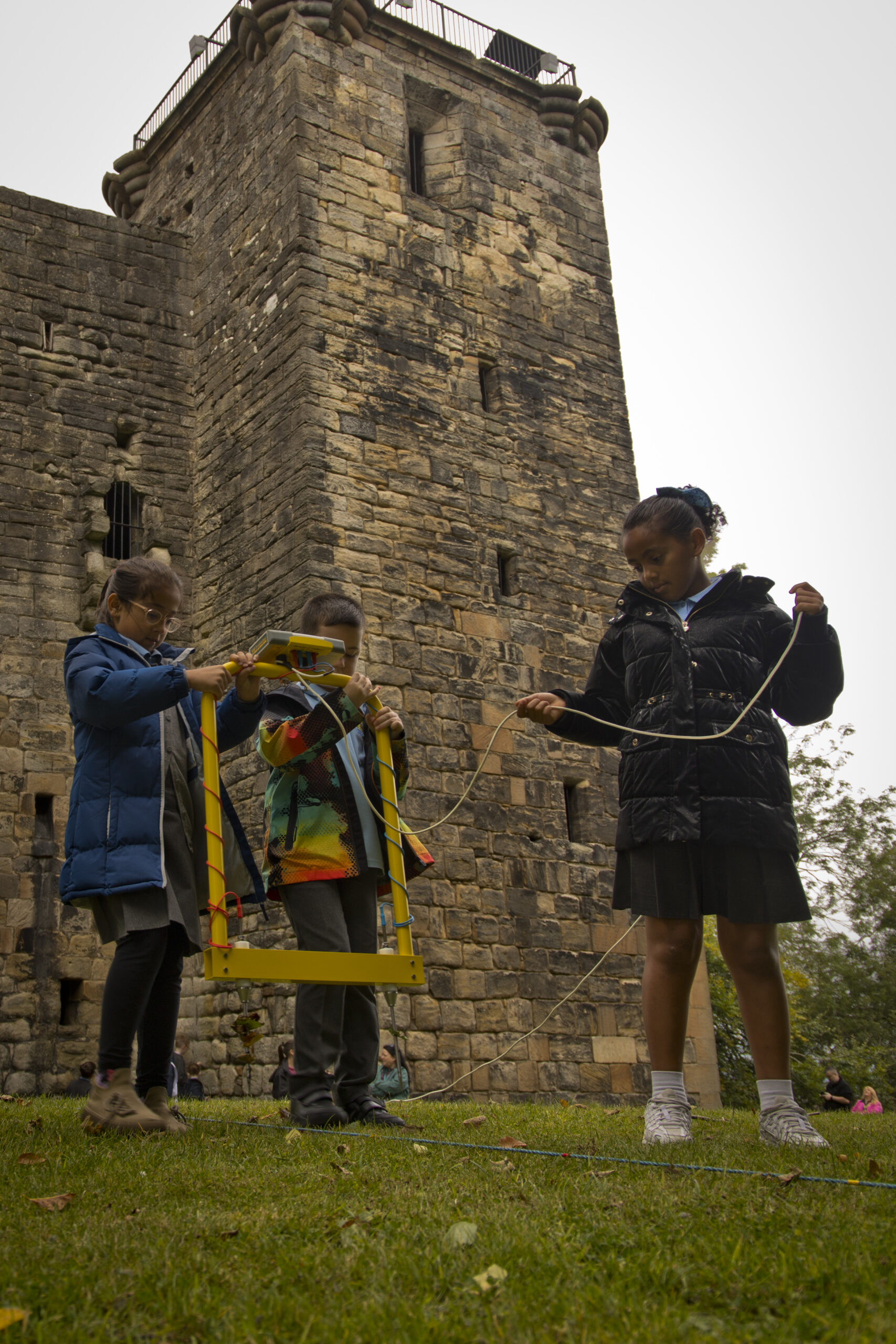
Crookston Castle Local school children carrying out the geophysical survey, copyright Friends of Crookston Castle

Learning by Doing

One of the most inspiring aspects of the project was its educational impact. For many of the school pupils involved, this was their first encounter with archaeology. They weren’t just passive observers—they were active participants, learning how to use equipment.

This hands-on experience helped make archaeology easier to understand, showing young people that history isn’t just something you read in books—it’s something you can touch, explore, and contribute to. It also planted seeds for future careers and lifelong interests, proving that heritage engagement can be both meaningful and transformative.

Subscribe to our quarterly newsletter

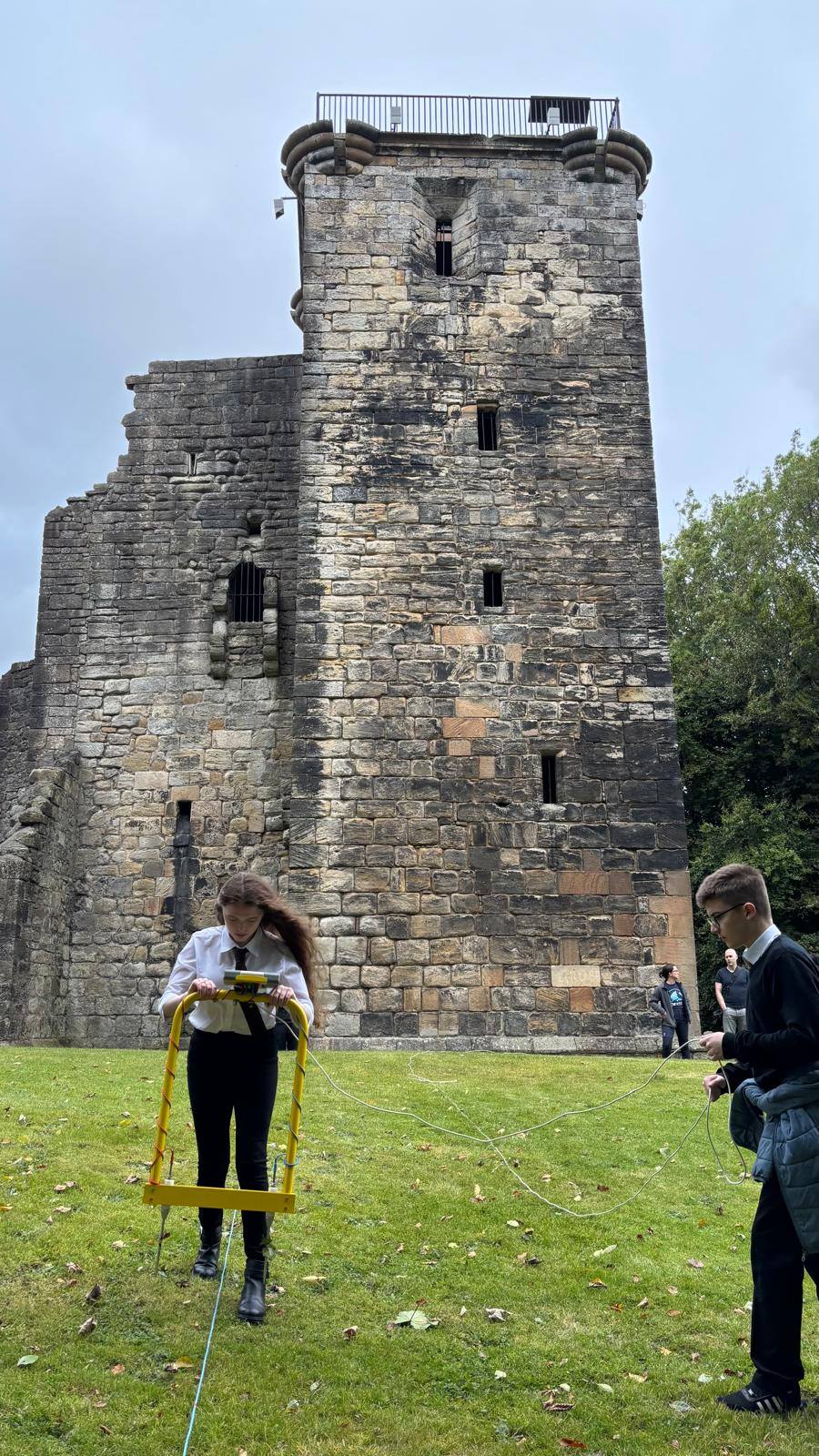
Crookston Castle: Local school children surveying in the castle grounds, copyright Friends of Crookston Castle

A Model for Community Archaeology

The Crookston Castle Community Geophysics Project stands as a model for how heritage organisations can collaborate with local groups to achieve something special. It wasn’t just about uncovering archaeological features—it was about empowering people to take ownership of their history, to tell their stories, and to connect with one another through a shared sense of place.

By combining scientific expertise with grassroots enthusiasm, the project demonstrated that archaeology can be inclusive, educational, and rewarding. It also highlighted the importance of funding bodies like the Castle Studies Trust, whose support makes such initiatives possible.

The Results: Large Potential for Future Archaeological Study

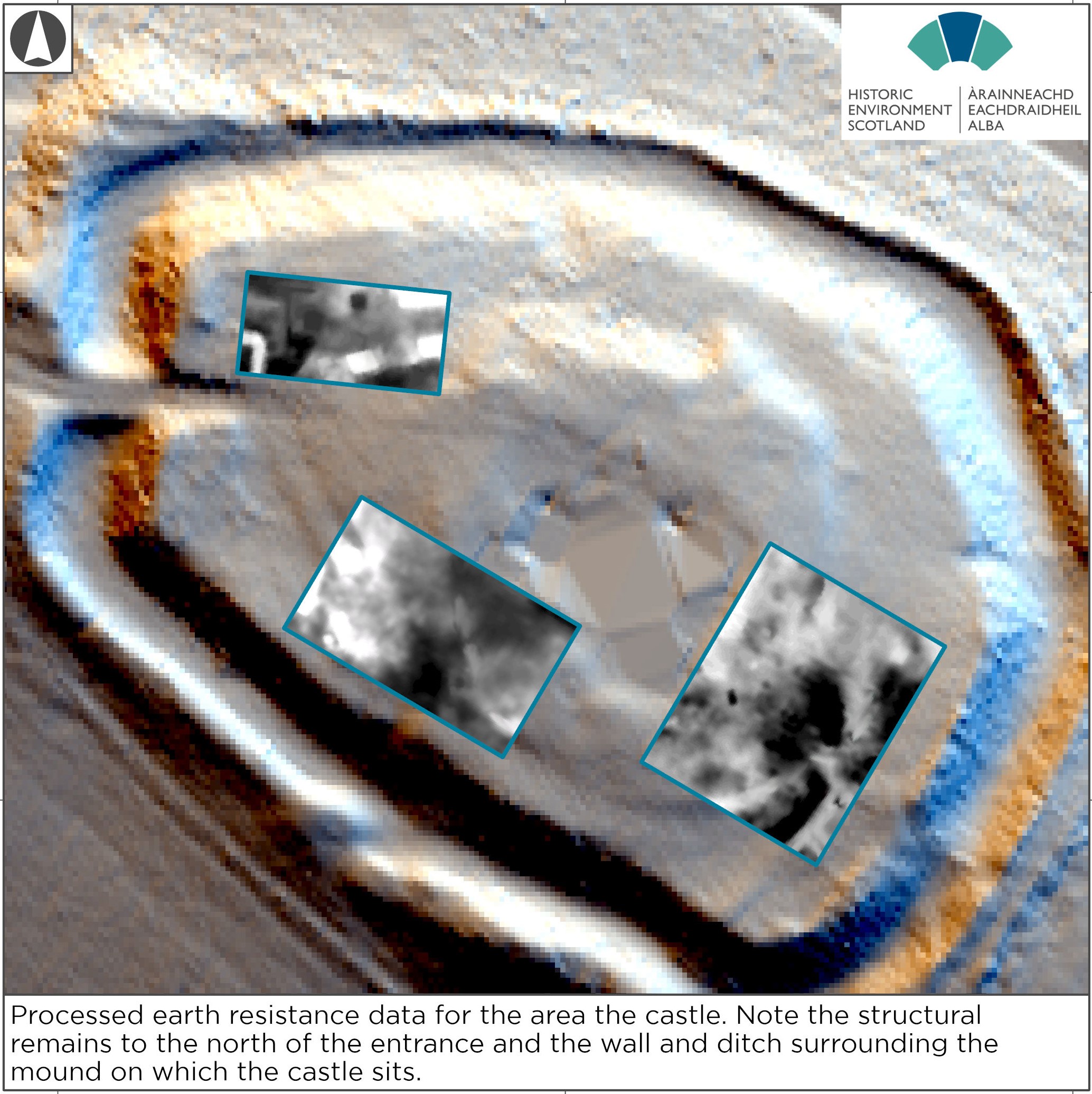
The survey has revealed a range of archaeological features that include structural elements of the castle, and a range of buildings and structures, including a stone enclosure surrounding the current standing remains and perhaps including a well within the castle keep. There is also possible evidence of another entrance with a gap in the stone enclosure aligning with a square enclosure south-east of the main castle Outside the castle moat an entirely unexpected cluster of later prehistoric roundhouses and a palisaded enclosure have been discovered, a significant addition to the history of this location. These represent a succession of large timber round houses.

The identification of ephemeral, possibly timber, building remains to the west south west of the castle moat highlights the potential for settlement of medieval and later date just outside the castle moat.  Finally, coal mining of medieval or later date is identified in what look like bell pits, along with the signatures of demolished 19th and 20th century buildings and infrastructure.

Looking Ahead

Now that the fieldwork is over and the data is analysed, the legacy of the Crookston Castle project continues. The findings will inform future research, conservation efforts, and educational programmes. But perhaps more importantly, the relationships forged during the project—between professionals, volunteers, students, and community members—will endure.

Crookston Castle is no longer just a relic of the past. It’s a living symbol of what can happen when people come together to explore, learn, and celebrate their shared heritage. And thanks to the vision and hard work of “The Friends of Crookston Castle,” its story is richer than ever.

Subscribe to our quarterly newsletter

Ruthin Castle: conserving and learning more about an Edwardian Castle

Fiona Gale of the Ruthin Castle Conservation Trust looks at what they are hoping to find out with the engineering survey being co-funded by the Castle Studies Trust about the Great Gatehouse of Ruthin Castle, North Wales.
Ruthin Castle is situated in North East Wales, it relates to the English conquest of the Welsh carried out by Edward I. In 1277, after conquering Wales and building an iron ring of castles around the north coast, Edward 1 gave the area in which Ruthin Castle now sits to Dafydd ap Gruffydd, brother of Llewelyn the Last. He may have begun some building in Ruthin, but the castle building really took off when the area was given to Reginald de Grey in 1282 following the defeat of Dafydd’s uprising. It is recorded that Edward visited the site of the castle with his ‘architect’ Master James of St George in the autumn of 1282 and there was some limited expenditure recorded by the Crown.

Subscribe to our quarterly newsletter

The curtain walls of Ruthin Castle have the shape of a large pentagon, with upper and lower wards separated by a deep ditch which lies immediately behind the postern gate. The de Greys remained in control of the site throughout the medieval period, despite an attack from Owain Glyndwr in 1400. Little documentary evidence survives but there is a plan and bird’s eye view from the very early 17th century, by Randle Holme, which shows a number of internal buildings including a great hall, well and chapel. By the early 17th century, however, the castle was in crown hands and recorded as being in a ruinous state ‘except for the Great Gatehouse’ and at this stage it was bought by the Middletons of Chirk Castle. It played its last military role in the Civil war period when it was held by the Royalists but taken by the Parliamentarians following a siege.

Ruthin Castle in the 1970s

Subscribe to our quarterly newsletter

Nothing was done to the site until the early 19th century and until  then it most probably acted as a good source of building stone for the town of Ruthin. However, in the 1820s the site was inherited by Harriet Middleton, and she built a large mansion house within one corner of the medieval remains. Thirty years later her nephew extended the mansion house and developed a grand garden. The remains of the medieval castle became part of the picturesque grounds of the house and much of the vegetation, particularly ivy and some trees, most probably relate to this time when the romantic picturesque ruins fitted with how a garden should be. The mansion house is now a private hotel with the building listed as Grade 2*, the medieval castle remains are a scheduled ancient monument and the gardens and grounds are on the Gardens Register.

Ruthin Great Gatehouse south tower copyright Fiona Gale

Despite this neglect of the medieval remains over many centuries, there is a large amount of the fabric surviving, although there have been some alterations and additions as part of the garden development.  Levels within the interior of the curtain walls have been raised by as much as three metres. Around three quarters of the curtain wall survives, with both the postern gate and Great Gatehouse still recognizable. The Great Gatehouse, a key feature of the castle, still acts as the main entranceway into the castle gardens. It was partly rebuilt in the Victorian period, but understanding the extent of this and the extent of medieval remains is extremely important. Ruthin Castle, although one of the important castles build as part of Edward I’s campaign to quell the Welsh, has had very little antiquarian study and little research undertaken. It is hoped that a programme of work, of which this structural examination of the lower areas of the Great Gatehouse funded by the Castle Studies Trust is a part, will begin to add knowledge. A review of the Conservation Management Plan (CMP) in 2021 identified the Great Gatehouse, and particularly features within it, as in imminent danger of collapse.
Ruthin Castle Conservation Trust was established  in 2016 and members comprise  former Cadw inspector, local historians, construction and planning specialists, and representatives of local organisations. Representatives of the owners also sit on the Trust, demonstrating their support.

In 2021, the Trust was successful in an application to Cadw for funding to undertake conservation work on the Great Gatehouse of the castle, to address serious issues which had been identified within the CMP. Despite extra funding from Cadw the funds available were only enough to conserve the upper levels of the Gatehouse. The structure proved much more complicated than expected with surviving medieval masonry at ground level, which was completely unexpected, Victorian rebuild of external walls and a subsequent brick ‘house’ inserted into the structure. The area which was not reconsolidated with funding from Cadw was the lower, predominantly medieval area of the Great Gatehouse.

Ruthin Castle Great Gatehouse lower level interior, copyright Fiona Gale

Thanks to grant aid from the Castle Studies Trust, which is matching a contribution from the Cambrian Archaeological Association, the Trust will employ an expert structural engineer to look at the underground, medieval, areas of the Great Gatehouse, and develop a plan of work to address issues of collapse and water ingress.  This work is scheduled to take place in mid-April 2026.

Subscribe to our quarterly newsletter

Armed with this information, the aim is to apply for further funding to address the serious conservation issues remaining. Concurrently the Trust is seeking funds to work with an experienced legal firm to develop a formal, legally binding, agreement between the Trust and the private owners which we hope will open up the possibility to apply for larger sums from the likes of Cadw and National Lottery Heritage Fund to then undertake the pressing conservation issues in the Gatehouse and throughout the extensive medieval remains. The information the structural engineer will provide will be key in moving towards this stage.

The funding from the Castle Studies Trust will help the Trust both gain further information about the condition of a part of Ruthin Castle and will act as a catalyst for funding in the future. The medieval ruins of Ruthin Castle form part of the gardens of the private hotel but are open to the public to explore, and the Trust would be keen to offer a tour of the remains to members of the Castle Studies Group.
Subscribe to our quarterly newsletter

Cockermouth Castle – Building Survey Diary Stage 1 – Update

Following his and his team’s first visit to survey the inner ward of Cockermouth Castle Tom Addyman looks at what they have found so far.

The initial stages of survey were carried out at Cockermouth Castle, within the inner ward area.  Adverse weather held off until gales forced an early retreat on the third day.  In spite of that excellent survey coverage was achieved, principally establishing a survey control and data capture for photogrammetry.  Great assistance was given by the estate in reduction of obscuring vegetation that revealing a number of areas that were long-obscured, and through the provision of high-level access.  The initial survey stage also included a general photographic record and preliminary fabric analysis such as the image below of the hall range frontage – sketch plan.

Subscribe to our quarterly newsletter

Cockermouth Castle high level access, inner ward gatehouse, copyright Addyman Archaeology
Cockermouth Castle hall range frontage – sketch plan, copyright Addyman Archaeology

Initial processing of the imagery worked well leading, as intended, to the generation of dimensionally accurate projections to be used as a basis for a survey drawing set.  In purely visual terms some striking individual images emerged, such as a vertical projection of the vaulted ceiling structure of the cellarage beneath the kitchen tower and elevation views within the kitchen interior.    

Subscribe to our quarterly newsletter

Cockermouth Castle vertical projection showing vaulting configuration of lower level of the kitchen tower, copyright Addyman Archaeology
Cockermouth Castle north interior of the kitchen tower showing remains of former gallery arrangements, copyright Addyman Archaeology

Better access to the fabric allowed better understanding of the evidence for the evolving hall range arrangements (hall entrance and junction with the kitchen range and general view of hall range, north wall.  Examination of the surviving footings of the hall range’s courtyard frontage led to a preliminary reconstruction of its former appearance (image – preliminary sketch reconstruction of hall range frontage).

Cockermouth Castle great hall entrance and junction with the kitchen range, copyright Addyman Archaeology
Cockermouth Castle general view of hall range, north wall, copyright Addyman Archaeology
Cockermouth Castle preliminary sketch reconstruction of hall range frontage, copyright Addyman Archaeology

Once image processing is complete a follow on survey trip will involve detailed marking up of the imagery with phasing data and other analytical information.  There will also be a review of early records of the castle with the estate archivist and volunteer team.

Subscribe to our quarterly newsletter

Finding Flemingstown Kilkenny

Project lead Dr David Stone of the Discovery Programme Centre in Ireland explains their plans for geophysical survey at Kilkenny.

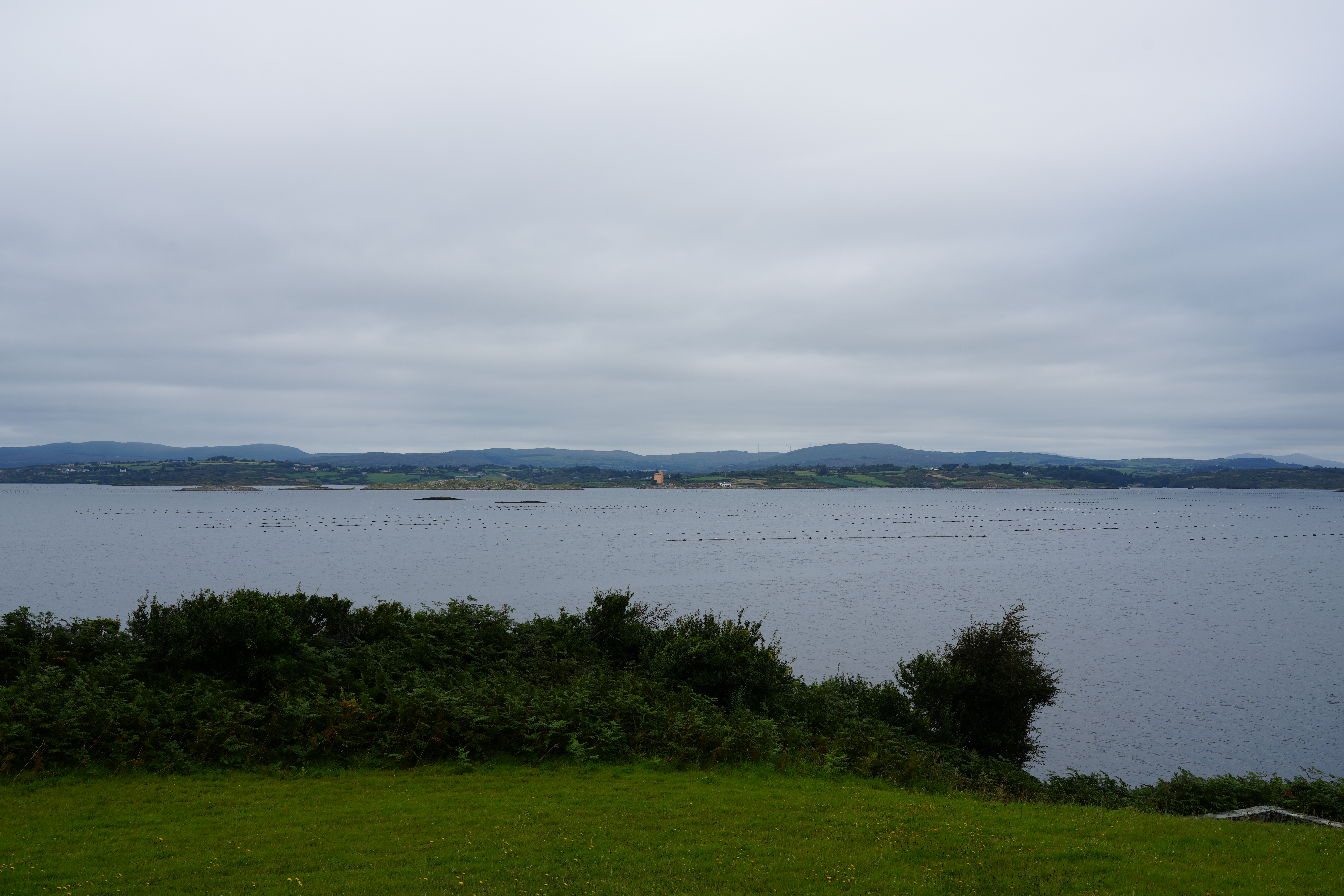
Archaeologists from the Discovery Programme Centre for Archaeology and Innovation Ireland, Dr David Stone, Dr Susan Curran and Cian Hogan, together with Cóilín Ó Drisceoil of the National Monuments Service, are beginning a new project to explore the grounds of Kilkenny Castle in search of the lost Flemingstown. This is one of the most intriguing missing parts of the castle’s medieval history, a former settlement associated with the castle, documented in historical sources, but whose location has since been lost as no traces of it remain visible on the ground. With the generous support of the Castle Studies Trust, work will begin in the last week of March on a new survey of the parkland east of Kilkenny Castle known as the Dukesmeadow.

Subscribe to our quarterly newsletter

Kilkenny Castle, copyright The Discovery Programme Centre for Archaeology and Innovation Ireland

Kilkenny Castle (Figure 1) is one of the great fortresses of medieval Ireland. Built by William Marshal between approximately 1207 and 1213, it still dominates the modern city’s skyline and remains one of the county’s best known historic sites. The standing remains at Kilkenny Castle, however, tell only part of the story. Research over the last decade has shown that the medieval castle complex once extended far beyond the surviving Inner Ward into what is now open public parkland. A geophysical survey in 2010, followed by excavation in 2019, confirmed the position of the great gatehouse and revealed that the castle’s original layout was far more complex than had long been assumed. That earlier work also identified a dense area of subsurface archaeology, including defensive features, routeways and elements of a designed landscape in the outer park. The new project will target the one major area of the castle landscape that remains unexplored, the Dukesmeadow (Figure 2 & 3), which is also the most likely location of Flemingstown.

Figure 2: Dukesmeadow, Kilkenny, copyright The Discovery Programme Centre for Archaeology and Innovation Ireland

Flemingstown appears to have been a purpose-built settlement connected to the castle and associated with Flemish settlers. It was probably established in the early thirteenth century to house Flemish weavers, millers and other artisans, either drawn from Pembrokeshire or from Flanders itself. The settlement is first recorded in 1339 as Villa Flemang. By 1413 it seems to have been largely deserted after its inhabitants were moved to Danesfort by the earl of Ormond. Even so, later writers still described traces of an extensive former settlement surviving near the castle, including the mid seventeenth century Bishop of Ossory, David Rothe. LiDAR evidence also suggests that traces of this settlement may survive in the lower parkland in the form of earthworks, possible plot boundaries, enclosures and a hollow way.

Figure 3: Dukesmeadow, Kilkenny, copyright The Discovery Programme Centre for Archaeology and Innovation Ireland

This makes the project significant not only for Kilkenny, but for castle studies more generally. Castles were not simply defensive structures or elite residences. They were also centres of economic activity, planning, movement and display. Flemingstown offers a chance to examine Kilkenny Castle as the centre of a broader lived-in landscape, and to investigate the role of an immigrant artisan community within that setting. It may be the only attested example in Ireland of a purpose-built colonial castle settlement established specifically for an immigrant artisan community. If that can be demonstrated more clearly on the ground, it will give the site importance well beyond Kilkenny itself.

Subscribe to our quarterly newsletter

The team will use magnetic gradiometry across the Dukesmeadow, supported by targeted earth resistance survey on selected features. The aim is to detect buried boundaries, routeways, possible plot divisions, structures, pits or industrial features, and perhaps elements of an enclosing circuit. In practical terms, success would mean producing the first clear interpretative map of Flemingstown’s extent and internal organisation, while also clarifying how it related to the Outer Ward, surrounding meadows and approach routes into the castle complex. Just as importantly, the survey should identify the best targets for future research.

This project is therefore about recovering a missing part of Kilkenny Castle’s story. By identifying what survives beneath the parkland, the survey will provide the foundation for future research. It will also help bring back into view a forgotten community that once stood at the edge of one of medieval Ireland’s most important centres of power. For visitors to Kilkenny Castle, that promises a richer and more complete picture of the monument, not just the great fortress that still stands, but the wider lived in landscape that made it work.

The project team would like to thank the donors and patrons of the Castle Studies Trust for their generous award, which has made this project possible. We would also like to thank The Discovery Programme’s CEO Dr John O’Keeffe, Projects Manager Clare Lancaster, the National Monuments Service, and the Office of Public Works, especially Albert Jordon and Colm Mangan, for their assistance with this project.
Go raibh míle maith agaibh go léir.

Subscribe to our quarterly newsletter

Ellesmere Castle – Revealing the Secrets of a Major Castle of the Welsh Marches

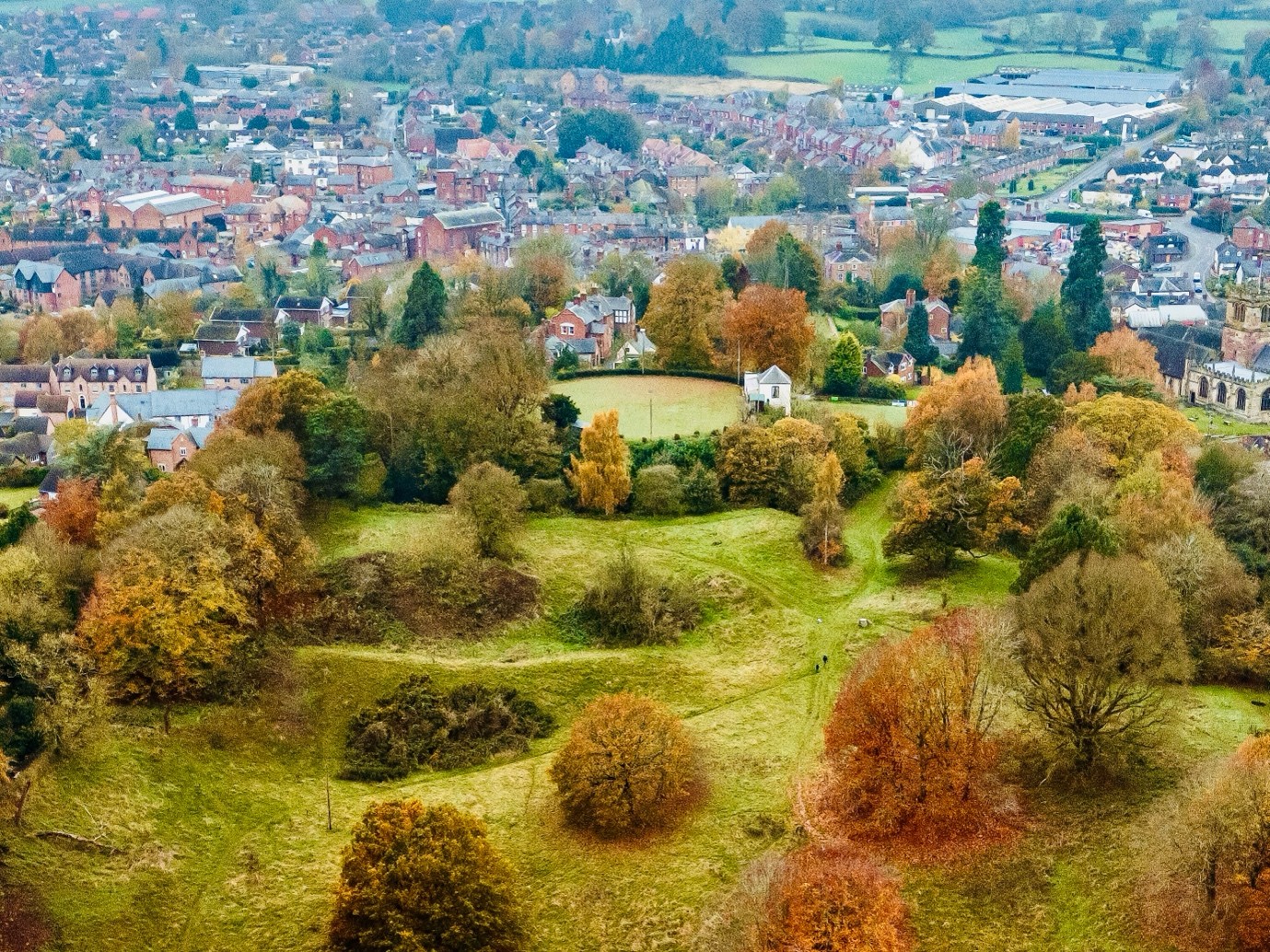
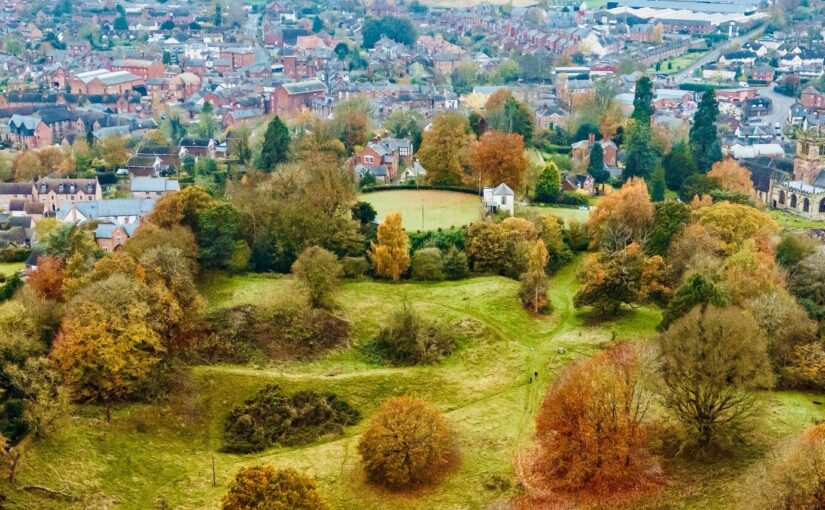
Ellesmere Castle in Shropshire is a substantial motte and bailey castle in the Welsh Marches that played an important role in the history of the area. However, very little is known about its form and structure with no standing remains above ground, or indeed when it was first constructed.

Starting on Monday 23 March, on behalf of the owners of the motte, Ellesmere Bowling Club, and with the support of owners of the rest of the castle Shropshire Council and funded by the Castle Studies Trust, archaeologists from the heritage organisation Heneb will be undertaking a programme of geophysical survey at the castle to assess the potential for surviving sub‑surface archaeological remains. The methods being used include magnetic gradiometry and electrical resistivity survey.

Subscribe to our quarterly newsletter

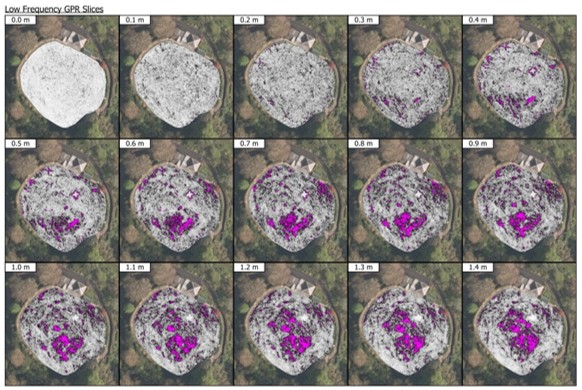
Ellesmere motte top, showing size as an shape of possible structure shown by GPR survey

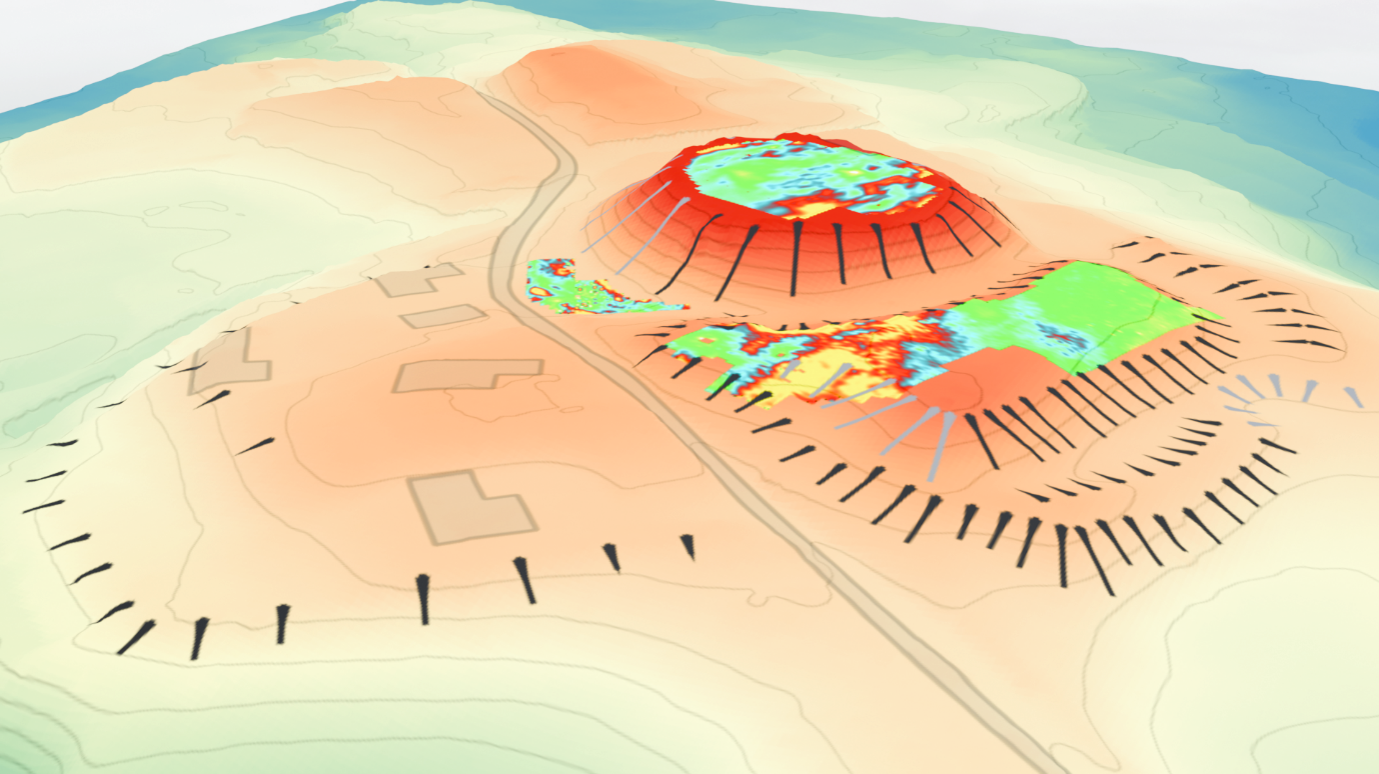
The motte itself is substantial. It is approximately 80m in diameter at its base, 52m across the top and stands about 11m high. A steep-sided ditch, about 20m wide and 3m deep, separates the motte from the bailey to the south east. In 2024, a partial and informal Ground Penetrating Radar GPR survey was carried out, which suggested and indicated a substantial structure, probably indicating a stone structure with the dimensions of 23m x 14m.

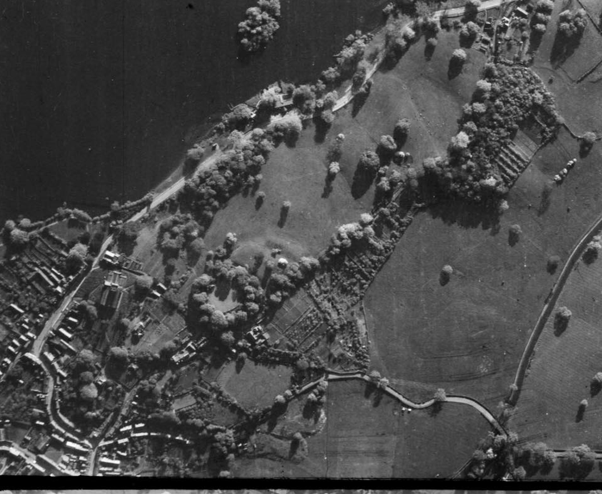
Lidar image of Ellesmere Castle including areas of geophysical survey

This current survey builds on the work carried out in 2024. It will be covering four areas of this very large castle site. The LiDAR image below shows the four targeted areas for geophysical survey:

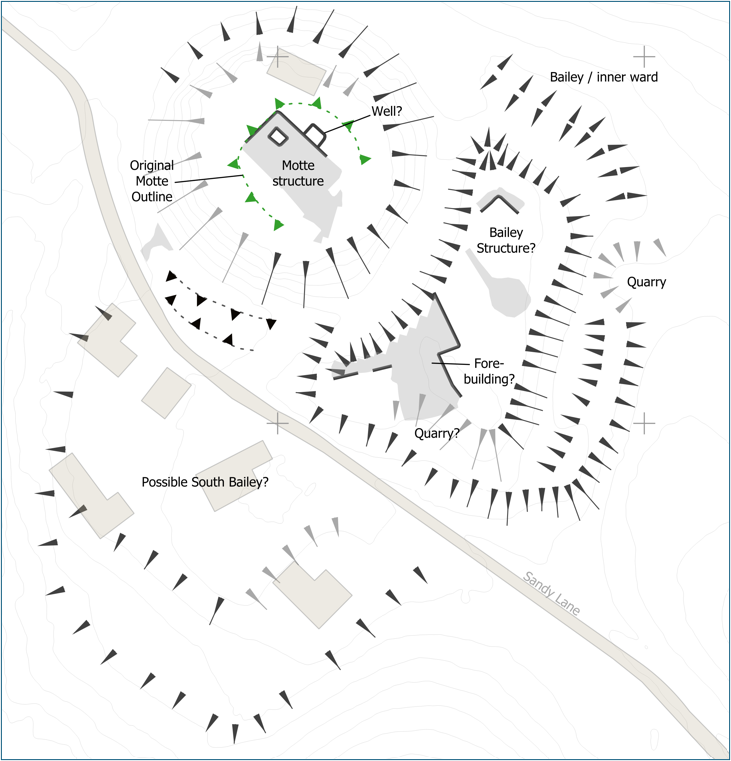
  1. Motte: to pinpoint the position of the curtain wall along with any other buildings within.
  2. Bailey: to determine the location and size of the buildings.
  3. Area three, to establish where the outer defensive wall once stood that came down from the top of the motte, and to understand the width and depth of the defensive ditch, along with deciphering the extent of the bailey (No2), part of which had been quarried away sometime in the past.
  4. Earthworks which are believed to be the outer defensive walls, showing what appears to be an entrance in the north east section, and to investigate the furthest easterly earthworks to determine whether there was both an inner and outer bailey.

Subscribe to our quarterly newsletter

The date of construction is unknown: it could have been built as early as the late eleventh century, by marcher lord Roger de Montgomery. The lands were confiscated by the crown following his son Robert de Bellesme’s rebellion. The castle was certainly in existence by 1138. In 1174 Henry II confirmed the manor to Dafydd ab Owain, a north Welsh prince, when he married Henry’s sister Emma in 1174. During the early to middle part of the 13th century the manor of Ellesmere passed in and out of royal control and throughout much of that century there are numerous accounts of building or repair works especially during the reign of Henry III.

Ellesmere Castle bailey with motte in the background, copyright Gary Bick

In 1241 John le Strange was paid forty pounds to build a castle also in the same year twenty one pounds was spent on building two bretasches. In 1256, the King’s house within castle was repaired at a cost of five pounds ten shillings and nine with a further one hundred and sixteen pounds being spent on castle repairs further emphasising the castle’s significance.

In historical terms, perhaps its most well-known claim to fame is that Joan, daughter of King John and wife of Llywelyn ap Iorwerth, was confined to the castle for about a year following her infidelity.

While the survey will not answer questions on its history, it will hopefully supply more details on the castle’s form, and potential targets for future excavation so we can learn more about its history.

Subscribe to our quarterly newsletter

Cockermouth Castle: a major baronial fortress of which we know little

Tom Addyman of Addyman Archaeology looks ahead to the first modern detailed study of Cockermouth Castle, a major baronial castle near the Scottish border which is starting this week.

With the generous support awarded by the Castle Studies Trust new survey work is to commence this week at Cockermouth Castle.  Located in the extreme west of the historic county of Cumberland, Cockermouth is the caput of a major early landholding, the barony of Allerdale and Honour of Cockermouth.  The castle is an extensively surviving baronial fortress that occupies a strong defensive site, a high spur of land at the confluence of the Rivers Derwent to the north and Cocker to the south and overlooking the medieval town extending to the south-east. 
Subscribe to our quarterly newsletter

Outer Gatehouse of Cockermouth Castle looking North West, copyright Addyman Archaeology

Roughly triangular in plan, the complex’s major walls and defensive towers essentially survive intact, comprising a small inner ward at the point of the promontory and a larger outer ward facing level ground to the east, defended by a ditch, now infilled.  The outer ward is accessed by a massively constructed gatehouse at the north angle of the east side.  The gatehouse and later ranges built against the north, east and south perimeter walls of the enclosure are still in occupation.  The now-ruinous inner ward, containing the principal domestic apartments, had been accessed by means of a second major gatehouse to the centre of its east side.

Cockermouth Castle gatehouse to the inner ward facing south west, copyright Addyman Archaeology

Subscribe to our quarterly newsletter

Following recent appraisal during the 2024 Chateau Gaillard conference there was considerable consensus as to both the importance of the site and its surviving architecture and in recognizing that its fabric has seen little study and was very notably lacking a reliable evidence-based analysis.  It seems the most up-to-date published plan of the site is that of 1910 by John Curwen who also provided an account of the castle’s evolution.  The only subsequent in-depth study that relates the detailed analysis of the physical development of the site to its ownership history is that of JB Bradbury (Bradbury’s History of Cockermouth, 1996); however this now requires comprehensive revision through scholarly review of the physical evidence.  Other accounts, by Lord Leconfield (1959) and Pevsner, as revised by Hyde (2010), are more summary in nature.  The understanding of the castle and its history has most recently been assessed by Dr Edward Impey in a draft paper (July 2024) that provides a firm basis upon which the more detailed assessment of the site will be built and its interpretation re-considered.

Cockermouth Castle inner ward with all and chamber block and the kitchen tower on the far left. copyright Addyman Archaeology

Led by a team from Addyman Archaeology, the project will focus upon developing a detailed understanding of the physical fabric of the structurally complex inner ward area.  The major building periods will be defined and related to the site’s known history and occupancy, to early illustrative material, and in terms of the broader evolution of castle architecture.  Particular focus will be the massive redevelopment of the site in the 14th century under the de Lucy and Percy families.  Incorporating parts of a pre-existing masonry curtain, these works included the creation of chamber, hall and service arrangements, the magnificent kitchen tower (reminiscent of the work of Master John Lewyn), and the inner ward’s idiosyncratic gatehouse, a structure of defensive appearance though of limited capability and without close parallel.  Together the gatehouse and the domestic ranges to either side occupy the site of an earlier defensive ditch; these structures present a specific interpretative challenge in that they incorporate the remains of vaulted cellarage of a predecessor range that may never have been completed.  

Cockermouth Castle Kitchen Tower looking North West, copyright Addyman Archaeology

The present project prioritises the establishment of new base-line survey information.  As far as existing vegetation and safe access permits the structures of the inner ward will be subject to a close and systematic visual assessment and non-invasive survey to be carried out primarily through photogrammetry.  The latter will lead to the development of a record drawing set that will be overlain with comprehensive analytical and phasing data.    The study will include a detailed component-by-component analysis and description, and a narrative account of the visible stratigraphic evidence.  Working with the estate archivist and a local historical group the project will also involve scoping of historical materials relevant to the understanding of the castle fabric.  The project will lead to the development of research questions and a possible scope of works for ongoing study of the site.

Subscribe to our quarterly newsletter

Tree-ring dating and 3D imaging the original roofs of Sudeley Castle’s Outer Courtyard Ranges

Project lead Dr Andy Moir (Chairman of the Gloucestershire Building Recording Group) takes a look at the project to see if we need to re-evaluate our existing understanding of the building history of Sudeley Castle.

Sudeley Castle is a grade I listed building (Historic England List No: 1154791). Although the castle has origins as a Saxon house, its history really began with Ralph Boteler who in 1441 became the Lord Admiral, and then Baron Sudeley and Lord Chamberlin of the Kings Household. Ralph Boteler set about buildings a castle to reflect his new found status and is reputed to have built the Portmare Tower, the Dungeon Tower, the banqueting Hall, and the Tithe barn. In 1547 Thomas Seymour married King Henry VIII widow Katherin Parr (who’s tomb is at the castle) and set about the refurbishment of the estate. Historical documents record that stonemasons and carpenters built a complete new suite of apartments. Queen Mary granted the castle to Sir John Brydges in 1554 creating him Lord Chandos and later the third Lord Chandos entertained Queen Elizabeth I three times at Sudeley.

Subscribe to our quarterly newsletter

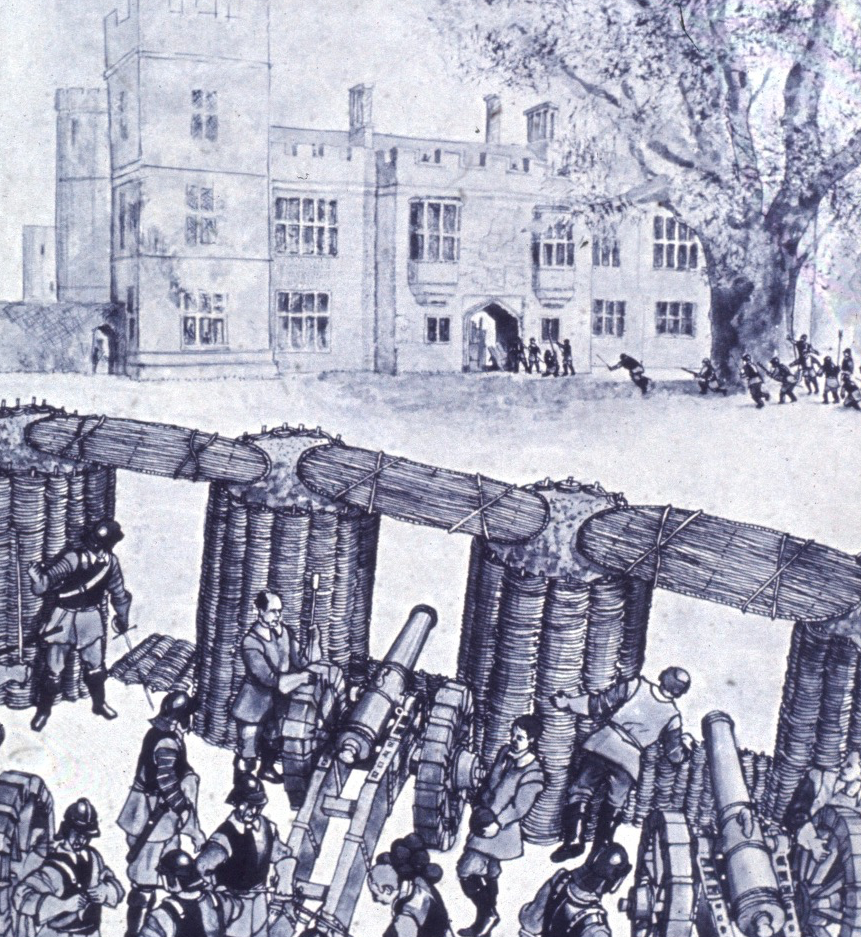
The castle was bombarded by cannon in 1644 during the Civil War and ordered ‘slighted’ (which is stated to have included the removal of the roofs) in 1649. After this the castle was left in ruins for the next 180 years and then extensively restored in the 19th century.

Figure 1: Outer Courtyard Ranges of Sudeley Castle, copyright Dr Andy Moir

Due to the slighting previously little of the earlier builds at Sudeley were thought to survive. However, in November 2025 the Outer Courtyard of Sudeley Castle was visited by the Gloucestershire Building Recording Group (GBRG) and a brief visual survey of the west, north and east range roofs undertaken (Figure 1). Some of stylistic features of timbers that survive in the roofs are useful to estimating their date of contraction, because date ranges of similar features have been identified in through the GBRG’s previous tree-ring dated projects on buildings in Gloucestershire. For instance, the use of queen struts (Figure 2) in the castle roofs are rarely used before the 1440s, and the use of clasped purlins are generally restricted to between the 1380s and 1500s. Diminished principal are present and these are rarely used before the 1440s and to date no examples have been found after the 1550s. Similarly the use of curved wind braces are typically restricted to before the 1570s, after which straight wind braces become more common used. Also in terms of carpentry, 80º saw marks are usually a reliable indicator that the timbers were pit-sawn, which generally comes into use from the 1540s. Overall, the stylistic features recorded suggest that the West and North Range roofs were likely constructed in the first half of the 16th century, some time between the 1500s and 1550s. This evidence suggests that the West and North ranges may be part of the new suite of apartments built by Thomas Seymour around 1547. However, precise dating of the timbers would be required to resolve this issue.

Subscribe to our quarterly newsletter

Figure 2: East range raking queen strut truss constructed using oak timbers, copyright Dr Andy Moir
Figure 3: A core taken for tree-ring dating (top) and a pencil (bottom), copyright Dr Andy Moir
 

Through the taking of small pencil like cores from timbers (Figure 3), tree-ring analysis can often identify an exact year of felling of the timbers used in construction of a building. Most medieval woodworkers use green wood (as seasoned wood is much more difficult to work with) and so a year of felling is generally accepted to identify the year of construction. During the recording of the roof at Sudeley Castle the timbers were also assessed for their potential use in tree-ring dating. Oak timbers with more than 50 rings, traces of sapwood or bark, and accessibility were the main considerations. The oak timbers in the roofs of all three ranges contain sufficient rings and bark to indicate tree-ring dating would likely produced precise felling dates and so significantly advance the understanding of the development of Sudeley Castle. Thanks to funding from the Castle Studies Trust the roof will be recorded and samples for tree-ring dating taken near the end of February 2026 and the results of this project available near the end of March 2026. The GBRG would like to express their thanks to Lady Ashcombe for kindly granting access to Sudeley Castle for this project.
Subscribe to our quarterly newsletter