Ahead of the fieldwork beginning at Knepp Castle on 20 April, we hear from Dr Richard Nevell, the project lead about the project and what it aims to accomplish.
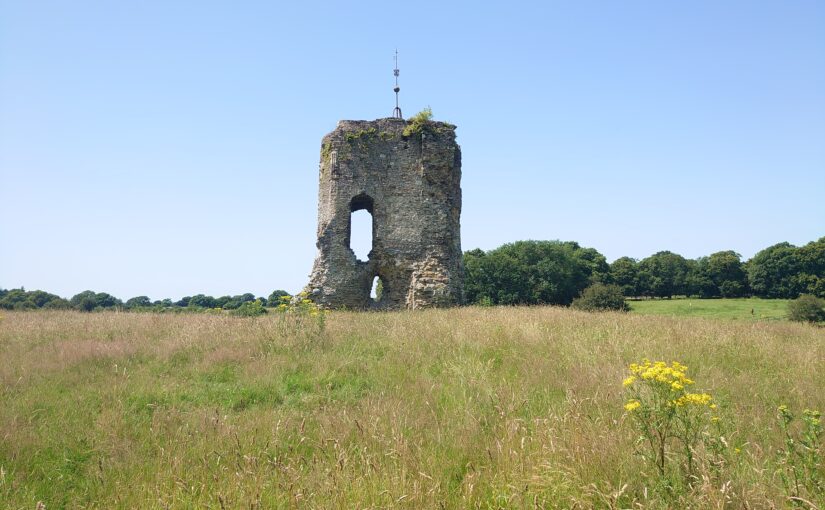
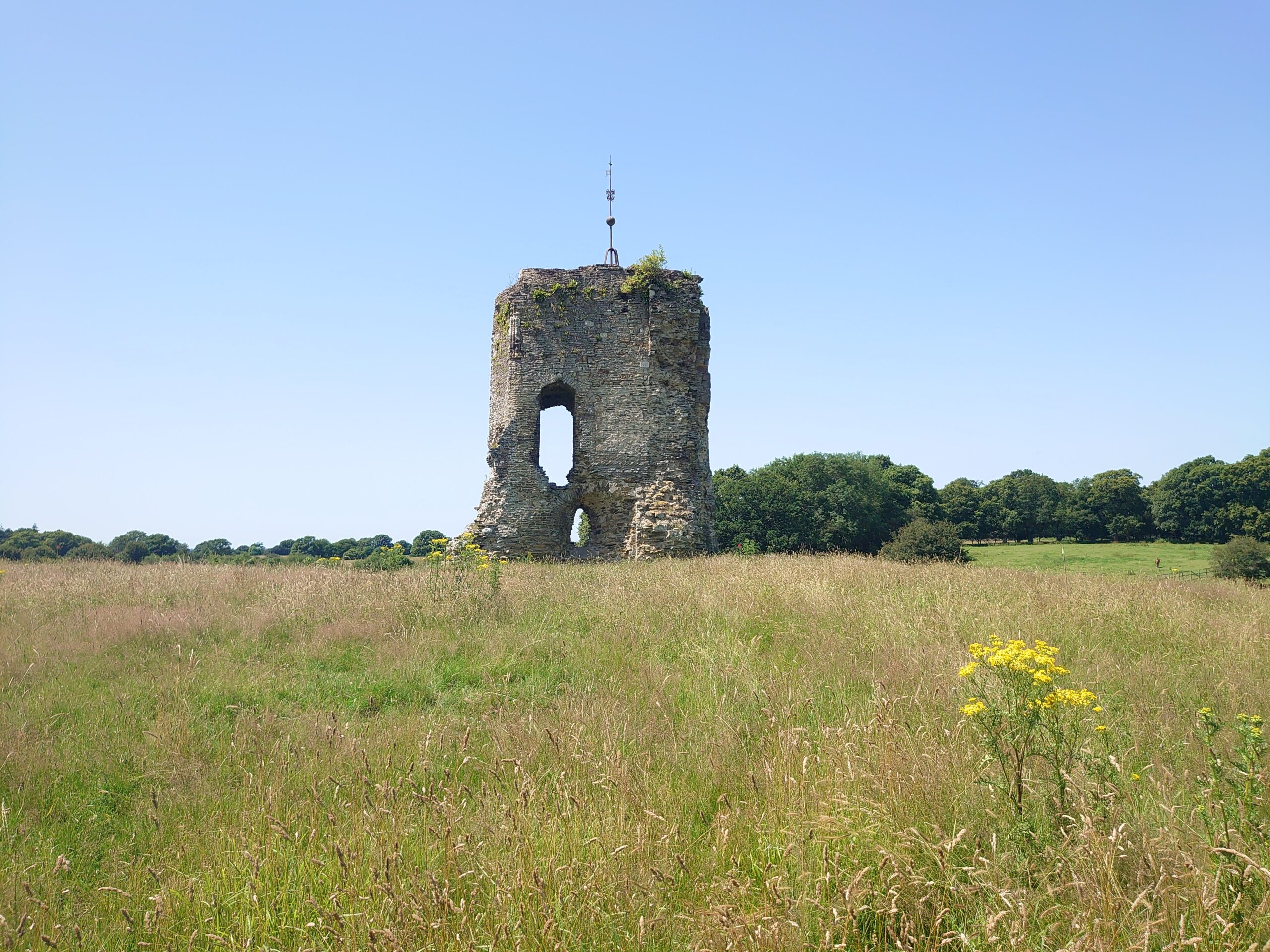
Ensconced in the countryside of West Sussex, Knepp is perhaps best known as a rewilding project – the first of its kind in England. At the eastern edge of the Knepp estate are the enigmatic remains of a tower. The 11m high wall stands on top of a mound just north of the River Adur, and immediately west of the A24 road. This is what remains above ground of Knepp Castle, and the Castle Studies Trust have awarded a grant to partially excavate the site and better understand what lies beneath the surface.
Subscribe to our quarterly newsletter
It is uncertain when Knepp Castle was established. It was likely founded by the powerful Braose family who held the land. The earliest mention of the castle dates to 1210 by which point it was under royal control as King John had confiscated the Braose family’s lands and property. John happily used Knepp as a hunting lodge, visiting to make use of the local deer park. The turmoil of his reign reached Knepp and on two occasions John ordered the destruction of Kneppp to prevent it from falling into enemy hands. Despite this the castle persisted and hosted royal visits from Henry III, Edward II, and Richard II. By the 1720s, most of the medieval castle had been dismantled leaving the lone wall that remains which was likely part of a keep (also known as a great tower).
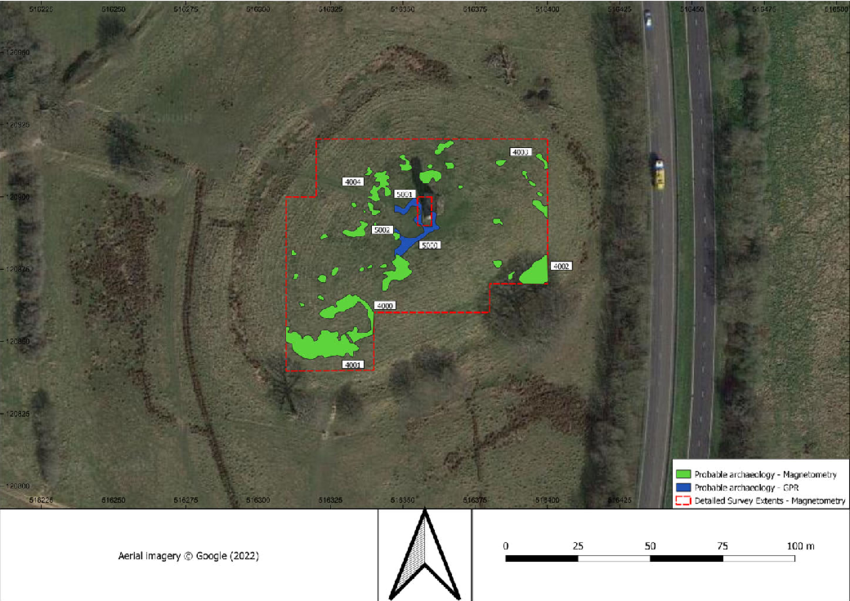
On 20 April Chris Butler Archaeological Services will begin a community excavation at Knepp Castle, and finish on 29 April. The work involves opening a trench just west of the standing wall, cutting across a feature identified in previous geophysical surveys. The castle is a scheduled monument and legally protected from unauthorised change, so any excavation has to be carefully planned to enhance the understanding of the site while preserving the remains.
The geophysical surveys carried out in 2021 and 2022 showed that there are considerable remains buried at Knepp particularly west and south-west of the standing wall. Part of the challenge with this excavation has been deciding which of these features to investigate. Should we work on what could be a curtain wall marking the edge of the castle, a rectangular shape to the south that could be the trace of a gatehouse, or some of the anomalies on the south slope? In the end we decided to examine a sharp edged feature west of the keep. It looks like it could be a building, but it is on a different alignment to the keep and partly overlaps it. That means it may be an earlier phase of the castle.
The remains are not immediately obviously castle-like. During the geophysical surveys passing members of the public asked what the site was. The motte is not as pronounced as at other castles, and the wall looks old without necessarily looking like a castle. By excavating at Knepp we hope to better understand how the site developed. The documentary sources give some hints of events, but little information on what was built when. Personally, I hope that we might find some evidence of the destruction of 1216 following King John’s orders, but that’s unlikely.
Though the geophysical evidence is strong, we can’t be certain about the archaeology until we start digging. What has been especially encouraging is how enthusiastic local communities have been to learn about Knepp’s medieval history and get involved with the fieldwork.
Here’s hoping to some exciting finds from Knepp Castle later this month!
