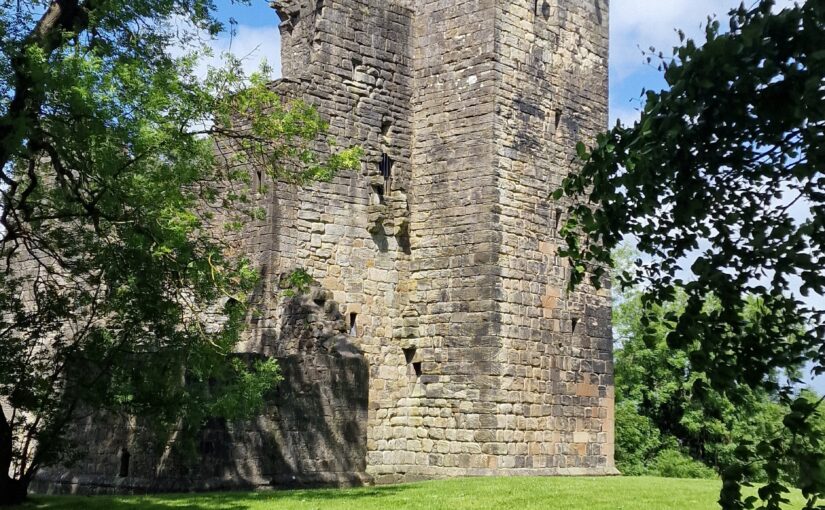
Unearthing Stories Beneath Crookston Castle: A Community Geophysics Project

Dr Nick Hannon of Historic Environment Scotland, project lead and Head of Geophysical Survey, takes a look at the community geophysical survey of Crookston Castle.

Nestled just 15 miles southwest of Glasgow, Crookston Castle stands as a beacon of Scotland’s layered past. But in August, this historic site became more than a monument—it transformed into a hub of community-led archaeological discovery. Thanks to a collaboration between heritage professionals, local volunteers, and schoolchildren, the Crookston Castle Community Geophysics Project brought the castle’s history to life.

Subscribe to our quarterly newsletter

A Castle, A Community, A Cause

The project was led by Historic Environment Scotland (HES) Archaeological Survey staff—Dr Nick Hannon, Dr Hazel Blake, and Paul Bethune—in partnership with “The Friends of Crookston Castle,” a passionate local group dedicated to preserving and celebrating their heritage. With full funding from the Castle Studies Trust, the initiative aimed to explore what lay beneath the castle’s grounds and surrounding area using non-invasive geophysical survey techniques.

But this wasn’t just a technical exercise. It was a community-driven effort that welcomed volunteers from all walks of life. Students from the University of Glasgow, pupils from five local primary and secondary schools, and residents from the surrounding area all joined forces to uncover the hidden stories buried beneath their feet.
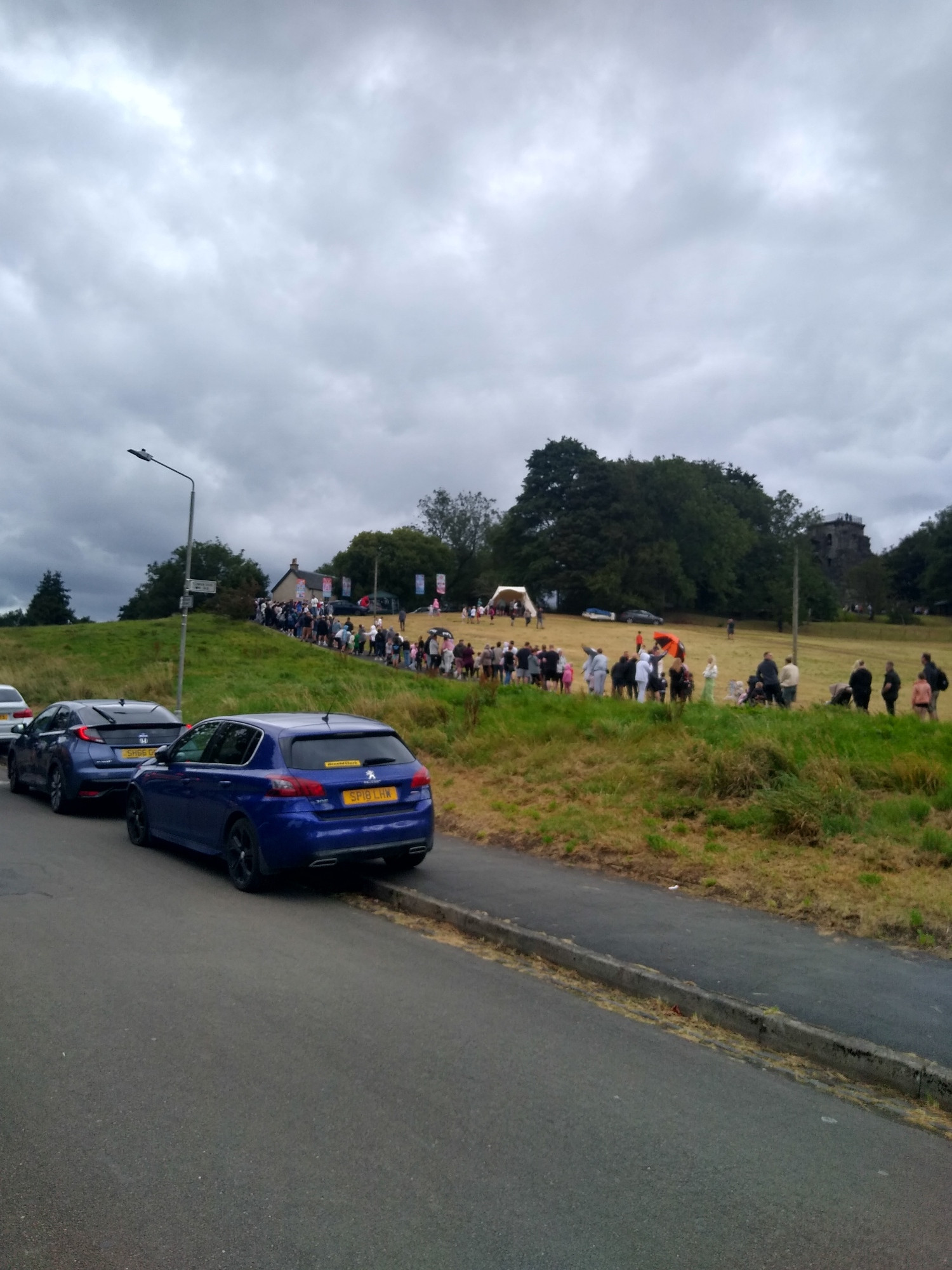
Queue to enter Friends of Crookston Castle Fun Day August 2025 copyright Castle Studies Trust

Science meets Storytelling

Geophysical surveys are a powerful tool in archaeology. They allow researchers to detect buried features without disturbing the ground—ideal for sites like Crookston Castle, where preservation is paramount. Under expert supervision, volunteers learned how to use these tools to scan the ground, searching for traces of ancient structures and activities.

The results were great. The surveys revealed a range of previously unknown archaeological features, including later prehistoric roundhouses, a palisaded enclosure, medieval settlement remains contemporary with the castle’s occupation, and even signs of 17th-century coal mining. These discoveries added new chapters to Crookston’s story, enriching our understanding of the site’s long and varied history.

Subscribe to our quarterly newsletter

A report detailing the full results of the survey is available free to download through Trove.scot and our website: Geophysical surveys at Crookston Castle | Castle Studies Trust

Heritage as a catalyst for Connection

At the heart of this project was a belief that heritage can be a force for positive change. “The Friends of Crookston Castle” exemplify this philosophy. Their mission is to use local history as a way to bring people together, foster pride, and build bridges between communities.

Their dedication was evident not only in the fieldwork but also in the community open day they organised at the castle. Over 900 visitors attended, engaging with the archaeological team, exploring the site, learning about the discoveries, and more importantly having fun. It was a celebration of place, memory, and shared curiosity.
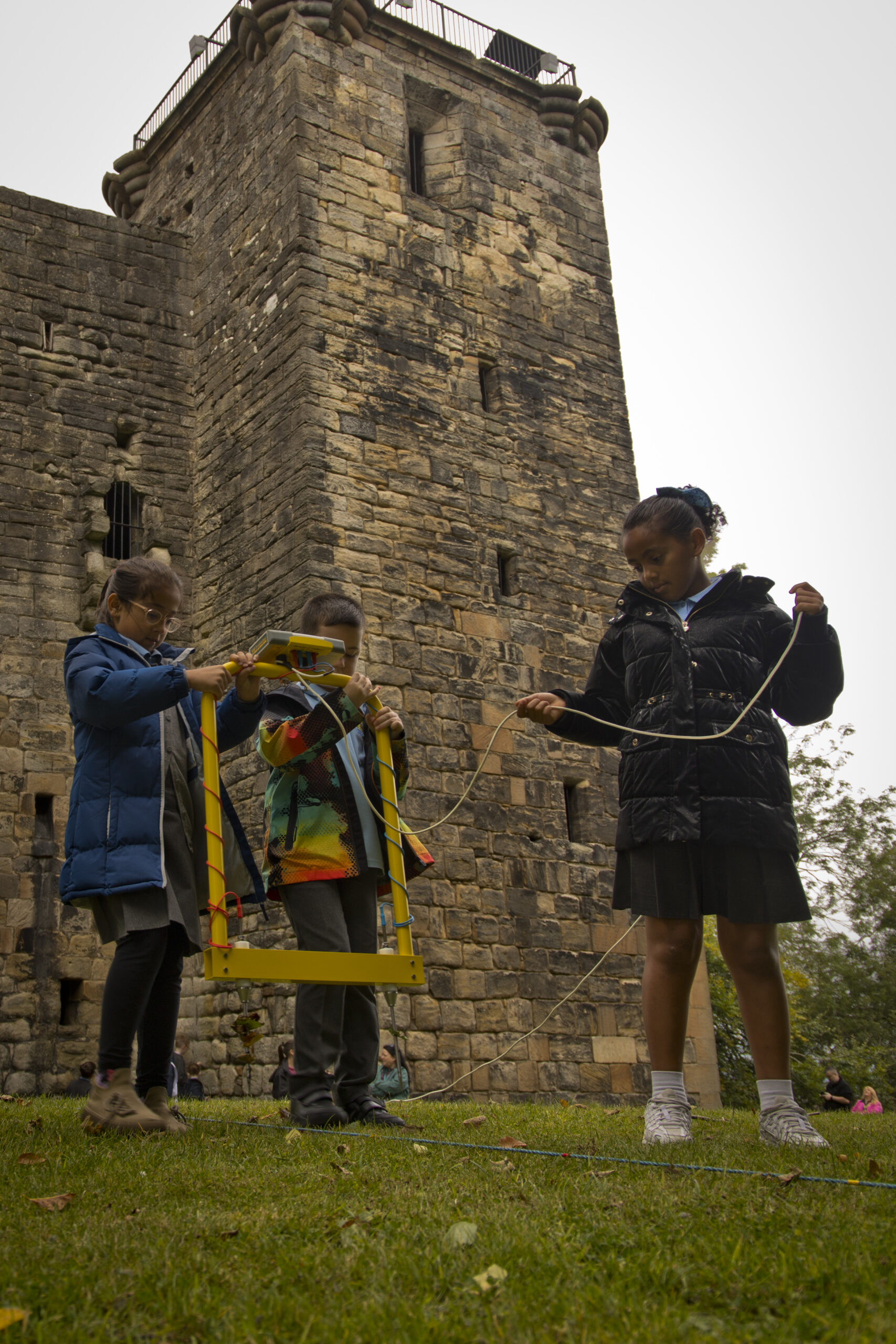
Crookston Castle Local school children carrying out the geophysical survey, copyright Friends of Crookston Castle

Learning by Doing

One of the most inspiring aspects of the project was its educational impact. For many of the school pupils involved, this was their first encounter with archaeology. They weren’t just passive observers—they were active participants, learning how to use equipment.

This hands-on experience helped make archaeology easier to understand, showing young people that history isn’t just something you read in books—it’s something you can touch, explore, and contribute to. It also planted seeds for future careers and lifelong interests, proving that heritage engagement can be both meaningful and transformative.

Subscribe to our quarterly newsletter
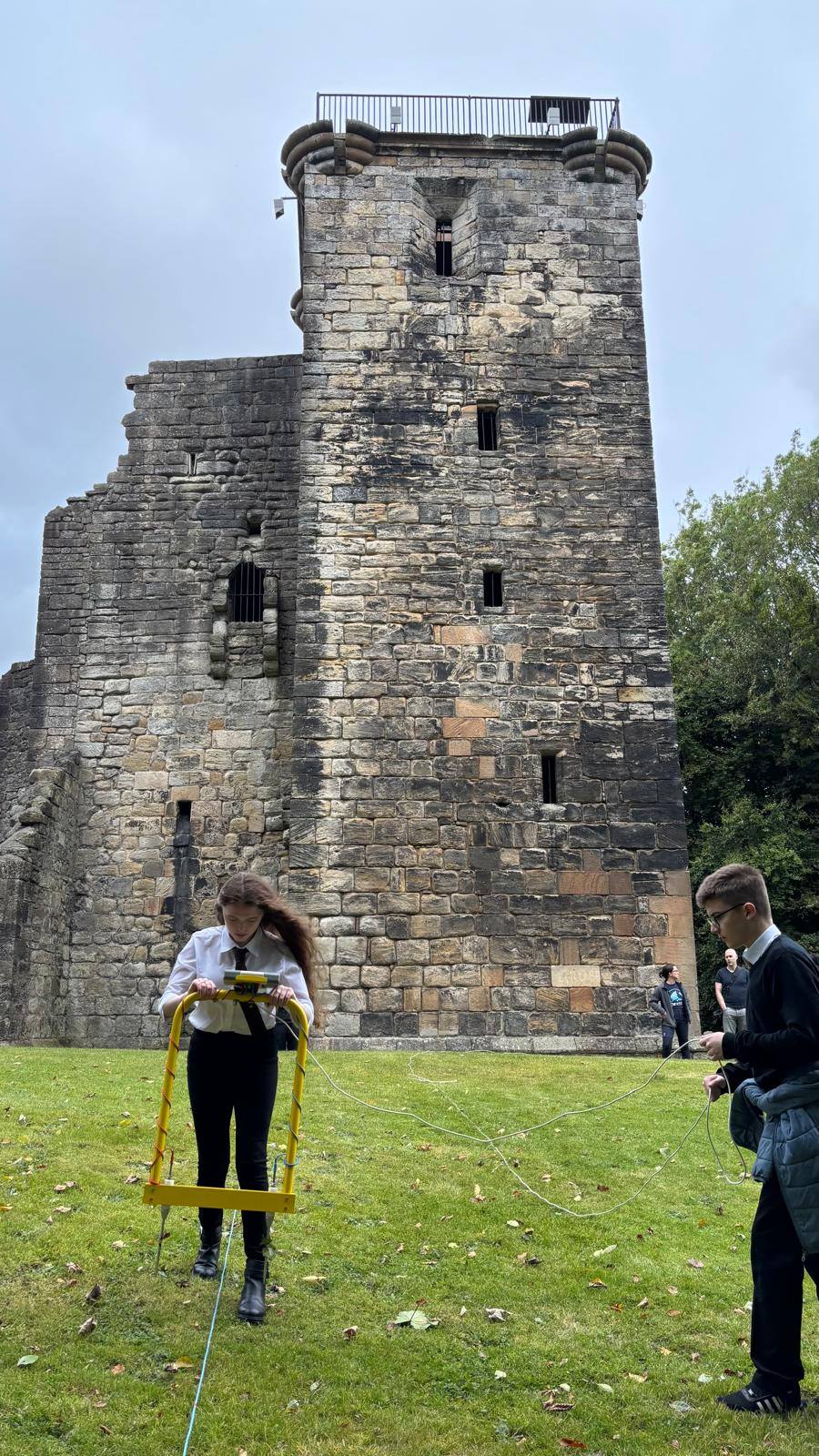
Crookston Castle: Local school children surveying in the castle grounds, copyright Friends of Crookston Castle

A Model for Community Archaeology

The Crookston Castle Community Geophysics Project stands as a model for how heritage organisations can collaborate with local groups to achieve something special. It wasn’t just about uncovering archaeological features—it was about empowering people to take ownership of their history, to tell their stories, and to connect with one another through a shared sense of place.

By combining scientific expertise with grassroots enthusiasm, the project demonstrated that archaeology can be inclusive, educational, and rewarding. It also highlighted the importance of funding bodies like the Castle Studies Trust, whose support makes such initiatives possible.

The Results: Large Potential for Future Archaeological Study
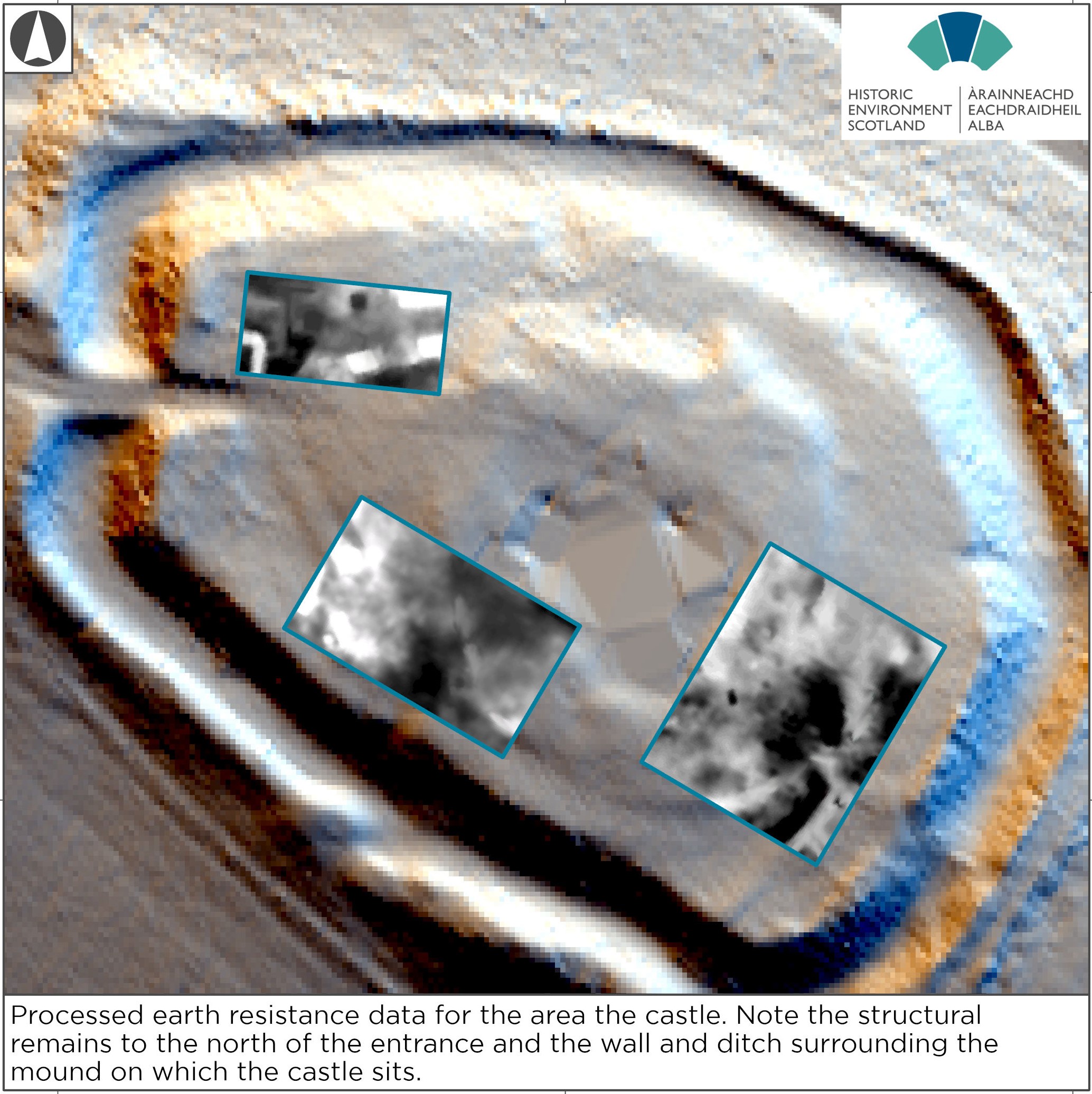
The survey has revealed a range of archaeological features that include structural elements of the castle, and a range of buildings and structures, including a stone enclosure surrounding the current standing remains and perhaps including a well within the castle keep. There is also possible evidence of another entrance with a gap in the stone enclosure aligning with a square enclosure south-east of the main castle Outside the castle moat an entirely unexpected cluster of later prehistoric roundhouses and a palisaded enclosure have been discovered, a significant addition to the history of this location. These represent a succession of large timber round houses.
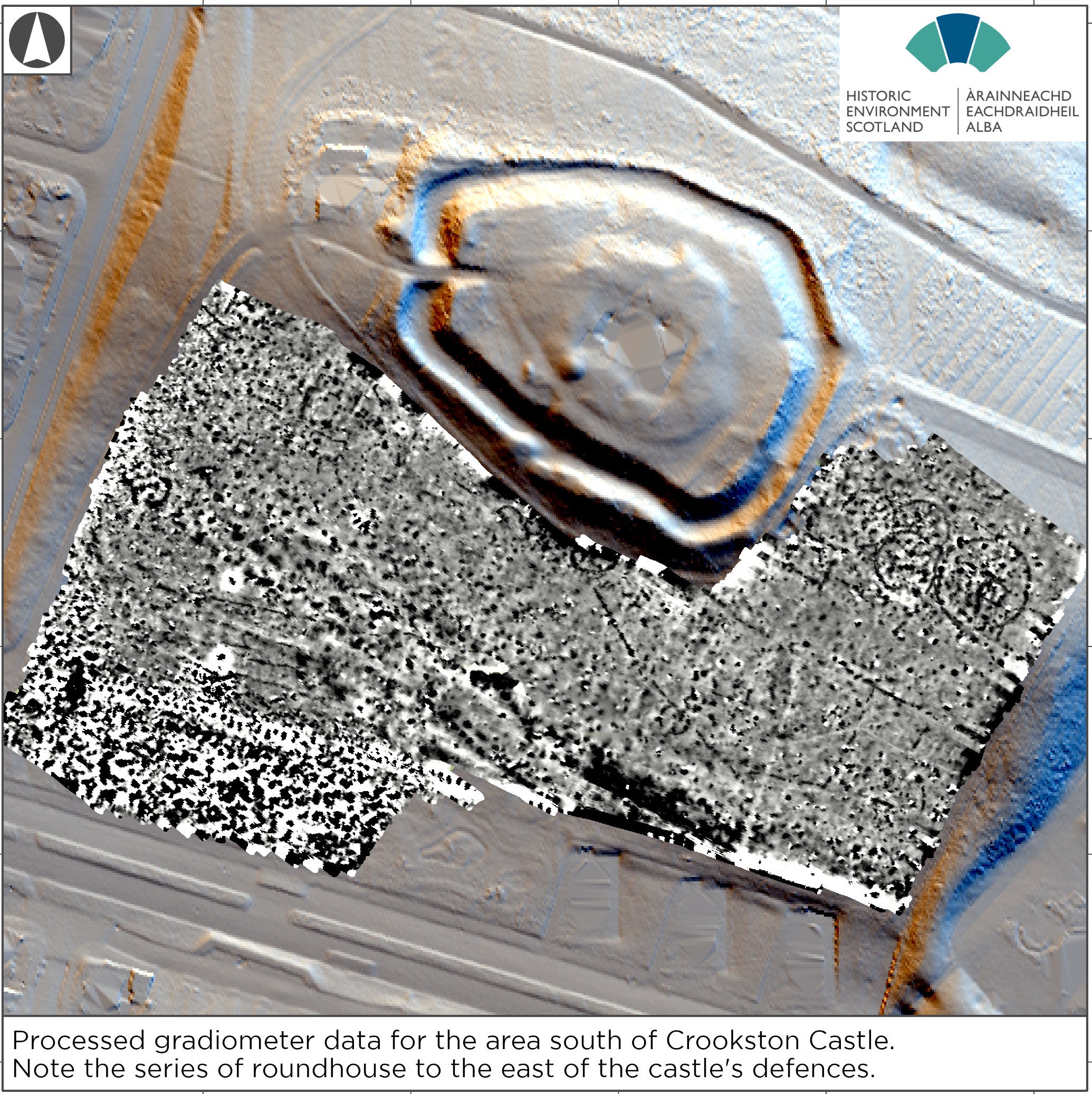
The identification of ephemeral, possibly timber, building remains to the west south west of the castle moat highlights the potential for settlement of medieval and later date just outside the castle moat.  Finally, coal mining of medieval or later date is identified in what look like bell pits, along with the signatures of demolished 19th and 20th century buildings and infrastructure.

Looking Ahead

Now that the fieldwork is over and the data is analysed, the legacy of the Crookston Castle project continues. The findings will inform future research, conservation efforts, and educational programmes. But perhaps more importantly, the relationships forged during the project—between professionals, volunteers, students, and community members—will endure.

Crookston Castle is no longer just a relic of the past. It’s a living symbol of what can happen when people come together to explore, learn, and celebrate their shared heritage. And thanks to the vision and hard work of “The Friends of Crookston Castle,” its story is richer than ever.
Subscribe to our quarterly newsletter

Echoes from the Earth: A Community-Led Archaeological Project at Crookston Castle

Chair of the Friends of Crookston Castle, David McDondald and Historic Environment Scotland’s Dr Hazel Blake look forward to the community geophysical survey days that are starting on Friday that the Trust is funding.

Subscribe to our quarterly newsletter

As Glasgow celebrates its 850th anniversary, the Friends of Crookston Castle are proud to be contributing to the city’s story with a major new heritage project.

Re-established in 2024, our volunteer-led group exists to care for and celebrate Glasgow’s only surviving medieval castle, Crookston.

Crookston Castle copyright Friends of Crookston Castle

Once surrounded by ancient woodland the Castle is now encircled by twentieth-century housing. It has stood as a landmark in the life of generations of local people, but many of them do not realise just how deep its history runs.

That’s why we’re excited to be launching Echoes from the Earth – Crookston Castle’s Hidden Stories, supported by the Castle Studies Trust.

At the centre of the project is a three-day geophysical survey, the most comprehensive investigation of the site in decades. The survey will use three techniques; gradiometry, earth resistance, and ground-penetrating radar to build a picture of what lies beneath the castle grounds and the surrounding area.

With the help of Historic Environment Scotland, local volunteers will be trained to use the archaeological equipment providing our partner schools with a unique learning experience, while boosting the skills of early career archaeologists and local students. Crookston Castle is an unusual stone castle built around 1400 within earlier earthworks constructed in the 1100s. It is the only surviving medieval castle in the City of Glasgow and is in the care of Historic Environment Scotland (HES; Crookston Castle | Public Body for Scotland’s Historic Environment). 

The site is a well-known local landmark and has an active ‘Friends of Crookston Castle’ group from the local community who value the monument as an important part of their historic environment. Working in partnership with the ‘Friends’, the archaeological survey team at HES will be undertaking geophysical survey at Crookston Castle. This has two main objectives – firstly to understand more about what may lie below the ground surface, and secondly to provide experience of geophysical survey to the Friends of Crookston and support them in finding out more about their monument.

Subscribe to our quarterly newsletter

At any stone-built castle, it is inevitable that impressive standing masonry is a focus of attention. But these were monuments that underwent changes and development, perhaps because of war damage or as needs changed, and may be one aspect of a much longer span of activity on the site. So, there may be more to them than immediately meets the eye. The planned gradiometer, earth resistance and ground penetrating radar surveys (see here for more information on these techniques) will provide views of what archaeological remains lie below the ground surface. We hope this will provide more information about the history of the castle, enriching the stories that the remains can tell us and informing future management of the site.

Crookston Castle, copyright Friends of Crookston Castle

Crookston Castle matters to the local community, and that is one reason why it is important to HES to be working with the ‘Friends’ to better understand their monument. By providing experience of geophysical survey and the interpretation of the results, we have an opportunity to share experience and knowledge and together contribute to a better understanding of the site now and in the future.

Geophysics is exciting because you never know what may pop up in the survey data, lurking unsuspected under the ground surface! But there are already two potential areas of interest that we know should benefit from survey. One area to the south of the stone castle may contain medieval activity, while to the west there is what may have been the original western entrance. Both areas will be an initial target for the geophysical survey, with flexibility to target further areas across the site.

Crookston Castle is valued by its local community. It is a great opportunity for HES, as the national publicly funded body for the historic environment, to be able to engage directly with the Friends and support them in their interest in the monument. 

Subscribe to our quarterly newsletter

If you would like to get involved with the group, get in touch at Crookstoncastlefriends@gmail.com and follow them on Facebook.

So, if Crookston is close to you and you’d like to get involved in the project, get in touch or follow our progress on our social media and help us unearth the history and stories of a site that even after all these years still has secrets to share and that continues to surprise us, inspire us, and to remind us that the past is never quite as far away as it seems.

Castle Studies Trust Awards a Record Amount in Grants

The Castle Studies Trust is delighted to announce the award of five grants, totalling a record amount of £42,000, to a wide range of projects with different types of research. The amount means that since our foundation we will have given over £300,000 to castle research projects – a landmark to celebrate.

Subscribe to our quarterly newsletter

The five projects we will be funding are:

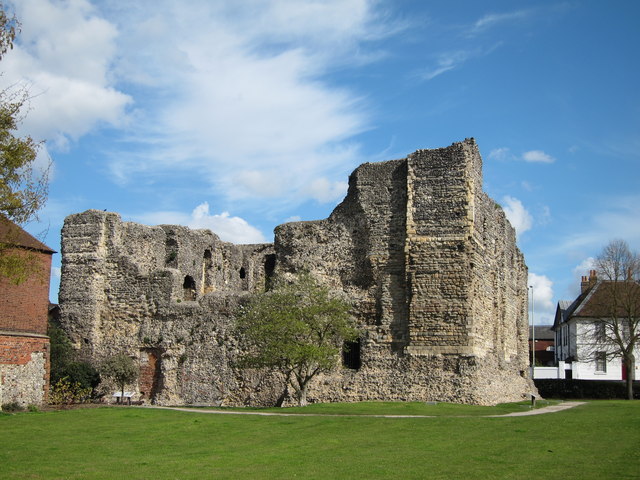
Canterbury Castle Keep copyright geograph.co.uk

Canterbury, Kent: To create an interactive digital model of the castle’s keep. The keep is one of the largest surviving from early Norman England dating to the late eleventh / early twelfth century. Now much ruined and inaccessible to visitors due to instability, the project will use the findings of previous archaeological research to create an interactive model. Work will start in March and be completed within ten months.

Clavering Castle platform copyright Simon Coxall

Clavering, Essex: To fund an excavation to help understand the development of the site which was occupied for over 600 years and which could be one of the very few pre-conquest castles in the UK. The excavation will build on the extensive survey work carried out by the local group of the site. They are planning to do the excavations in June.

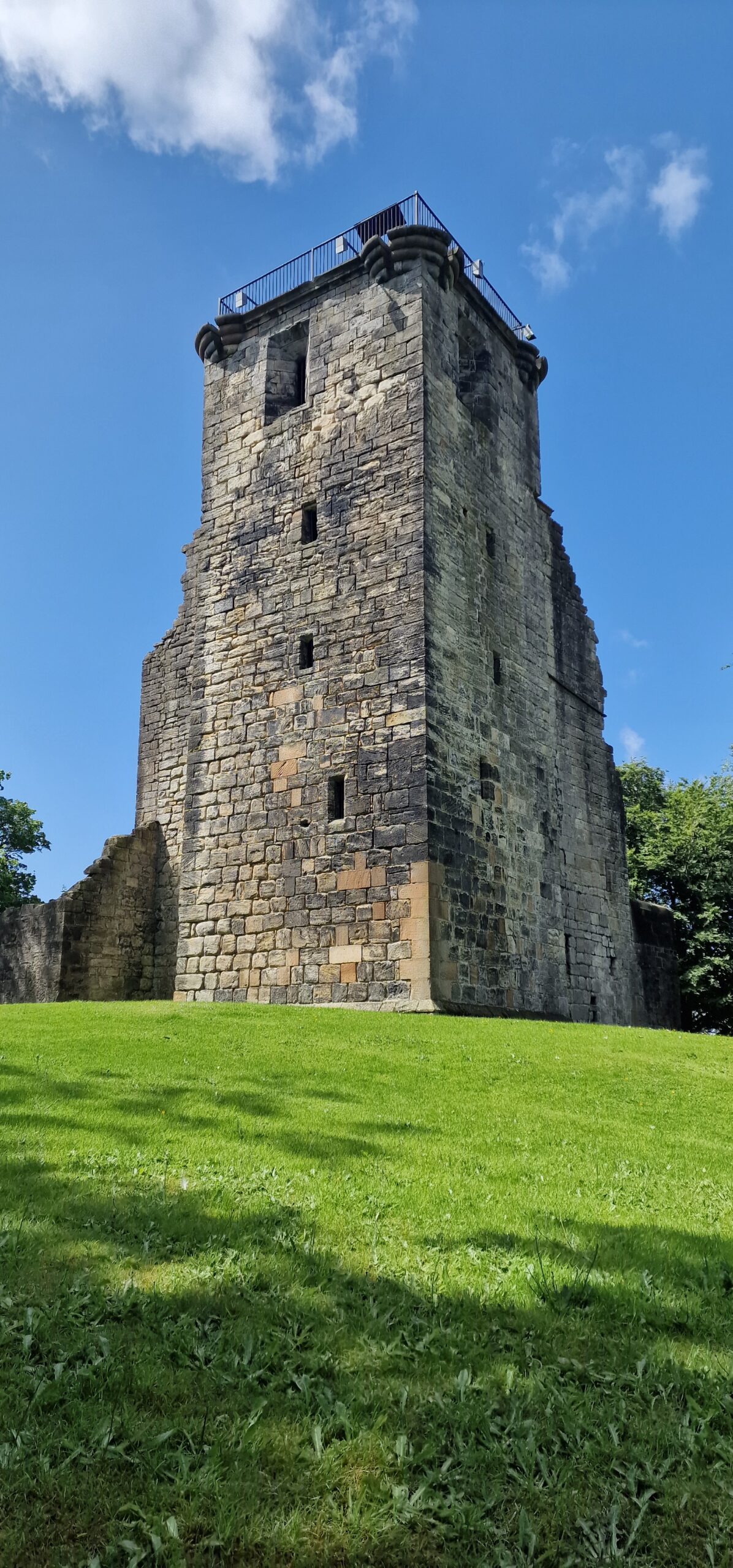
Crookston Castle copyright Friends of Crookston

Crookston, Glasgow: A community-led geophysical survey, using multiple techniques, through which the Friends of Crookston Castle in conjunction with HES hope to learn more about Glasgow’s only castle. While the standing remains are believed to date from the early fifteenth century, it is believed that the castle dates back to the twelfth century. The group hopes to discover evidence of that earlier history and whether it was based on an earlier Iron Age hillfort. They plan to do the survey in early August.

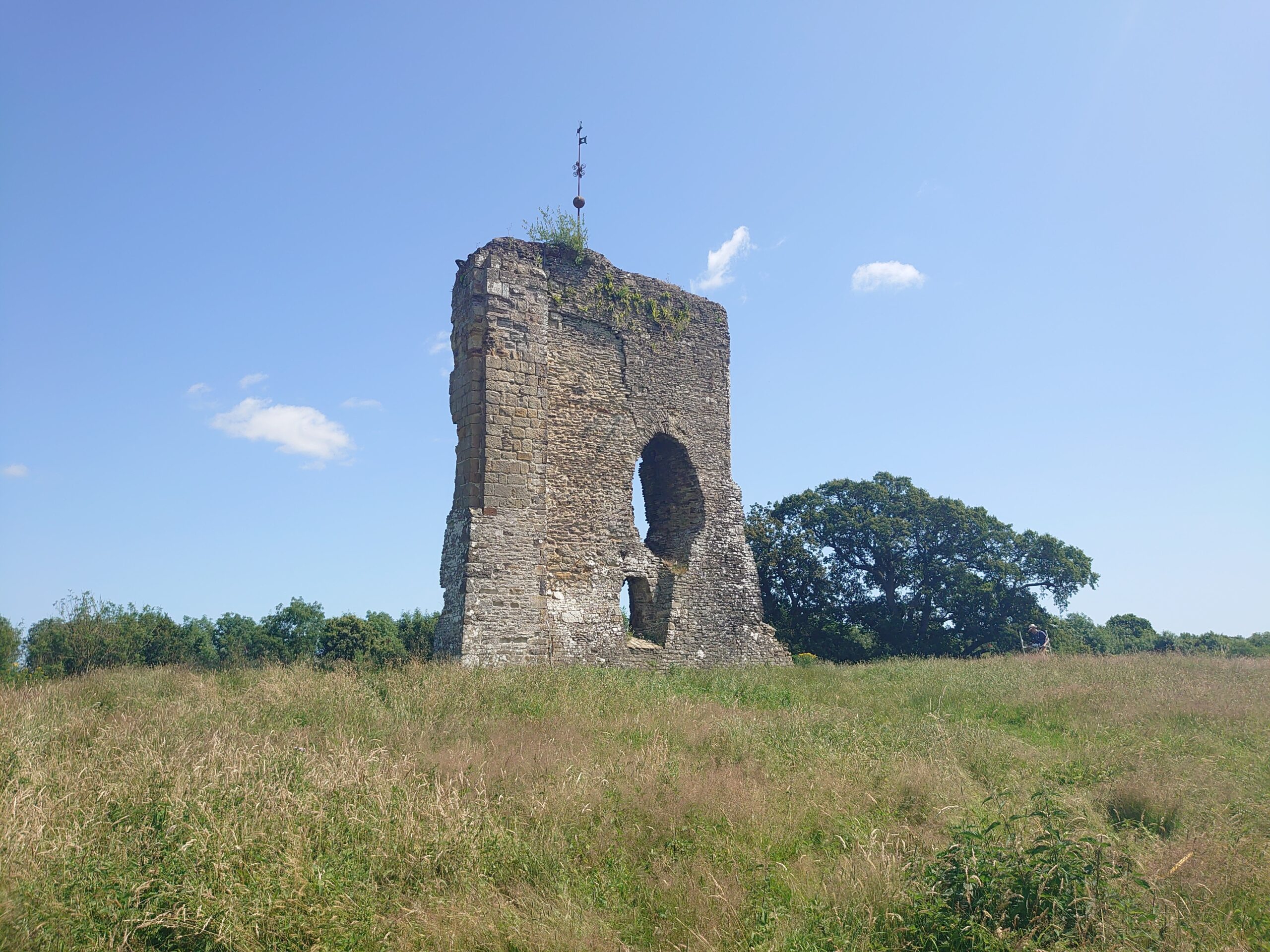
Knepp Castle copyright Richard Nevell

Knepp, West Sussex: An excavation building on a geophysical survey to better understand the site’s development and its relationship to the local area of this important baronial centre thought to be built by the de Braose family. The first documentary evidence is from 1210 when it was under royal control, documenting repairs, while the geophysical survey shows activity that pre-dates the extant stone tower. Excavations are planned for late July/ early August 2025.

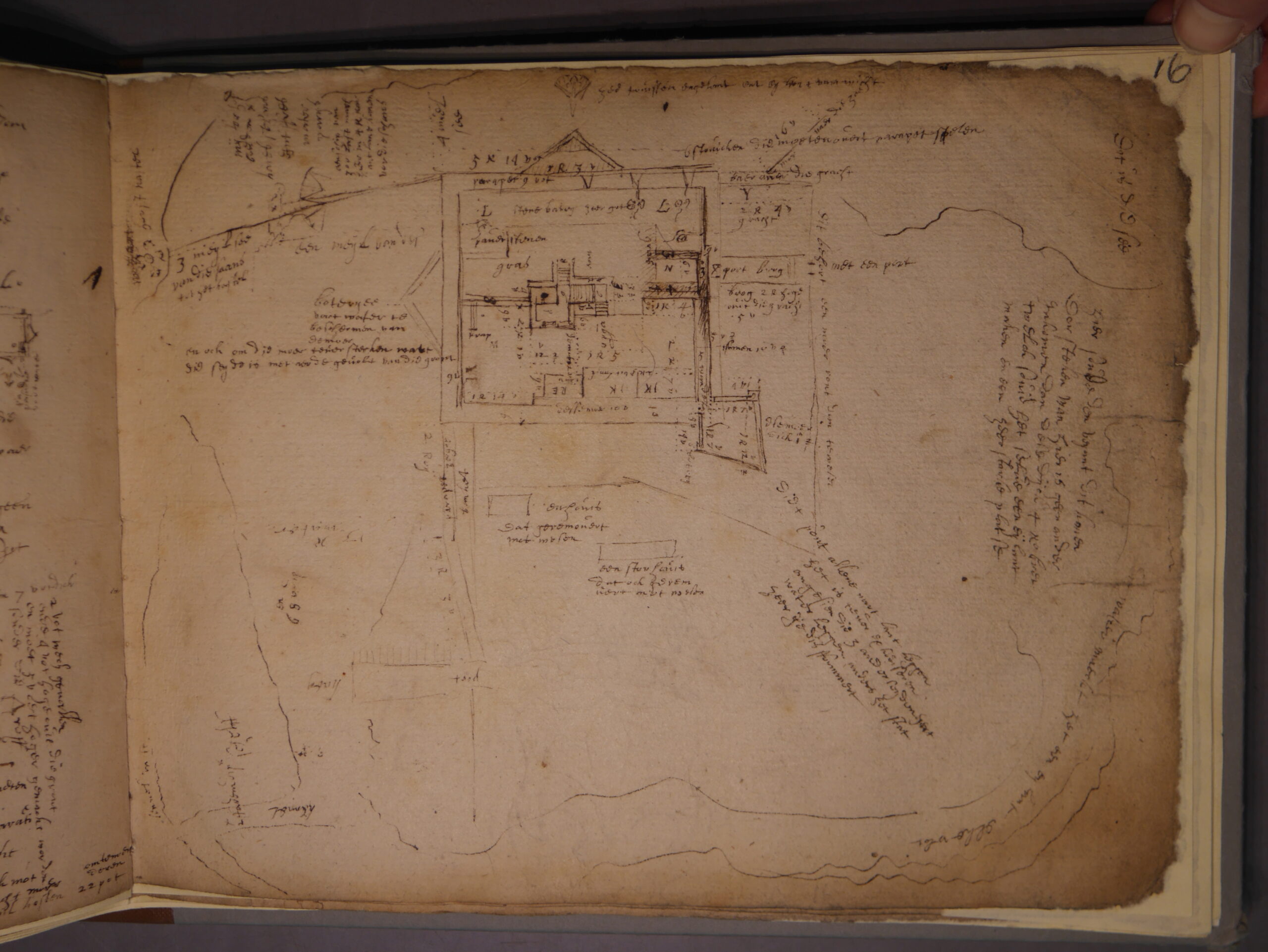
Image of Transcript copyright Esther van Raamsdonk

Transcription and translation of C17  Dutch Engineer’s Survey of English castles and fortifications: A joint project between Dutch academic Dr Esther van Raamsdonk and English Heritage to transcribe and translate part of an early seventeenth-century manuscript of a Dutch surveyor’s examination of castles and forts in England. The sample covers five of the 22 castles and fortifications in the document, which is called SP 9/99,   held by the National Archives in Kew.  The sample will include Dover, Walmer and Deal. The document is filled with detailed drawings and maps of these fortifications with often lengthy descriptions of their condition. Esther has already started work on it.

Subscribe to our quarterly newsletter