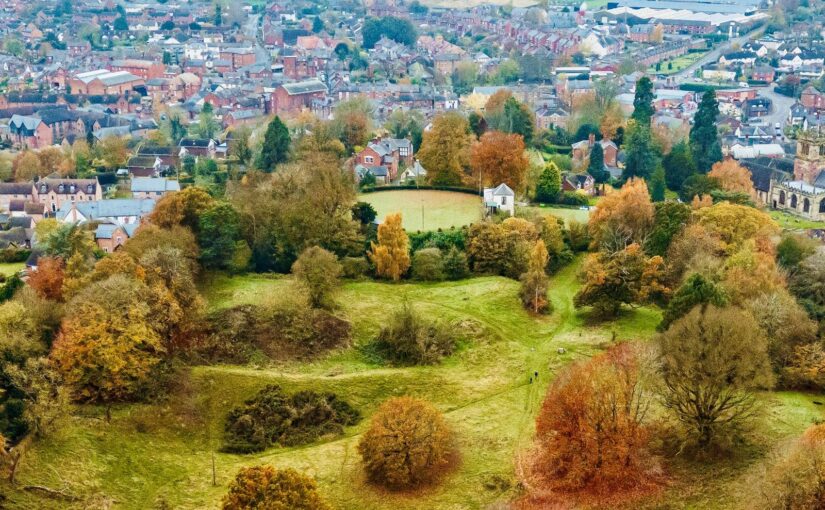
Ellesmere Castle in Shropshire is a substantial motte and bailey castle in the Welsh Marches that played an important role in the history of the area. However, very little is known about its form and structure with no standing remains above ground, or indeed when it was first constructed.
Starting on Monday 23 March, on behalf of the owners of the motte, Ellesmere Bowling Club, and with the support of owners of the rest of the castle Shropshire Council and funded by the Castle Studies Trust, archaeologists from the heritage organisation Heneb will be undertaking a programme of geophysical survey at the castle to assess the potential for surviving sub‑surface archaeological remains. The methods being used include magnetic gradiometry and electrical resistivity survey.
Subscribe to our quarterly newsletter
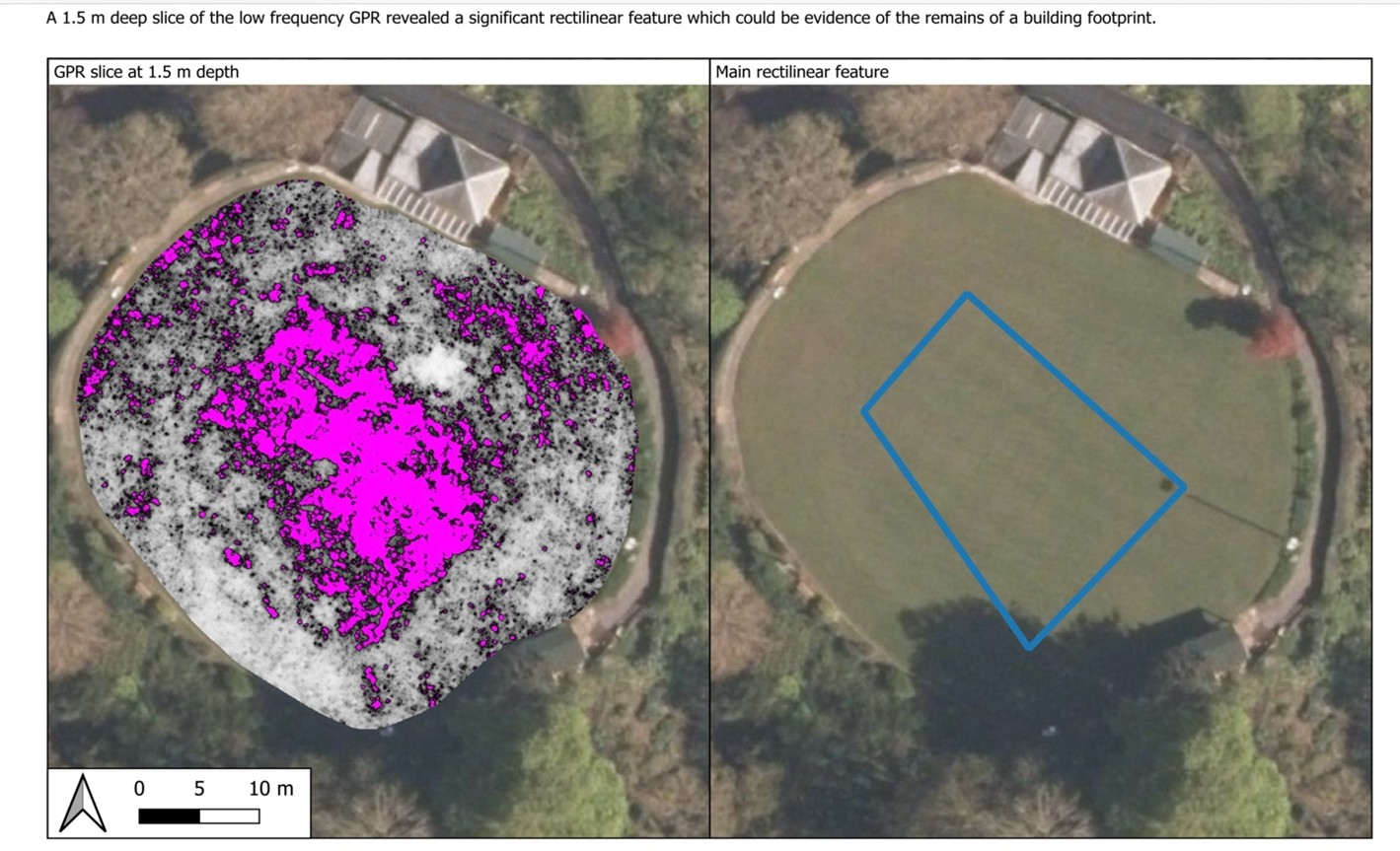
The motte itself is substantial. It is approximately 80m in diameter at its base, 52m across the top and stands about 11m high. A steep-sided ditch, about 20m wide and 3m deep, separates the motte from the bailey to the south east. In 2024, a partial and informal Ground Penetrating Radar GPR survey was carried out, which suggested and indicated a substantial structure, probably indicating a stone structure with the dimensions of 23m x 14m.
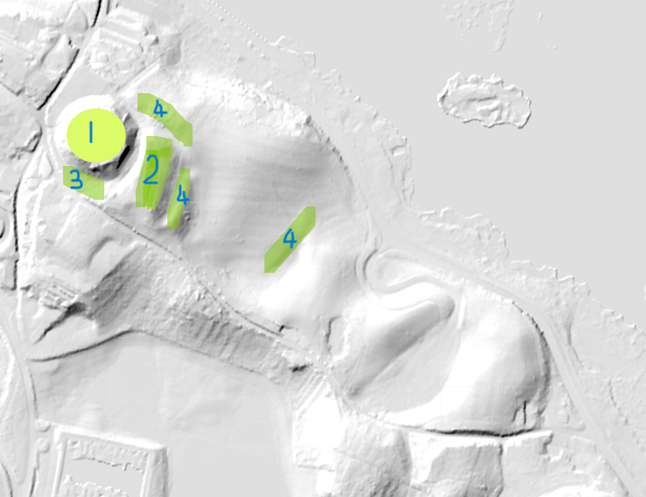
This current survey builds on the work carried out in 2024. It will be covering four areas of this very large castle site. The LiDAR image below shows the four targeted areas for geophysical survey:
- Motte: to pinpoint the position of the curtain wall along with any other buildings within.
- Bailey: to determine the location and size of the buildings.
- Area three, to establish where the outer defensive wall once stood that came down from the top of the motte, and to understand the width and depth of the defensive ditch, along with deciphering the extent of the bailey (No2), part of which had been quarried away sometime in the past.
- Earthworks which are believed to be the outer defensive walls, showing what appears to be an entrance in the north east section, and to investigate the furthest easterly earthworks to determine whether there was both an inner and outer bailey.
Subscribe to our quarterly newsletter
The date of construction is unknown: it could have been built as early as the late eleventh century, by marcher lord Roger de Montgomery. The lands were confiscated by the crown following his son Robert de Bellesme’s rebellion. The castle was certainly in existence by 1138. In 1174 Henry II confirmed the manor to Dafydd ab Owain, a north Welsh prince, when he married Henry’s sister Emma in 1174. During the early to middle part of the 13th century the manor of Ellesmere passed in and out of royal control and throughout much of that century there are numerous accounts of building or repair works especially during the reign of Henry III.
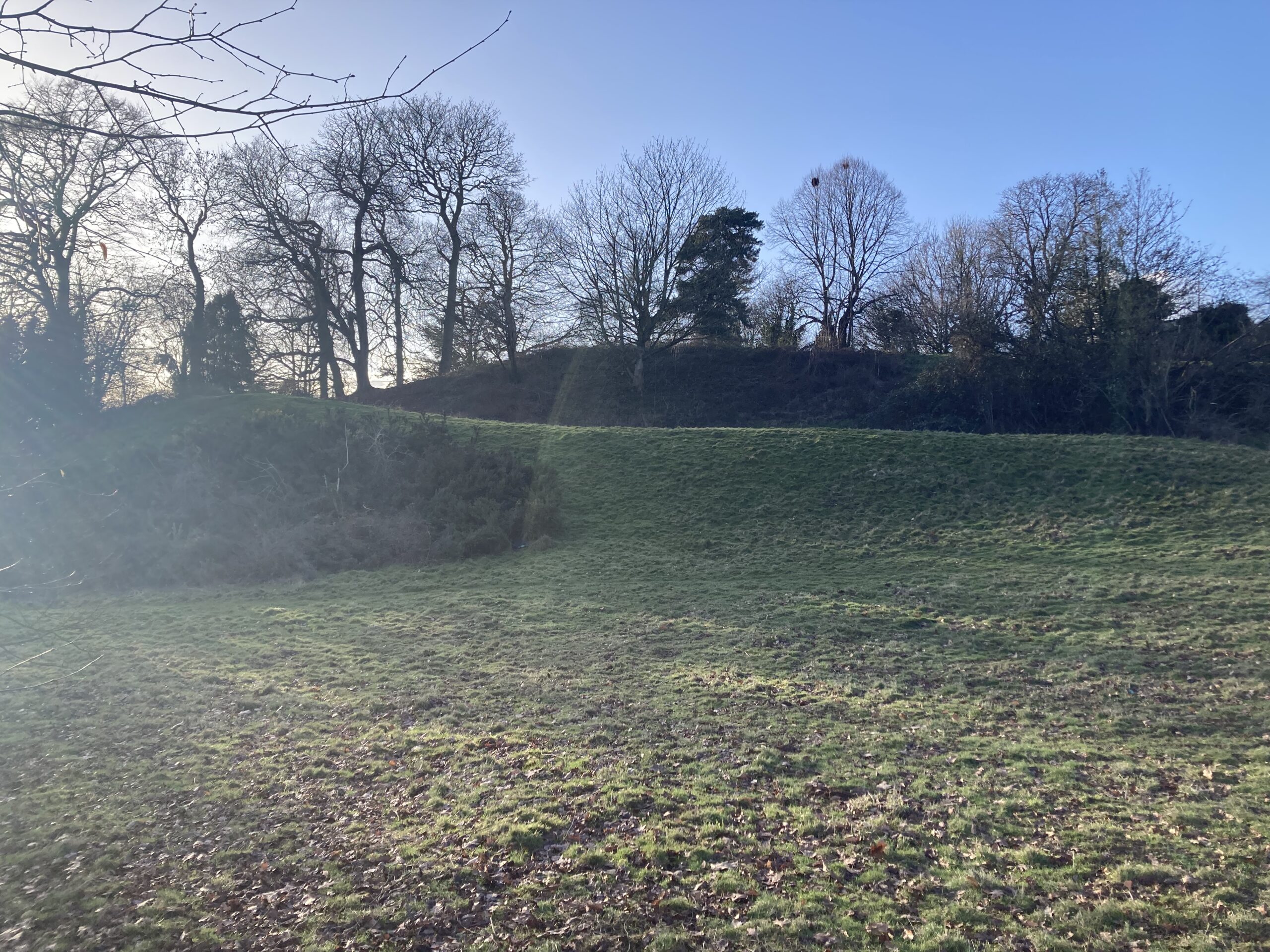
In 1241 John le Strange was paid forty pounds to build a castle also in the same year twenty one pounds was spent on building two bretasches. In 1256, the King’s house within castle was repaired at a cost of five pounds ten shillings and nine with a further one hundred and sixteen pounds being spent on castle repairs further emphasising the castle’s significance.
In historical terms, perhaps its most well-known claim to fame is that Joan, daughter of King John and wife of Llywelyn ap Iorwerth, was confined to the castle for about a year following her infidelity.
While the survey will not answer questions on its history, it will hopefully supply more details on the castle’s form, and potential targets for future excavation so we can learn more about its history.