Where Power Lies: project summary

Between November 2022 and March 2025 the research project Where Power Lies explored the archaeological evidence for the origins and early development of England’s medieval lordly centres. Funded by the Arts and Humanities Research Council, the project characterised material expressions of elite authority across c.800-1200. This blog summarises some of the project’s key findings and outputs, and provides updates on continuing work.

Subscribe to our quarterly newsletter

For a little over two years the research project Where Power Lies investigated the archaeological evidence for the emergence of England’s medieval ‘lordly centres’: places in the landscape that elite families developed primarily for their own self-aggrandisement. The programme was keen to conceptualise early castles (c.1066-1200) as a manifestation of these elite enclaves, albeit ones that were in many ways distinctive from other sites. Where Power Lies examined the material at a number of scales, firstly with national datasets integrated into a GIS in order to identify possible regional distinctions. It was quickly realised, however, that a more detailed approach was required to interrogate data more meaningfully, so the project team examined two ‘macro regions’ more closely. One region covered counties in southern and western England, the other incorporated the historic counties of Yorkshire and Lincolnshire. Information was extracted from the Historic Environment Record of each county, and interrogated to assess the validity of a site identified as a lordly centre and an assessment made as to its character and date.
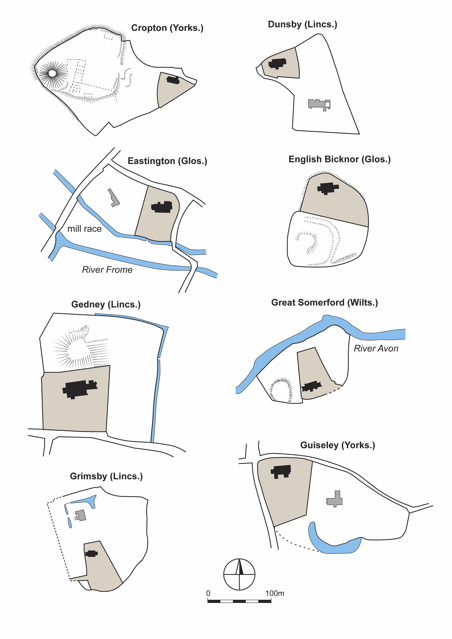
Figure 1: Plans of some early lordly centres, showing enclosures, earthworks, and major watercourses. The integration of large streams and rivers into these sites hints at the fundamental importance of watermills in their economy. Credit: David Gould.

Although the ‘cleaned’ dataset for the two macro regions still presented challenges for interpretation, some meaningful patterns could be identified. Firstly, it was clear that lordly centres featuring a closely paired church and residence occurred more frequently in areas of dispersed settlement. This finding is supported by analysis of the nationwide dataset of early castles, with significant numbers located in areas of very low to low settlement density. These patterns highlight that lordly foci were were at the very least embedded within a diversity of settlement landscapes and were not a peculiarity of nucleated villages in ‘champion’ countryside, as has sometimes been assumed. Secondly, it was evident that major watercourses were of great importance in the establishment of lordly centres; while significant quantities of water would have been needed for domestic and agricultural purposes, substantial rivers and streams also seem to have been exploited from an early date to power watermills (Figure 1). Such mills were a fundamental foundation of lordly authority, representing a centralisation of a key economic resource and symbolic of the primacy of particular families over others.
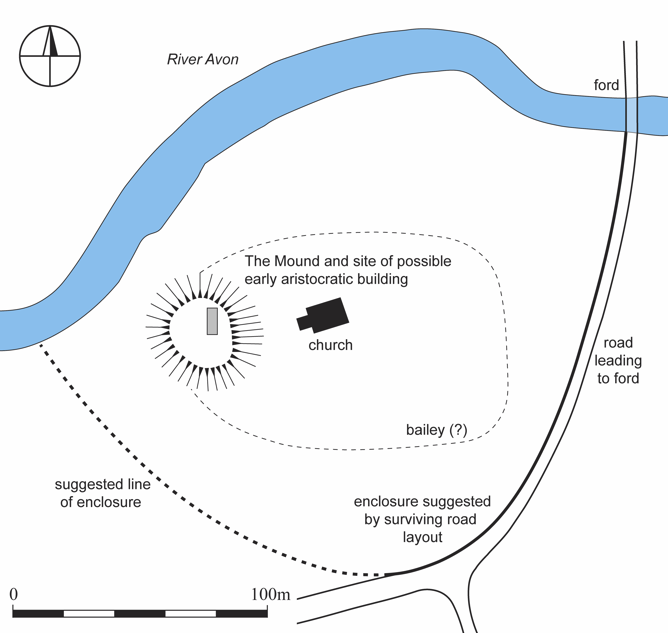
Figure 2: Plan of the key features at Great Somerford, Wiltshire. The location and form of the early aristocratic building, most feasibly interpreted as a chamber, was achieved through ground penetrating radar. Credit: Scott Chaussée/David Gould.

Eight locations offering especially high potential were chosen as case studies warranting further investigation, with a combination of approaches deployed to understand them more thoroughly; these included detailed desk-based research, geophysical and topographic survey, standing building assessment, and targeted excavation to facilitate optically-stimulated luminescence profiling and dating of earthworks. Among the case studies was the motte at Great Somerford (Wiltshire), surveyed using a ground-penetrating radar which found a stone-built structure located within the earthwork. This feature had previously been excavated in the 1950s and although ‘windows with Norman features’ were recovered, the exact character of the structure remained uncertain. Our survey demonstrated that the rectilinear building is orientated broadly north-south, apparently discounting its identification as an early church (Figure 2). Situated at some depth within the north-east part of the motte, this feature is perhaps best understood as a chamber and one that apparently preceded construction of the castle. A similar situation is apparent at Earls Barton, Northamptonshire, where a comparable stone-built rectilinear building seems to have been followed by construction of Berry Mount (Figure 3). Our survey here also located a second church, less than 5 metres from the celebrated tower-nave. At both of these sites, then, mottes seem to have been raised over earlier stone-built chambers; while further work is required to phase site sequences more closely, the possibility is that these castles were raised after a period of elite Norman occupation, perhaps in the twelfth century, rather than in the immediate aftermath of the Conquest.

Subscribe to our quarterly newsletter
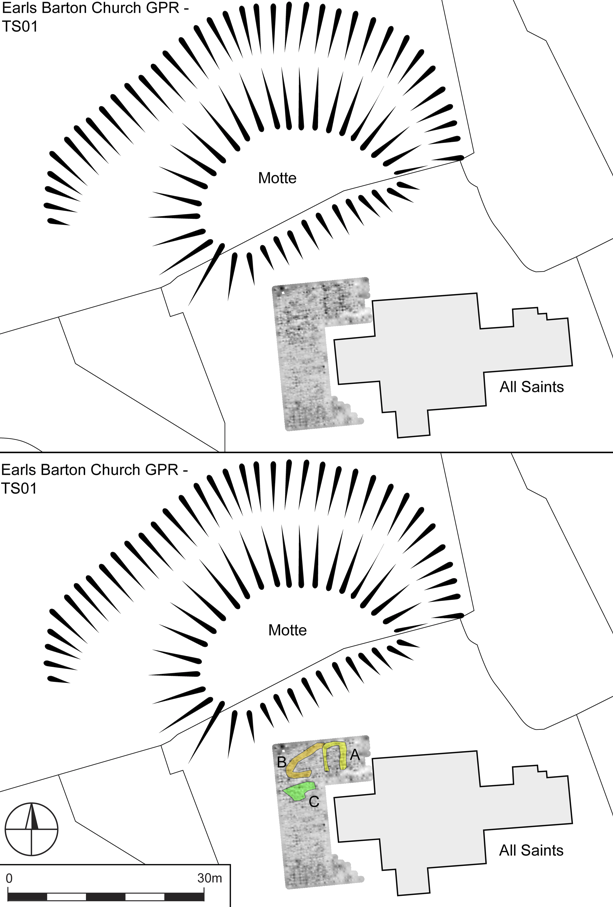
Figure 3: Timeslice of the ground penetrating radar survey at Earls Barton, Northamptonshire. Feature ‘A’ is a probable stone-built chamber. Credit: Scott Chaussée.

Our work continues at Earls Barton, with two generous grants from the National Environment Isotope Facility supporting investigation of ten rock-cut burials from the churchyard, excavated in the 1970s (Figure 4). The majority of the radiocarbon work has already taken place, and our tentative interpretation phases these graves to the eleventh and early twelfth centuries. Results of isotope analyses are expected soon, which will hopefully clarify the migration and dietary histories of what is apparently Earls Barton’s earliest medieval burial population. A final site in which a castle was investigated was at Saintbury, Gloucestershire, which was reported on in a previous blog-post. The project team are aiming to obtain radiocarbon dates for human remains recovered from animal burrowing at Saintbury’s motte and bailey, in order to ascertain whether the monument was erected on a prehistoric burial mound.
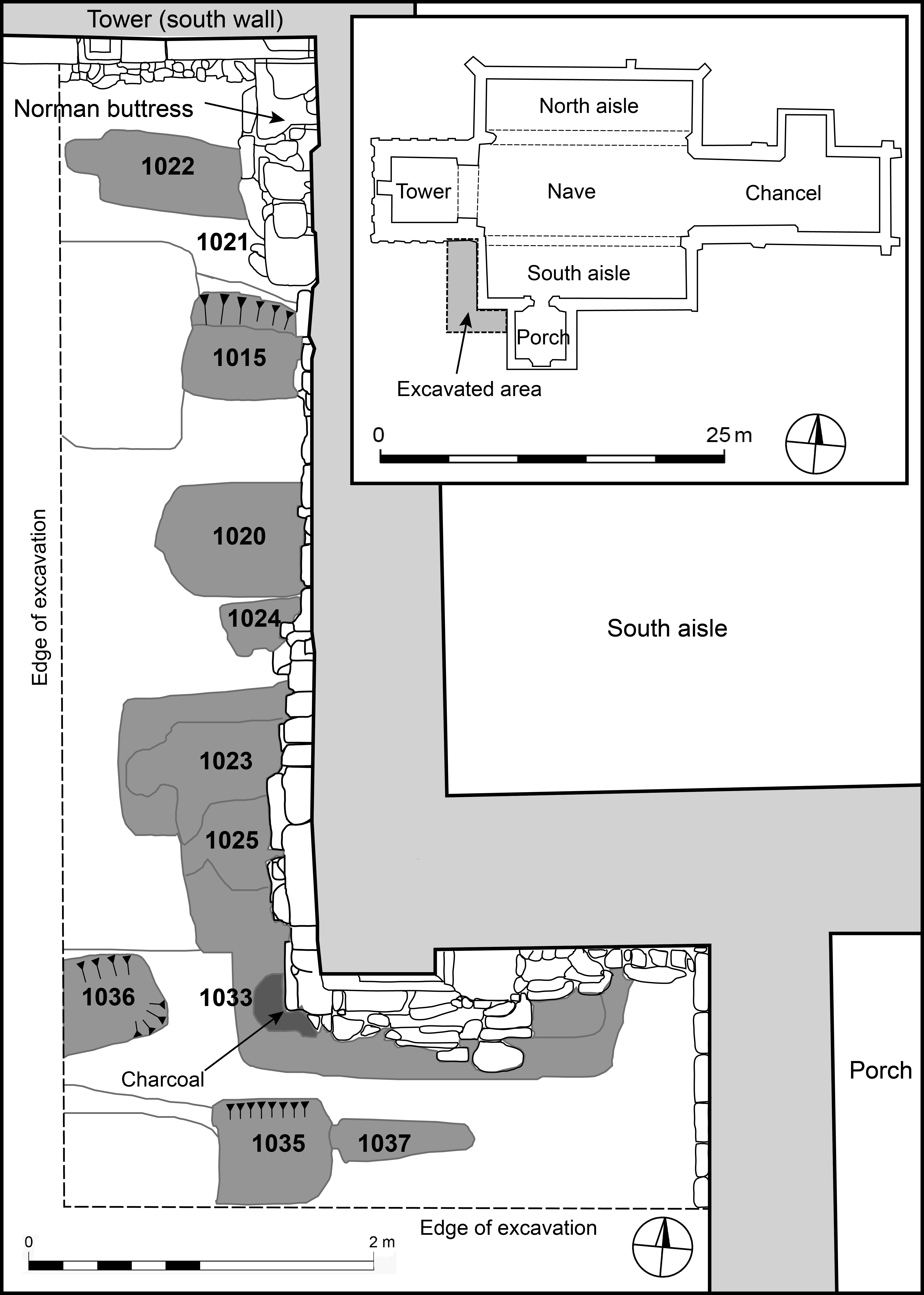
Figure 4: Location of the rock-cut graves at All Saints’ Church, Earls Barton, excavated in the 1970s. Credit: Redrawn by Oliver Creighton from the original by M Audouy.

Where Power Lies has generated several outputs, all of which are free to access. Our project database, which includes all geophysical survey and GIS data as well as individual site reports, is hosted by the Archaeology Data Service and we have published papers in The Antiquaries Journal, Early Medieval Europe and Medieval Settlement Research. Duncan Wright and Oliver Creighton are also writing a monograph, which will be published in 2028 with Bloomsbury. The project team would like to thank once again the Castle Studies Trust for supporting the project throughout, and for funding the pilot phase of work at Laughton en le Morthen, South Yorkshire. We hope that our work has in some way advanced understanding of lordly centres, and that the study of early castles as a phenomenon has been invigorated and enriched by our findings.

Subscribe to our quarterly newsletter

Further reading and resources

Gould D., Creighton O., Chaussée S., Shapland M., Wright D.W. 2025: ‘Where Power Lies: Lordly centres in the English Landscape c.800-1200, The Antiquaries Journal 104, 72-106. https://doi.org/10.1017/S0003581524000350 

Gould D, Creighton O, Chausée S, Shapland M, Wright D.W. 2024: ‘Where Power Lies: The Archaeology of Transforming Elite Centres in the Landscape of Medieval England c.AD 800-1200’, Medieval Settlement Research 39, 80-92. https://archaeopresspublishing.com/ojs/index.php/msr/article/view/2715

Wright, D.W., Creighton, O., Gould, D. 2024: ‘Data from ‘Where power Lies: The Archaeology of Transforming Elite Centres in the Landscape of Medieval England c. AD 800-1200’, 2022-2024 [data-set]. York: Archaeology Data Service [distributor] https://doi.org/10.5284/1122293

Wright, D.W. Creighton, O.H., Gould, D., Chaussée, S., Kinnaird, T., Shapland, M., Srivastava, A. and Turner, S. 2025: ‘The power of the past: materialising collective memory at early medieval lordly centres’, Early Medieval Europe, https://doi.org/10.1111/emed.70004

Wright D.W., Bromage S, Shapland S, Everson P, Stocker D. 2022: ‘Laughton en le Morthen, South Yorkshire: Evolution of a Medieval Magnate Core’, Landscapes 23(2), 140-165. https://doi.org/10.1080/14662035.2023.2219082
Where Power Lies: the archaeology of transforming elite centres in the landscape of medieval England c. AD 800-1200

Between 2018-2021 the Castle Studies Trust awarded three grants totalling less than £5,000 to Dr Duncan Wright of Newcastle University to develop a new methodology to understand the transition from Saxon to Norman rule at elite sites using Laughton-en-le-Morthen in South Yorkshire as an case study. This was then used to successfully win an early career research grant from the Arts and Humanities Research Council in 2022. Here is an update from Duncan about the project.

For the past 14 months a team from Newcastle University and the University of Exeter has been carrying out the first project dedicated to understanding the archaeological evidence for the origins of medieval power centres in the landscape of rural England. Where Power Lies has explored data at a number of scales, with a particular focus on places where elites developed a residential and ecclesiastical component in a single enclave. Importantly, the chronological remit of the programme straddles the Norman Conquest, allowing us to see with greater clarity the way in which castles were integrated and, in some cases, disrupted existing patterns of aristocratic activity and investment.

Subscribe to our quarterly newsletter

Among the first work packages initiated by the project team was a national GIS (Geographic Information Systems) of all of the ‘big data’ evidence for lordly centres, including the Corpus of Romanesque Sculpture in Britain and Ireland, and locations of the earliest castles. From this nationwide picture, the project targeted two ‘macro’ study regions, one focussed on the South/Southwest, and a second in North-East England. The Historic Environment Records for each county in the macro regions was then mined for useful data, helping us to identify a large number of new sites and to some extent map regional trends and differences in medieval elite activity. While such datasets must always be treated with care, this work immediately showed the frequency with which lordly complexes incorporate or are adjacent to watermills, strongly suggesting that mills and milling were central not just in the siting of aristocratic cells but also in the economic and symbolic foundations of elite power from the outset.  

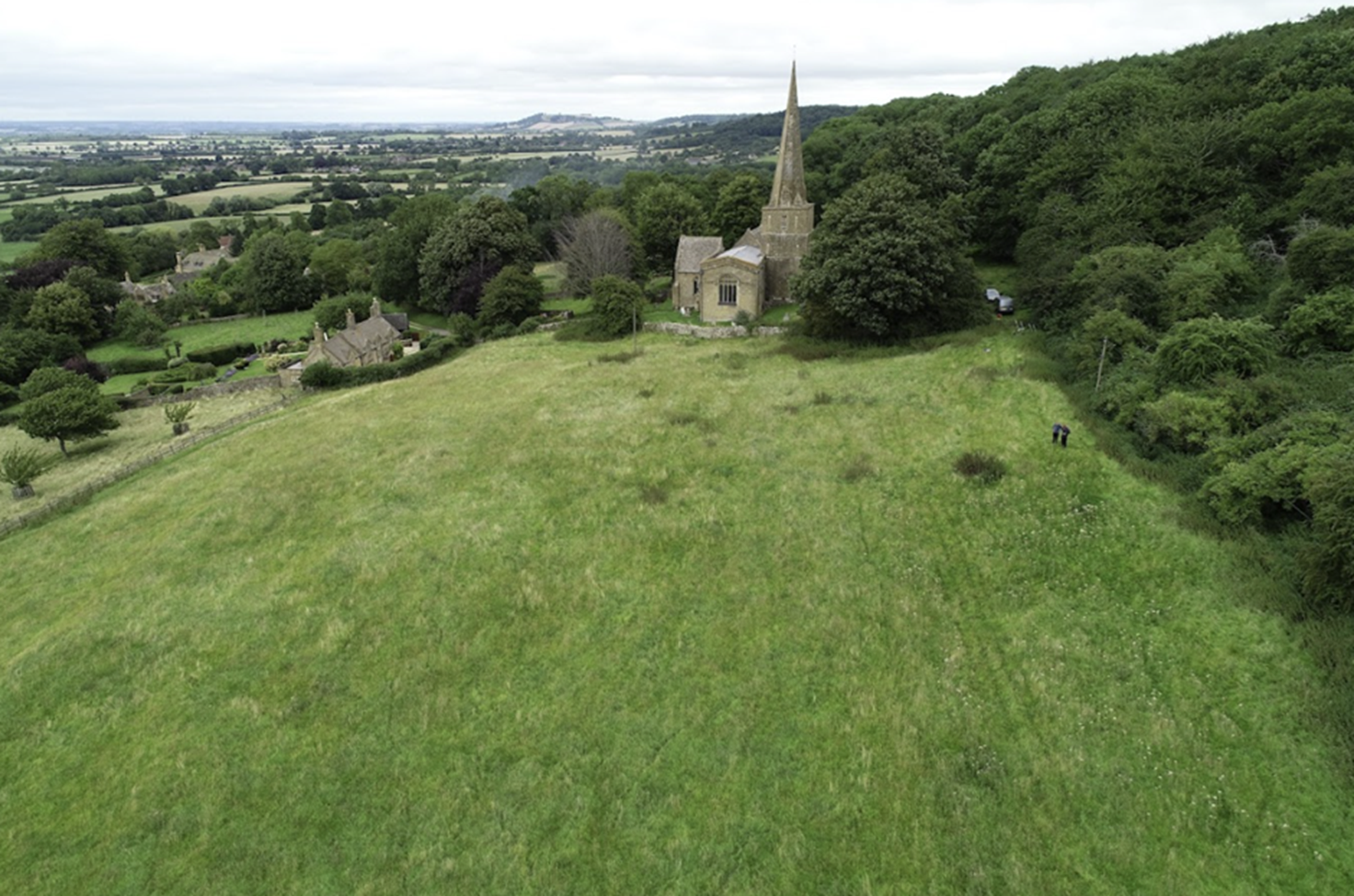
Figure 1: Aerial view of St Nicholas, Saintbury, and the earthworks to the west of the church. The complex has formed a key case study for the project copyright Where Power Lies

Where Power Lies has also conducted a programme of more comprehensive study focused on individual lordly centres. As a result, the project has been able to reconstruct something of the earliest phases of these places, identifying both commonalities and distinctions in what is usually seen as a homogenous category of archaeological site. One of the project’s main case studies has been Saintbury, Gloucestershire, where a series of prominent earthworks lie immediately south-west of the Romanesque church of St Nicholas (Figure 1). Despite the correlation of early church and impressive earthworks, almost no previous study had been undertaken at Saintbury until the Where Power Lies team conducted fieldwork in three phases in 2023; geophysical and standing building survey were conducted in July, excavation for optically stimulated luminesce (OSL) profiling and dating samples in September, and topographic survey and 3D modelling via drone in November.

Figure 2: Topographic model derived from drone data of St Nicholas, Saintbury, and the earthworks west of the church. The inner and outer enclosures of the complex are clearly visible, and probably represent periods of Roman and medieval occupation on the site.

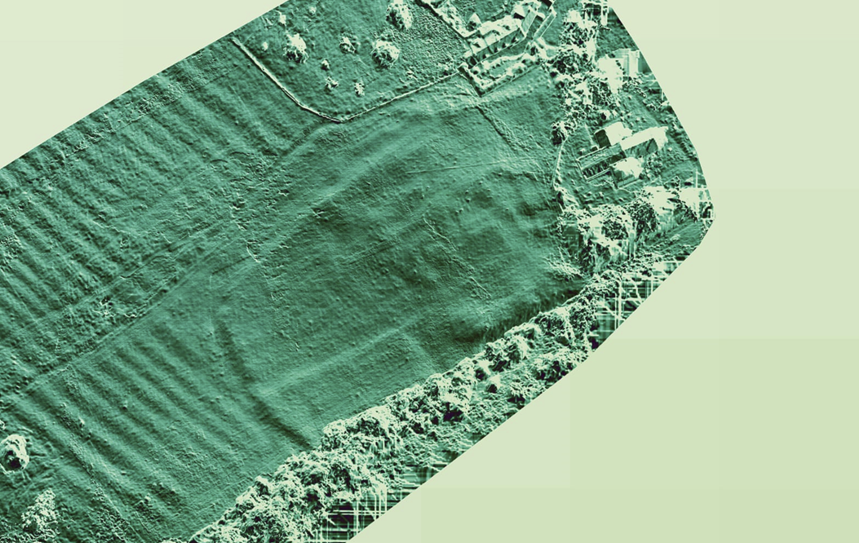
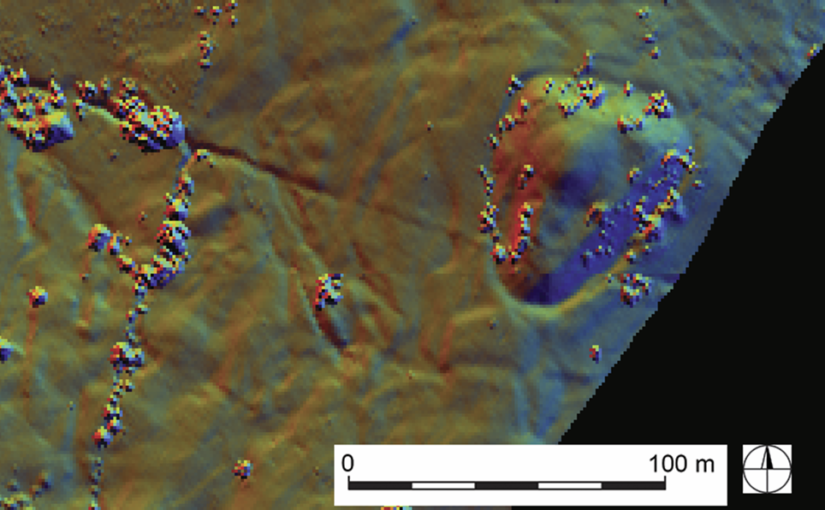
While we’re still awaiting the OSL dates that will allow us to phase the earthworks, our research has already made some key breakthroughs. It now appears that Saintbury’s lordly centre was developed on a pre-existing Roman site, perhaps a villa or even a military installation of some kind (Figure 2). In the early medieval period the earlier Roman complex was transformed, perhaps into an ecclesiastical community; several pre-Conquest charters relating to neighbouring estates mention ‘Cada’s Minster’ (cadan mynster) and, while the minster has previously been located at the nearby hillfort of Willsersey Camp, the earthworks adjacent to St Nicholas could well instead represent this early church. St Nicholas itself was constructed c.1100, at a time when the aristocracy were again investing heavily in Saintbury’s landscape. The appropriation of minsters for elites for their private use was increasingly common from the mid-ninth century, and at Saintbury we may be seeing an archaeological example of this process of secularisation. Not only is the residence adjacent to the church at Saintbury likely to have been enhanced, a previously little-recognised motte and bailey castle was also constructed around the same time 1km to the south-west (Figure 3). Whether the result of a divided manor, or an additional military installation to an existing lordly centre, the castle was certainly thoughtfully located; not only near to where the Roman Ryknild Street drops down the Cotswold scarp, but in close proximity to an early medieval assembly place called the Kiftsgate Stone (Figure 4). Our Saintbury case study is just one of several that the project has undertaken that not only neatly encapsulates the complexities of evolving aristocratic activity in the period, but also shows the value of concerted study of specific sites and landscapes.

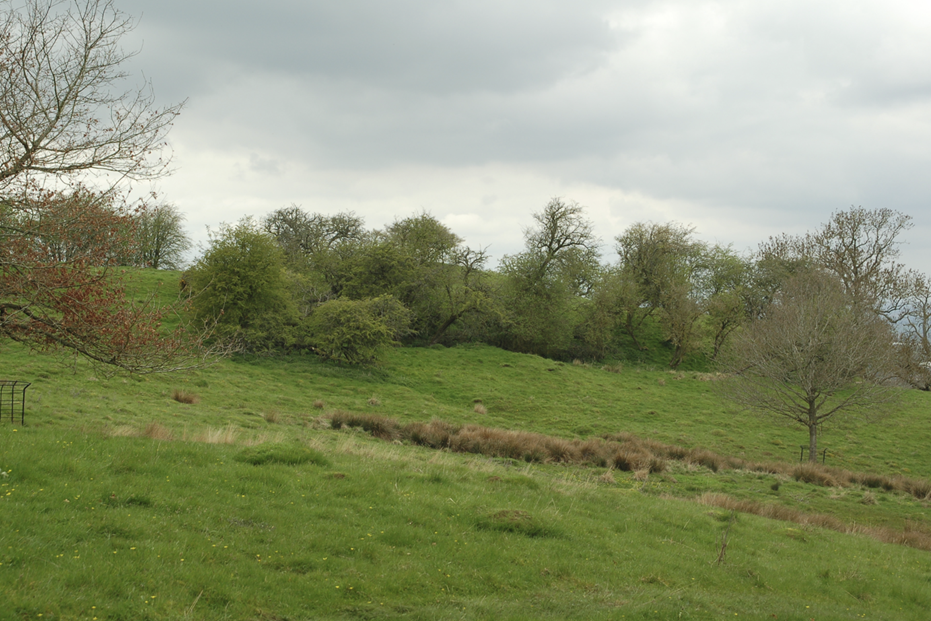
Figure 3: The tree-covered earthwork of the motte and bailey castle at Weston Park, Saintbury. The reuse of the monument in the post-medieval period as a prospect mound may partly explain why the castle has been overlooked by previous scholarship. Copyright Where Power Lies
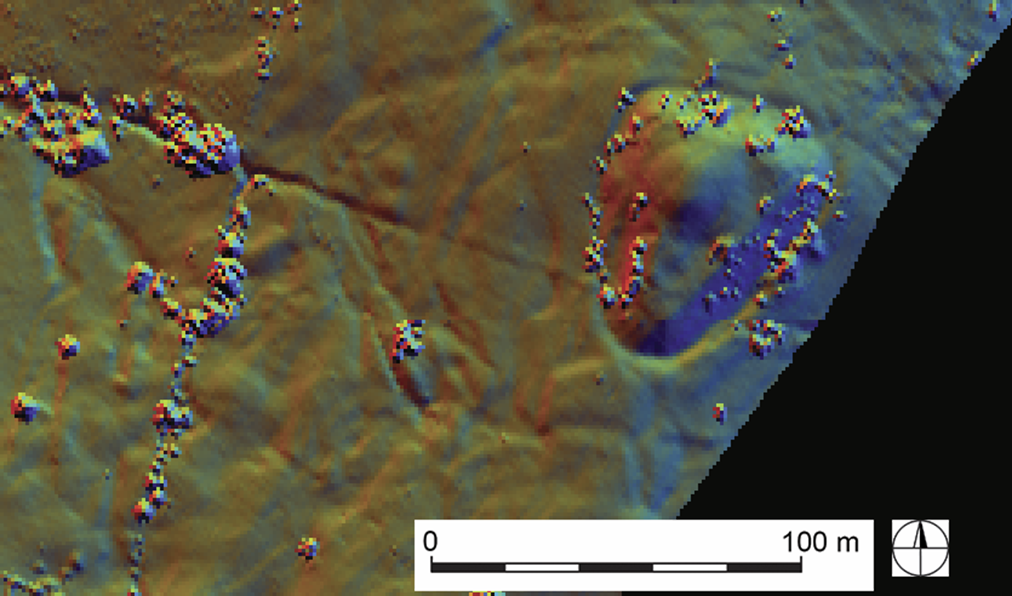
Figure 4: LiDAR data of the motte and bailey at Weston Park, Saintbury. The monument has been sculpted to form a prospect mound for the nearby house, but was clearly originally a castle of the eleventh or twelfth century. 

Moving into its final few months, Where Power Lies is now integrating the findings from these different scales of work into a number of different outputs. The success of the project is partly down to the support of the Castle Studies Trust who generously funded three stages of a pilot scheme at Laughton en le Morthen, South Yorkshire, the results of which were recently published in Landscapes. The monies provided by the Castle Studies Trust were critical in allowing us to demonstrate the methods and concept behind Where Power Lies, resulting in an AHRC (Arts and Humanities Research Council) research grant for our 18-month long project. The project team hope that we can in some way repay this generosity, by placing early castles into a more coherent, longer-term picture of aristocratic development in the landscape of England.

Subscribe to our quarterly newsletter