Alice Connelly of the National Trust for Scotland takes a look at The Re-imagining of Fyvie Castle project.
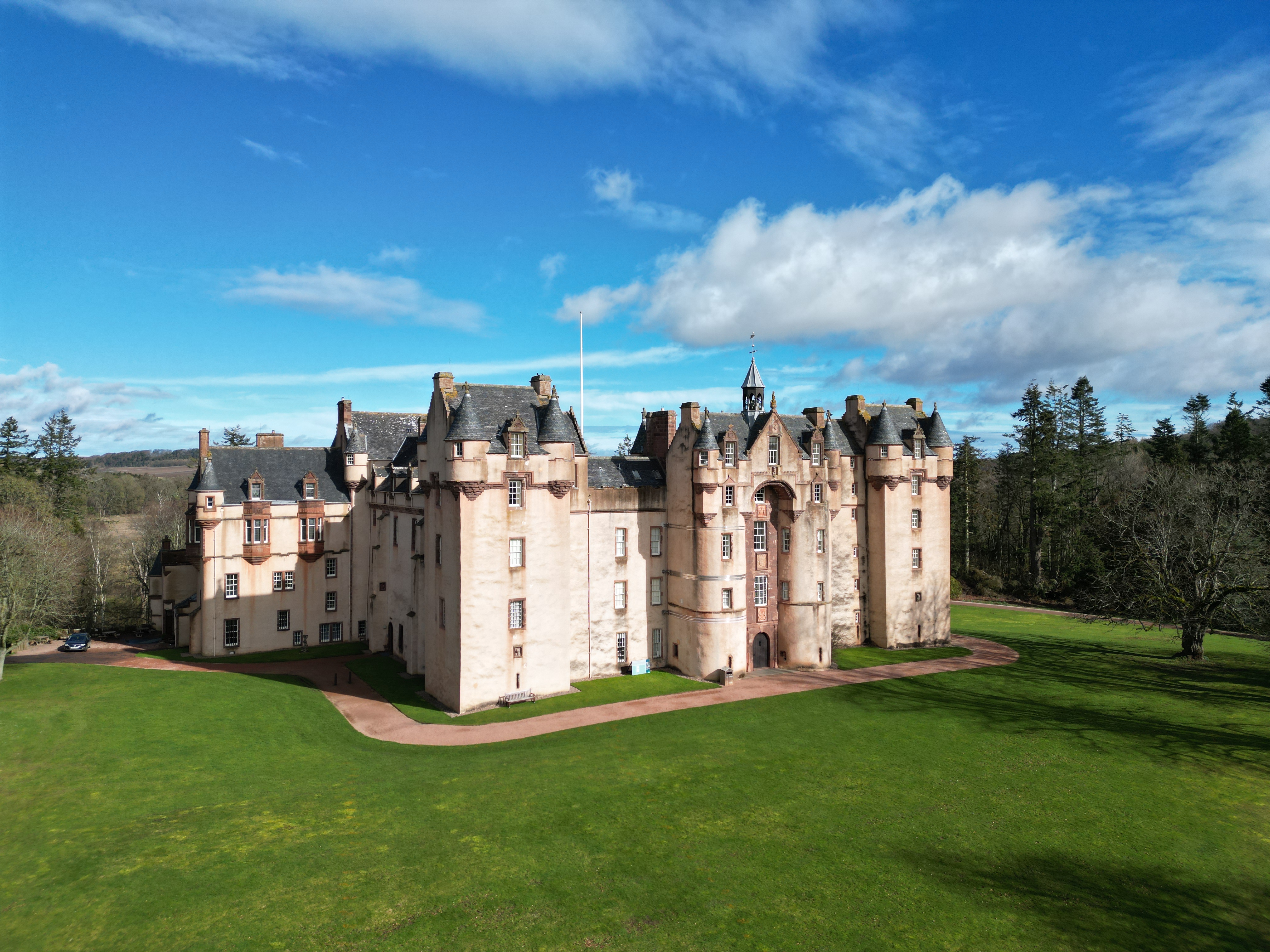
Rising above the rolling landscape of Aberdeenshire, Fyvie Castle is the quintessential Scottish fairytale castle. Its pink harled walls, ornate towers and landscaped grounds draw thousands of visitors from the nearby A96 each year, inviting them to explore centuries of Scottish history hidden behind its striking exterior.
Subscribe to our quarterly newsletter
Inside, visitors are guided through the castle’s richly furnished rooms by a dedicated team of volunteers, hearing stories of royal visits, political intrigue, battles, folklore and ghostly legends. Yet the magnificent castle we know today emerged from much humbler beginnings.
Fyvie began as a timber stronghold built on a natural defensive platform, protected by the River Ythan and surrounding bogland. Over time, the site evolved dramatically: timber was replaced with stone and successive generations expanded and remodelled the building. What began as a laird’s fortified residence gradually transformed into a royal stronghold and, eventually, the lavish country estate seen today.
Fyvie also occupies an important place within the cultural traditions of north-east Scotland. The castle and village are woven into Scots song and folklore through tunes such as The Bonnie Lass o’ Fyvie and Mill o’ Tifty’s Annie. The latter tells the tragic story of Bonnie Annie and Andrew Lammie, the trumpeter to Lord Fyvie. The grave of Annie Smith, the woman thought to be Bonnie Annie, can still be visited in Fyvie cemetery today, while a carved stone trumpeter stands among the twenty-four decorative figures that crown the castle roofline, a reminder of how deeply history, music and storytelling are embedded within the site.
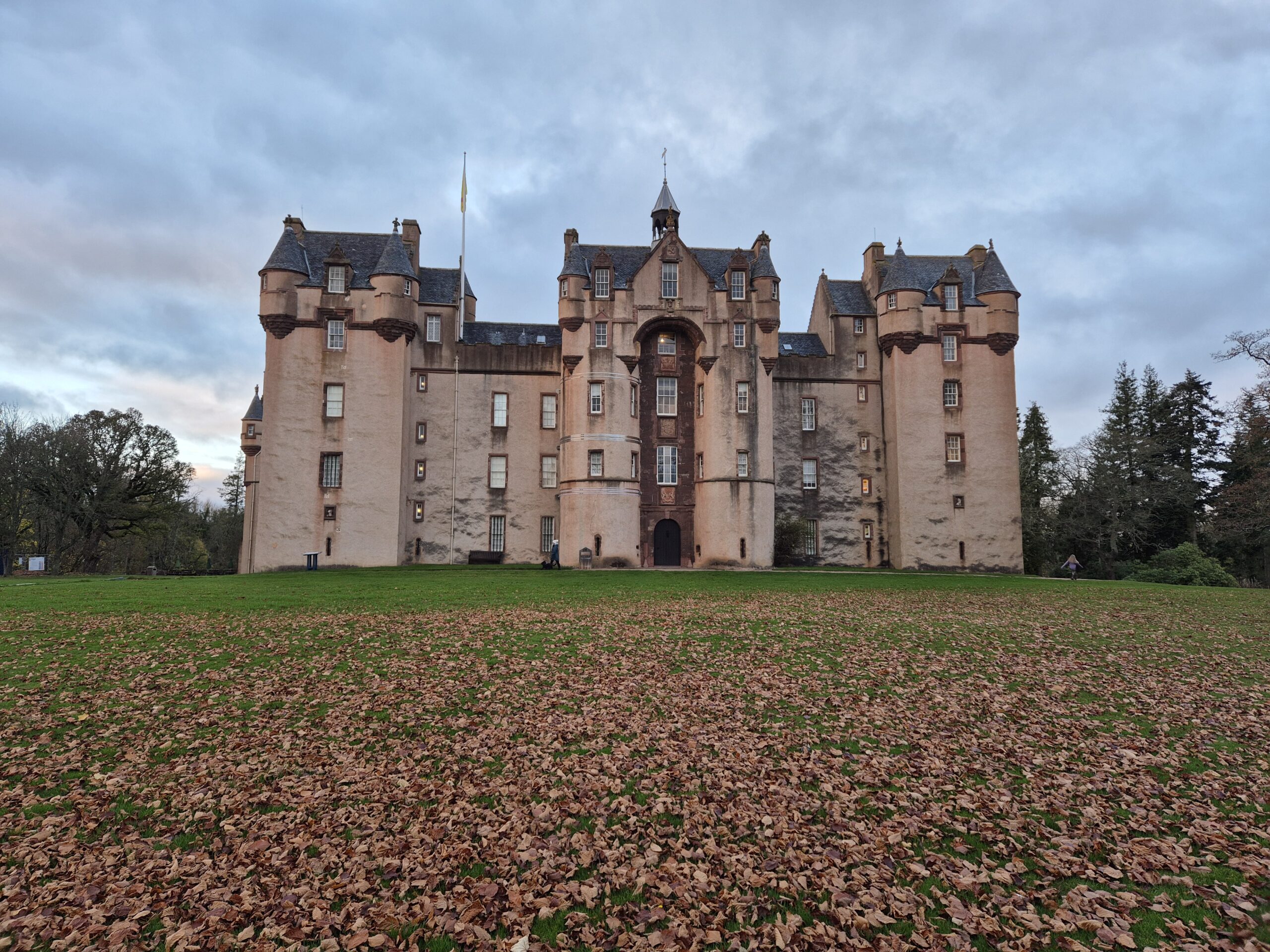
Recently, Fyvie featured in the National Lottery Heritage Fund supported television programme Great British Castle Rescue, presented by Rick Edwards. The programme explored both the architectural significance of the castle and the challenges involved in conserving such a complex historic building for future generations.
Subscribe to our quarterly newsletter
At the heart of this work is the Fyvie Reimagined project. The project aims not only to conserve and repair the fabric of the castle, but also to deepen public understanding of how Fyvie developed over time. Fyvie remains a focal point for the local community and an Aberdeenshire landmark; cherished by regular visitors who walk the grounds throughout the seasons, as well as those travelling from much further afield to experience one of Scotland’s great historic houses.
As part of this wider effort, the Castles Studies Trust has funded a new series of interpretation drawings designed to help visitors visualise key moments in the castle’s development. While the standing building tells a remarkable story, understanding how Fyvie changed across seven centuries can be difficult when viewing the castle only in its present form. The illustrations aim to bridge that gap, allowing visitors to imagine Fyvie at different stages in its history and better understand how architecture, landscape and daily life evolved together over time.
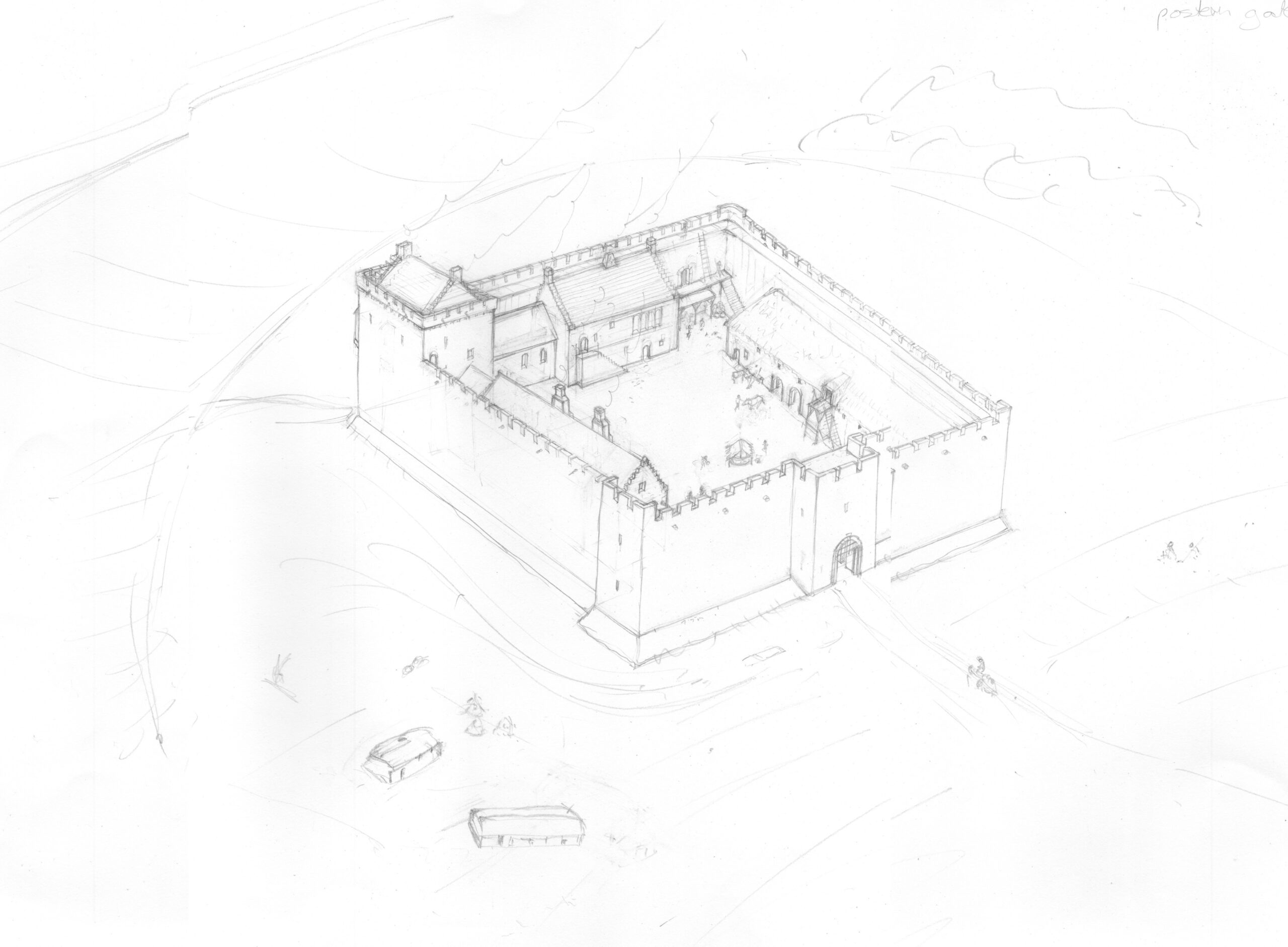
Several key periods in the castle’s development were selected for reconstruction, charting Fyvie’s transformation.
- The early palisaded, motte and bailey type structure, 1211
- Enclosure castle in stone, 1398
- Full courtyard palace, 1596
- North and East wings, with formal gardens in ruins and general dilapidation of main blocks, 1734
- South and West Ranges restored, altered roofline with new tower and formal parkland setting, 1784
- Castle as we know it today, with Leith Tower as fresh addition, connection of Butlers apartment by new kitchens, 1980
Each drawing will capture not simply the appearance of the castle, but also something of the activity and atmosphere surrounding it.
Importance was also placed on depicting construction work and scaffolding within one of the earlier scenes. Too often, castles are presented as finished monuments rather than places shaped by generations of labour, craftsmanship and continual rebuilding. Showing the physical process of construction helps highlight the immense skill and effort required to create buildings like Fyvie, while also drawing attention to the ongoing conservation work needed to preserve them today.
The illustrations therefore serve several purposes at once. They help visitors engage more deeply with the castle’s long history, provide an accessible way of communicating archaeological and architectural research, and reinforce the importance of protecting Scotland’s built heritage for future generations. By visualising change over time, the drawings encourage people to see Fyvie not as a static monument, but as a living site that has continually evolved across centuries of Scottish history.