The role of siege warfare in halting the crusader advance: The challenge of the big cities

In his latest book, Crusader Storm, Dr Nic Morton takes a new look at the Crusades, as not as a single clash of faiths, but as a dynamic era of war, commerce, innovation and exchange. In this piece he looks at why the crusaders struggled to expand their territory after their initial success.

Viewed from a purely military perspective, the First Crusade was a wildly over-ambitious undertaking.  When Pope Urban II launched the campaign in 1095, he set participants the challenge of marching for hundreds of miles through friendly, then hostile territory, during which they would need to confront and defeat a whole series of enemy armies before taking and holding the city of Jerusalem.
Crusader Storm book cover

Subscribe to our quarterly newsletter

The chances of surviving the venture were extremely low and the early waves of crusaders all met with defeat very quickly, but the final wave achieved its objective and – as is well known – brutally conquered Jerusalem in 1099.  In later years, the crusaders (or “Franks” as they came to be known) expanded their territories, working outwards from the cities they acquired or conquered during the crusade: Edessa, Antioch and Jerusalem.  Bolstered by tens of thousands of pilgrims, mercenaries and settlers from Western Christendom, these territories, known collectively as the Crusader States, continued to expand for two decades, pushing their frontiers outwards seizing many towns and castles. 

So what stopped them?  Why didn’t they continue to expand until the entire region lay under their dominion? This blog post will explore this question by focusing on one very serious obstacle to their continued expansion – the major cities of Damascus, Aleppo and Cairo.
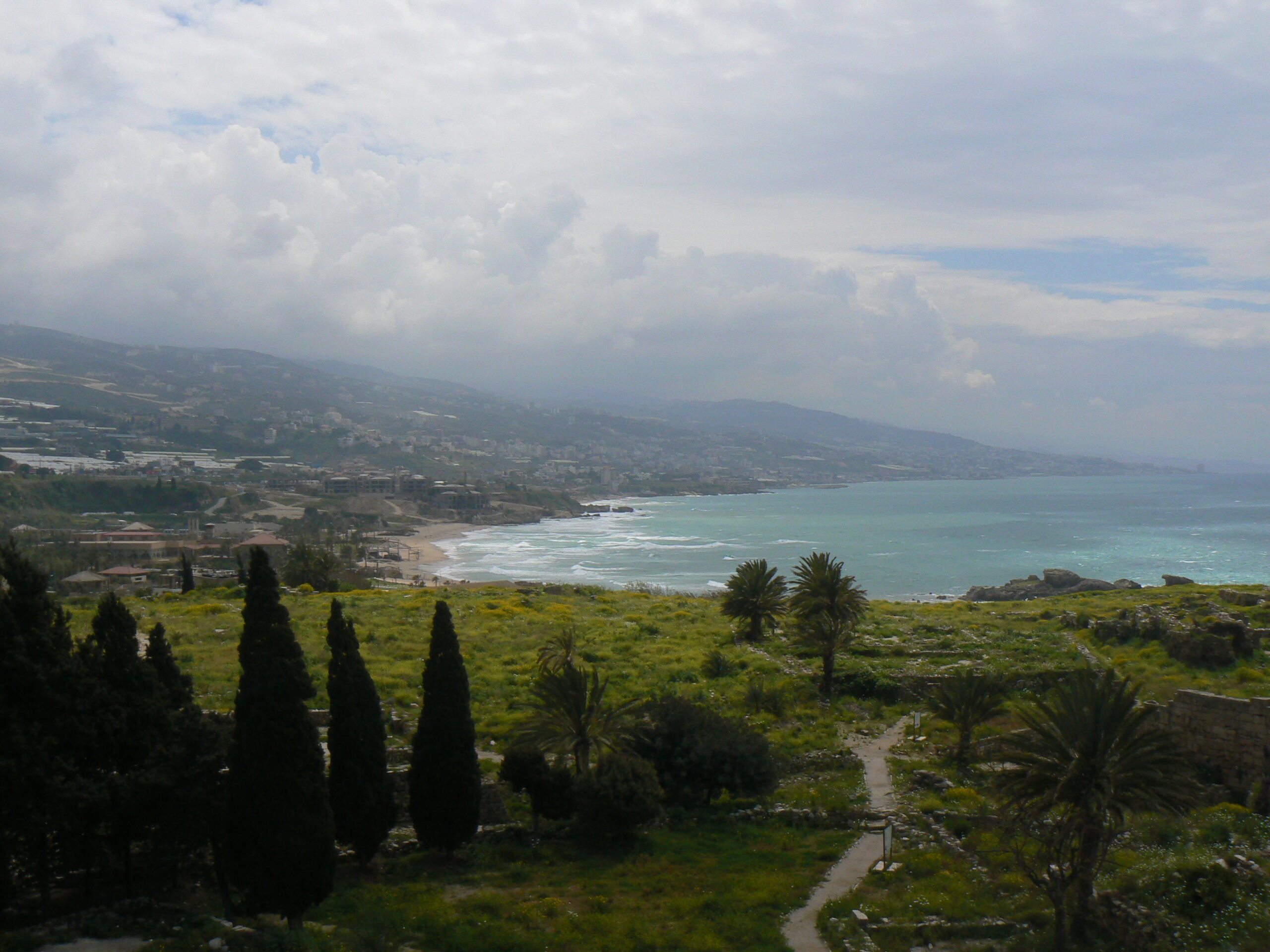
The Lebanese coast, copyright Dr Nic Morton

Spool forward to the early 1120s and the Crusader States had grown considerably.  In the south, the kingdom of Jerusalem (the largest Crusader State) controlled much of the Levantine coastline from Beirut in the north, down to Jaffa in the south, extending inland beyond the Jordan river.  In the north, the principality of Antioch, county of Tripoli, and county of Edessa were also major powers, despite a serious defeat suffered by Antioch in 1119.  Most of the coastline, complete with its major commercial ports, lay under their control and increasingly they turned their attention inland. 

Subscribe to our quarterly newsletter

This is where they faced the biggest obstacles to their continued expansion.  Frankish armies couldn’t seize Syria in its entirety without tackling the fortress cities of Damascus or Aleppo, and they couldn’t expand into Egypt without conquering Cairo.  Over the next five decades the Franks made serious attempts to seize each of these cities: Aleppo in 1124-5, Damascus in 1129 and 1148, and Cairo in 1168, but they failed each time.  What I’m describing here is their high-water mark, the culmination point – the line beyond which they proved unable to expand. 

So why were they so consistently unsuccessful?  Why couldn’t they capture these cities?  When historians discuss the conquest of major castles or cities, they typically talk about these strongholds’ fortifications and the siege weapons used to tackle them.  But with big cities, there is another point to consider – the urban populations themselves.  These were all very large cities, home to tens of thousands of people – in Cairo’s case possibly hundreds of thousands – far bigger than anything they had tackled so far.  There was every danger that a besieging army would fight its way across the ramparts only to be cut to pieces by the population as the attacking Franks became split up within a maze of narrow streets and alleyways.  This was a serious concern.  Notably when the Turkish ruler Zangi besieged Damascus in 1139, insiders offered to open one of the gates for him, but he still refused to order the attack; seemingly he knew very well that the population would resist his attempts to take control and they – not the fortifications – were the major obstacle.
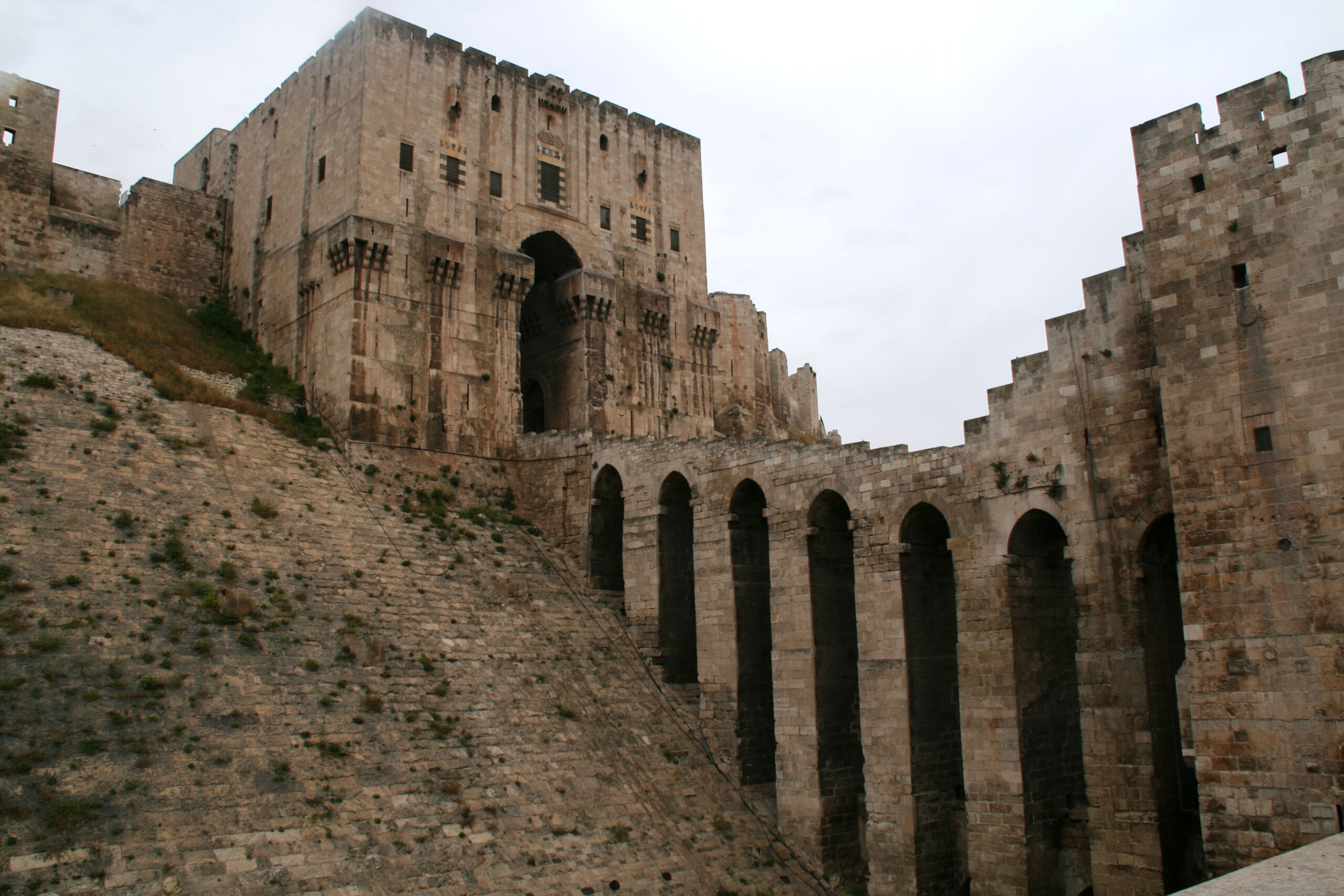
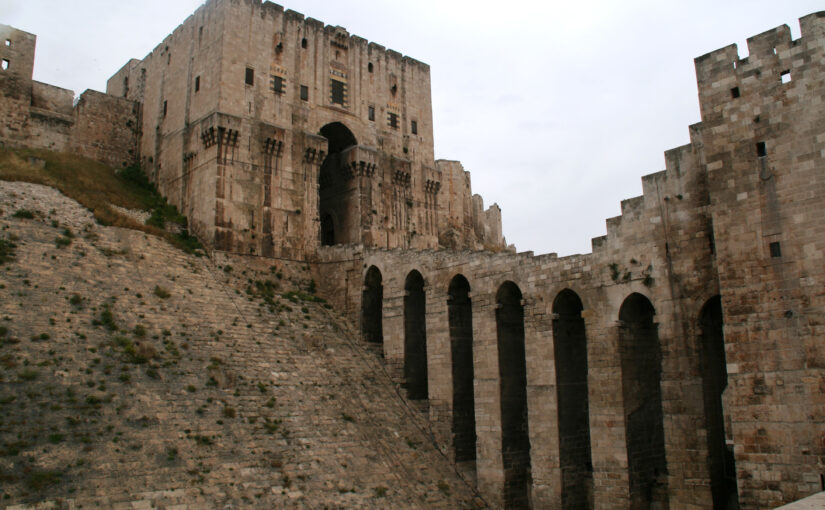
Citadel of Aleppo, rebuilt in the early thirteenth century, copyright Dr Nic Morton

In this way, the conquest of these cities – and therefore the continued expansion of the Crusader States – hinged on the Franks’ ability to persuade urban populations either to endorse, or at least to tolerate, the idea of Frankish rule.  For cities of this size, simple military overthrow wasn’t sufficient to guarantee their control in the long run.  Some Frankish commanders recognised this reality and, when King Baldwin II of Jerusalem besieged Aleppo in 1124-5 he worked with an Arab ruler named Dubays who he planned to install as a client ruler in the event of the city’s fall.  Unfortunately for them, Aleppo’s population didn’t favour the idea of Dubays as their new client ruler and they resisted their besiegers vigorously (and successfully).  Likewise, in 1129 Baldwin II tried to conquer Damascus with assistance from the city’s Nizari community (commonly known today as the “Assassins”), but the city’s governor massacred the Nizaris before the Frankish army could arrive. The Franks were less effective at winning the population’s support in their later endeavours but in every case, the broad consensus among the general population remained a vital consideration. 

In this way, a decisive factor for the Crusader States in the continued efforts to expand – and a central reason for their failure in these endeavours – were their unsuccessful efforts to gain control over these major cities. Their failure, by extension, enabled resistance to gather in these cities and, in later decades, these regional capitals acted as marshalling points for the Crusader States’ overthrow.
Subscribe to our quarterly newsletter

Reimagining Fyvie Castle

Alice Connelly of the National Trust for Scotland takes a look at The Re-imagining of Fyvie Castle project.

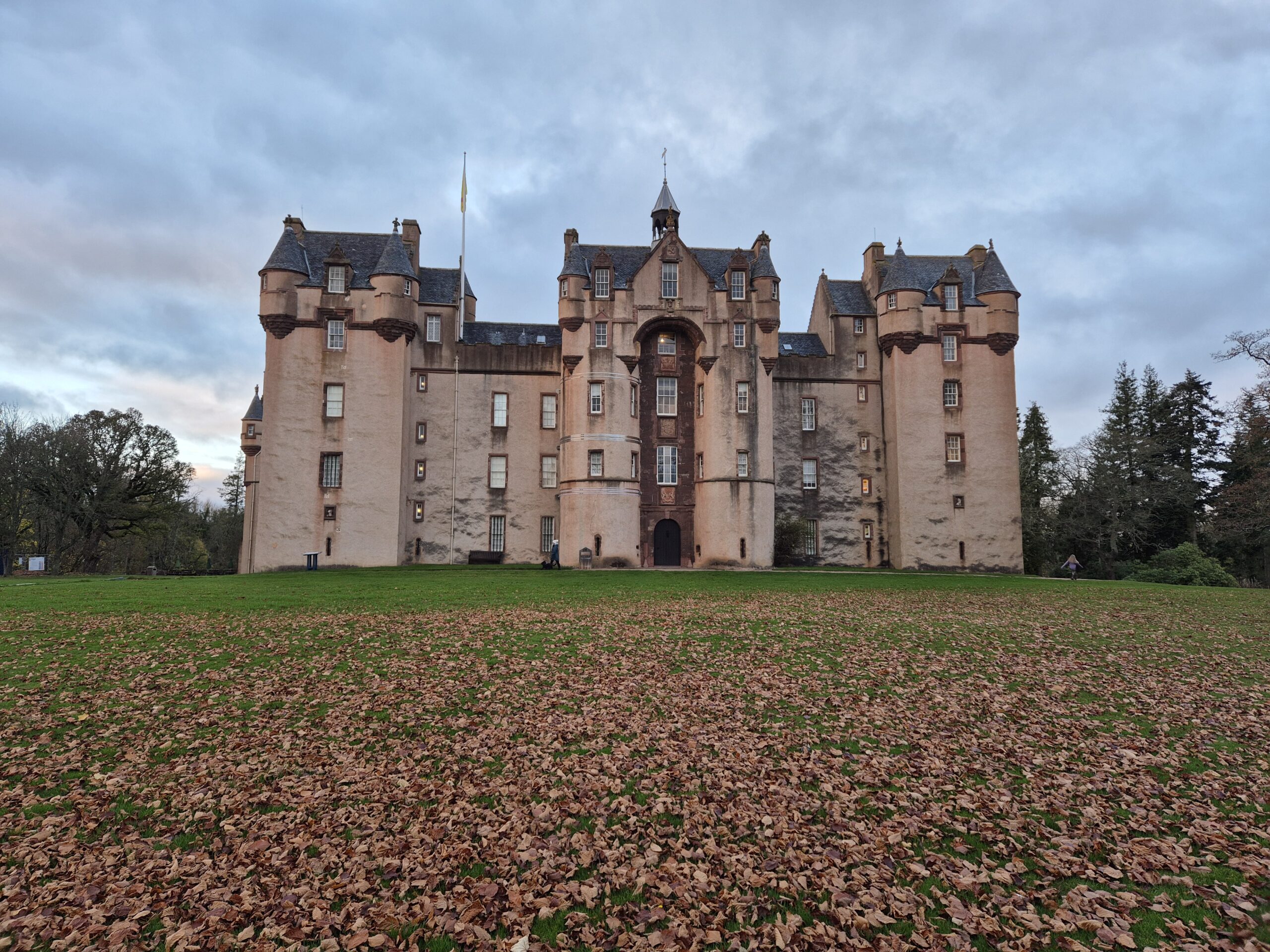
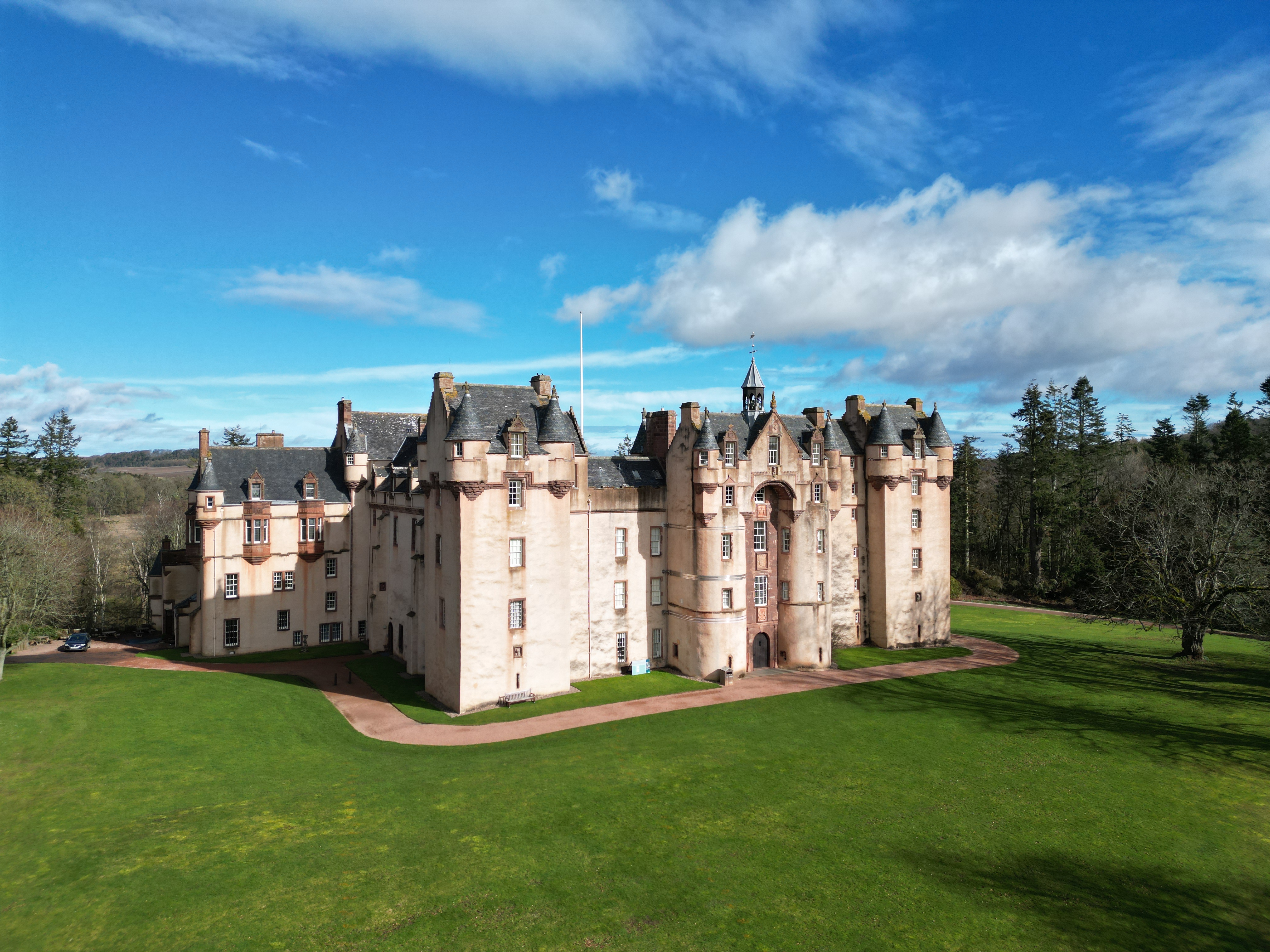
Rising above the rolling landscape of Aberdeenshire, Fyvie Castle is the quintessential Scottish fairytale castle. Its pink harled walls, ornate towers and landscaped grounds draw thousands of visitors from the nearby A96 each year, inviting them to explore centuries of Scottish history hidden behind its striking exterior.

Subscribe to our quarterly newsletter

Inside, visitors are guided through the castle’s richly furnished rooms by a dedicated team of volunteers, hearing stories of royal visits, political intrigue, battles, folklore and ghostly legends. Yet the magnificent castle we know today emerged from much humbler beginnings.

Fyvie Castle today, copyright National Trust for Scotland

Fyvie began as a timber stronghold built on a natural defensive platform, protected by the River Ythan and surrounding bogland. Over time, the site evolved dramatically: timber was replaced with stone and successive generations expanded and remodelled the building. What began as a laird’s fortified residence gradually transformed into a royal stronghold and, eventually, the lavish country estate seen today.

Fyvie also occupies an important place within the cultural traditions of north-east Scotland. The castle and village are woven into Scots song and folklore through tunes such as The Bonnie Lass o’ Fyvie and Mill o’ Tifty’s Annie. The latter tells the tragic story of Bonnie Annie and Andrew Lammie, the trumpeter to Lord Fyvie. The grave of Annie Smith, the woman thought to be Bonnie Annie, can still be visited in Fyvie cemetery today, while a carved stone trumpeter stands among the twenty-four decorative figures that crown the castle roofline, a reminder of how deeply history, music and storytelling are embedded within the site.

Fyvie Castle today, copyright National Trust for Scotland

Recently, Fyvie featured in the National Lottery Heritage Fund supported television programme Great British Castle Rescue, presented by Rick Edwards. The programme explored both the architectural significance of the castle and the challenges involved in conserving such a complex historic building for future generations.

Subscribe to our quarterly newsletter

At the heart of this work is the Fyvie Reimagined project. The project aims not only to conserve and repair the fabric of the castle, but also to deepen public understanding of how Fyvie developed over time. Fyvie remains a focal point for the local community and an Aberdeenshire landmark; cherished by regular visitors who walk the grounds throughout the seasons, as well as those travelling from much further afield to experience one of Scotland’s great historic houses.

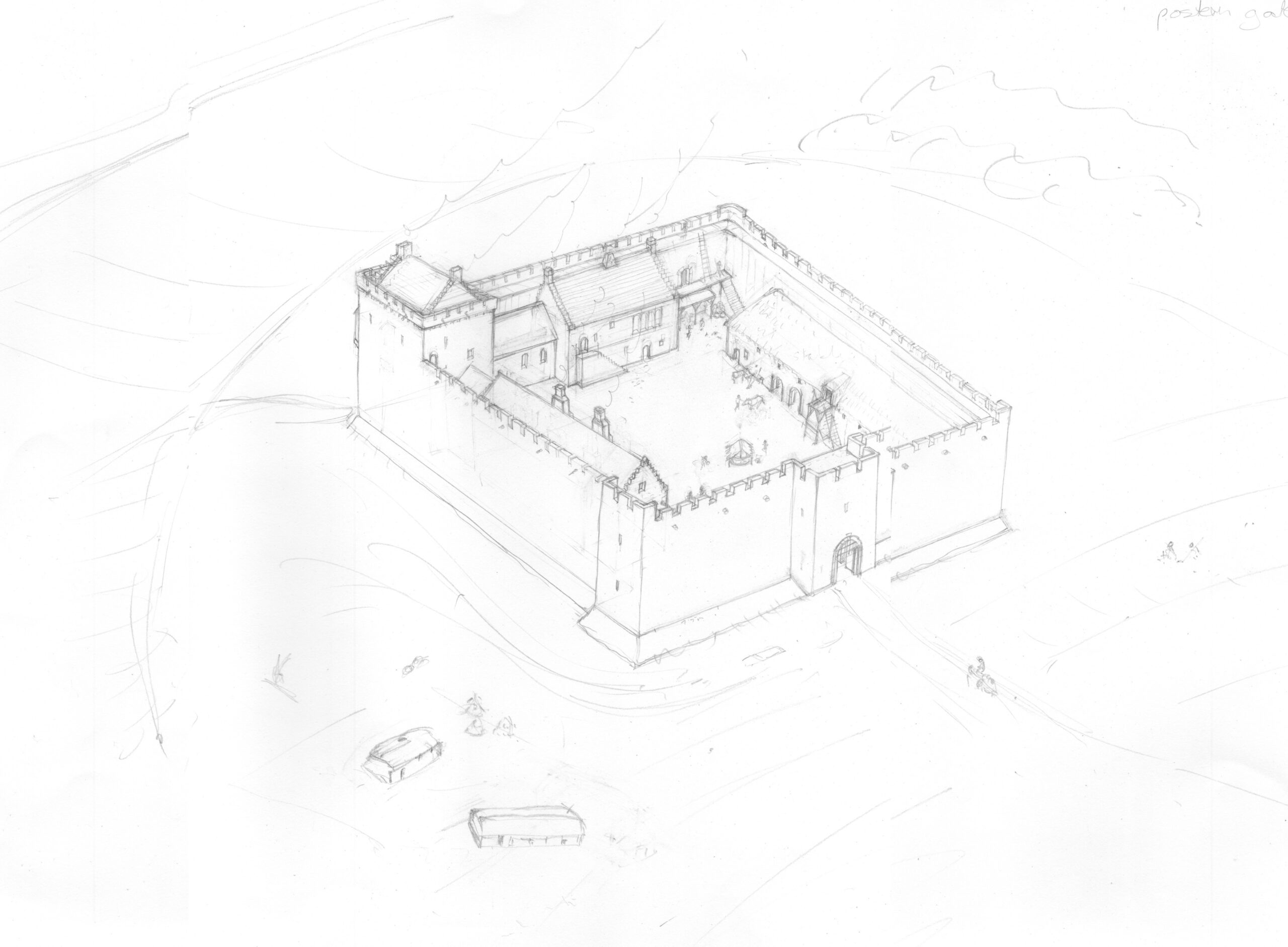
As part of this wider effort, the Castles Studies Trust has funded a new series of interpretation drawings designed to help visitors visualise key moments in the castle’s development. While the standing building tells a remarkable story, understanding how Fyvie changed across seven centuries can be difficult when viewing the castle only in its present form. The illustrations aim to bridge that gap, allowing visitors to imagine Fyvie at different stages in its history and better understand how architecture, landscape and daily life evolved together over time.

Initial image of Fyvie as an enclosure castle in 1398 by Jan Dunbar, copyright Jan Dunbar

Several key periods in the castle’s development were selected for reconstruction, charting Fyvie’s transformation.

  1. The early palisaded, motte and bailey type structure, 1211
  2. Enclosure castle in stone, 1398
  3. Full courtyard palace, 1596
  4. North and East wings, with formal gardens in ruins and general dilapidation of main blocks, 1734
  5. South and West Ranges restored, altered roofline with new tower and formal parkland setting, 1784
  6. Castle as we know it today, with Leith Tower as fresh addition, connection of Butlers apartment by new kitchens, 1980

Each drawing will capture not simply the appearance of the castle, but also something of the activity and atmosphere surrounding it.

Importance was also placed on depicting construction work and scaffolding within one of the earlier scenes. Too often, castles are presented as finished monuments rather than places shaped by generations of labour, craftsmanship and continual rebuilding. Showing the physical process of construction helps highlight the immense skill and effort required to create buildings like Fyvie, while also drawing attention to the ongoing conservation work needed to preserve them today.

The illustrations therefore serve several purposes at once. They help visitors engage more deeply with the castle’s long history, provide an accessible way of communicating archaeological and architectural research, and reinforce the importance of protecting Scotland’s built heritage for future generations. By visualising change over time, the drawings encourage people to see Fyvie not as a static monument, but as a living site that has continually evolved across centuries of Scottish history.

Subscribe to our quarterly newsletter

Tree-ring dating of previously unidentified Elizabethan roofs at Sudeley Castle

Dr Andy Moir of Gloucestershire Historic Buildings Group takes a look at the results from their attempts to date the outer ward of Sudeley Castle

Tree-ring dating at Sudeley Castle has established that the outer courtyard roofs were constructed over three years between 1569 and 1572. This result overturns the previous history which indicated that the castle roofs were destroyed during the Civil war and identifies that the roofs were likely built by Edmund Brydges (the 2nd Lord Chandos).

Subscribe to our quarterly newsletter

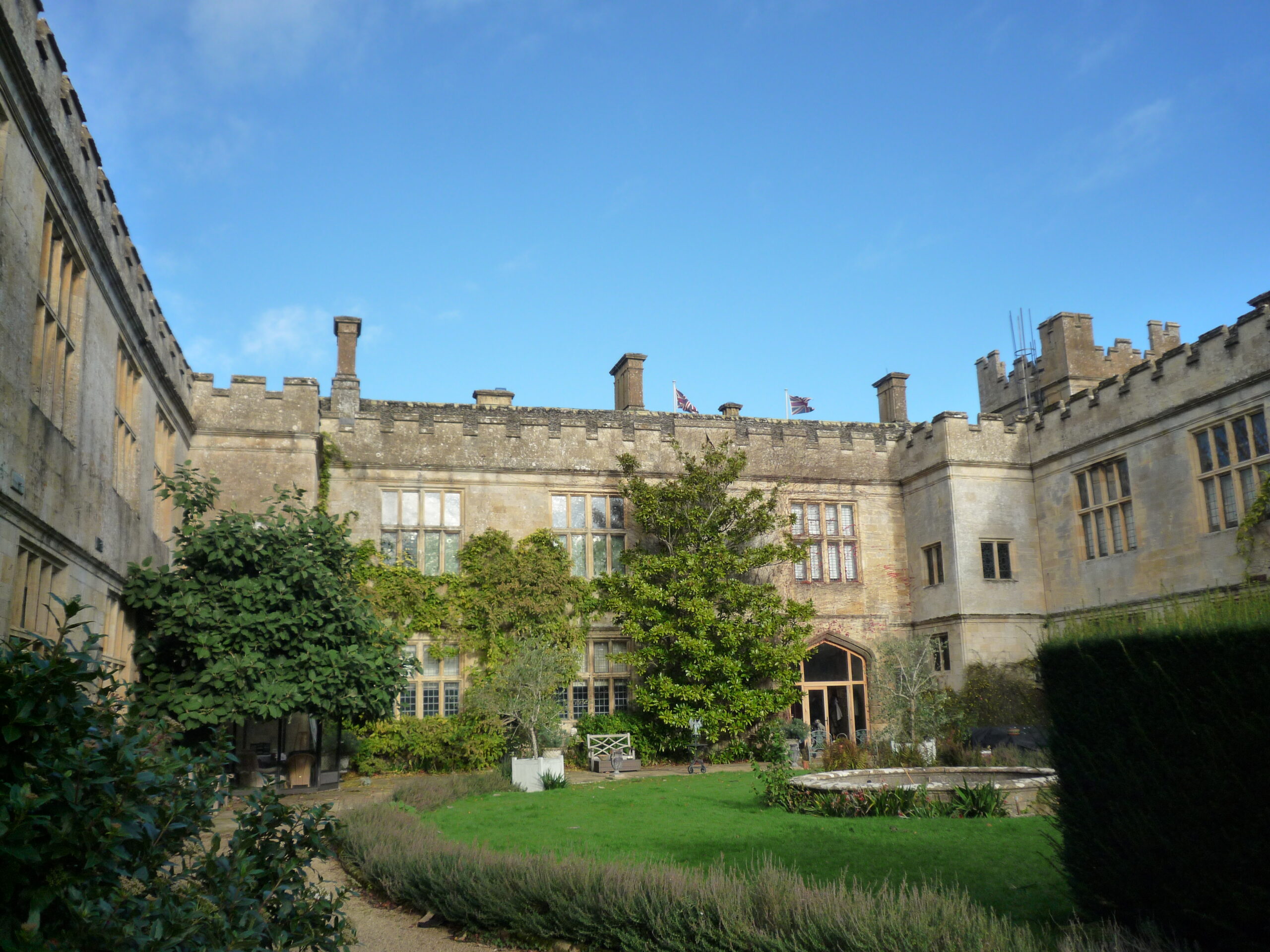
Sudeley Castle Outer Courtyard looking north, copyright Dr Andy Moir

Sudeley Castle has Saxon origins, but its history really developed from 1441 with Ralph Boteler (Baron Sudeley and Lord Chamberlain of the King’s Household) who set about developing a castle to reflect his new-found status. In later Tudor times, Thomas Seymour was granted the castle by Henry VIII and after marrying the king’s widow, Katherine Parr he set about refurbishment of the Sudeley Estate. Katherine became pregnant at a relatively late age and unfortunately died a few days after childbirth. Following her death and Seymour’s arrest for treason following his desperate attempt to grab power at the expense of his brother Edward Seymour, the castle was then gifted to John Brydges, the Constable of the Tower of London. This gift by Queen Mary I was followed with the title of Lord Chandos being granted to the family.  John’s successor, Edmund Brydges seems to have been further developing the castle, enhancing the work of Boteler and Seymour and the family contributed to Winchcombe with the building of Almshouses by Edmund’s wife Dorothy. The Brydges family maintained the castle throughout the rest of the Tudor times and supported the Royalist cause following the start of the Civil War.

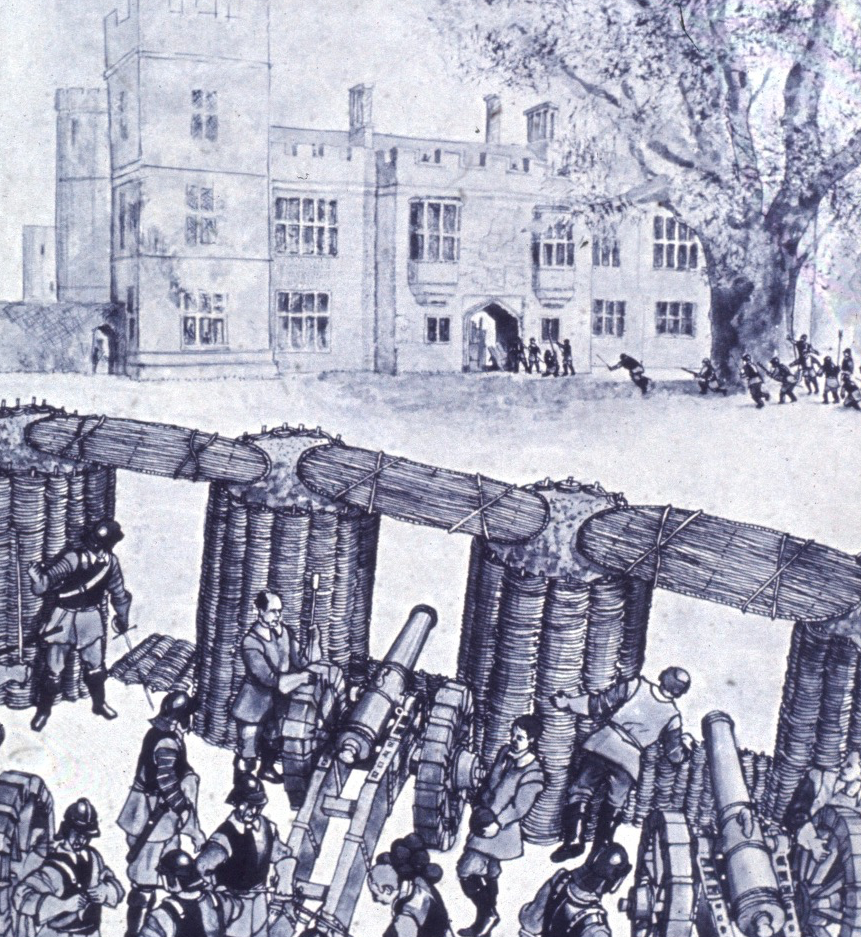
Besieging Sudeley Castle in 1643, during the Civil War

Sudeley had been used as the base by both Prince Rupert and Charles I from where they had launched attacks on Cirencester and preparations had been made to attack Gloucester. Following these failed attempts, Parliamentary troops had successfully besieged the castle on two occasions, bombarding the castle with cannon and after the second siege, the order was given for a systematic slighting (made un-inhabitable). Roofs were taken off and many walls were razed to the ground. Details of the destruction became clear when Lady Jane Brydges widow of George Chandos tried to sue for recompense. This was shown by depositions in the archives taken from five craftsmen stating that the castle had been fully destroyed and this had been signed off by two judges from Gloucester, Edward Slaughter and Robert Megge, but as the dendrochronology report went onto show, the slighting was not as comprehensive as claimed and roofs to the East, West and part of the North range of the outer courtyard were still intact.

Subscribe to our quarterly newsletter

 It had previously been thought that the castle had been left in ruins for the next 180 years, and few of the original structures at Sudeley Castle were thought to have survived before extensive restoration in the 19th century funded by the Dent brothers and their heir John Coucher Dent and his wife Emma.

In 2025 castle archivist Derek Maddock invited the Gloucestershire Building Recording Group (GBRG) to survey the outer courtyard roofs. Unexpectedly, the survey identified that east, west and north range roofs of the outer courtyard contained mainly oak timbers that were likely to be Elizabethan. As this finding completely changed understanding of the castle’s history, a project to precisely tree-ring date the roofs was conceived. This project was supported by the Castle’s owner, Lady Ashcombe, and funded by the Castle Studies Trust (www.castlestudistrust.org).

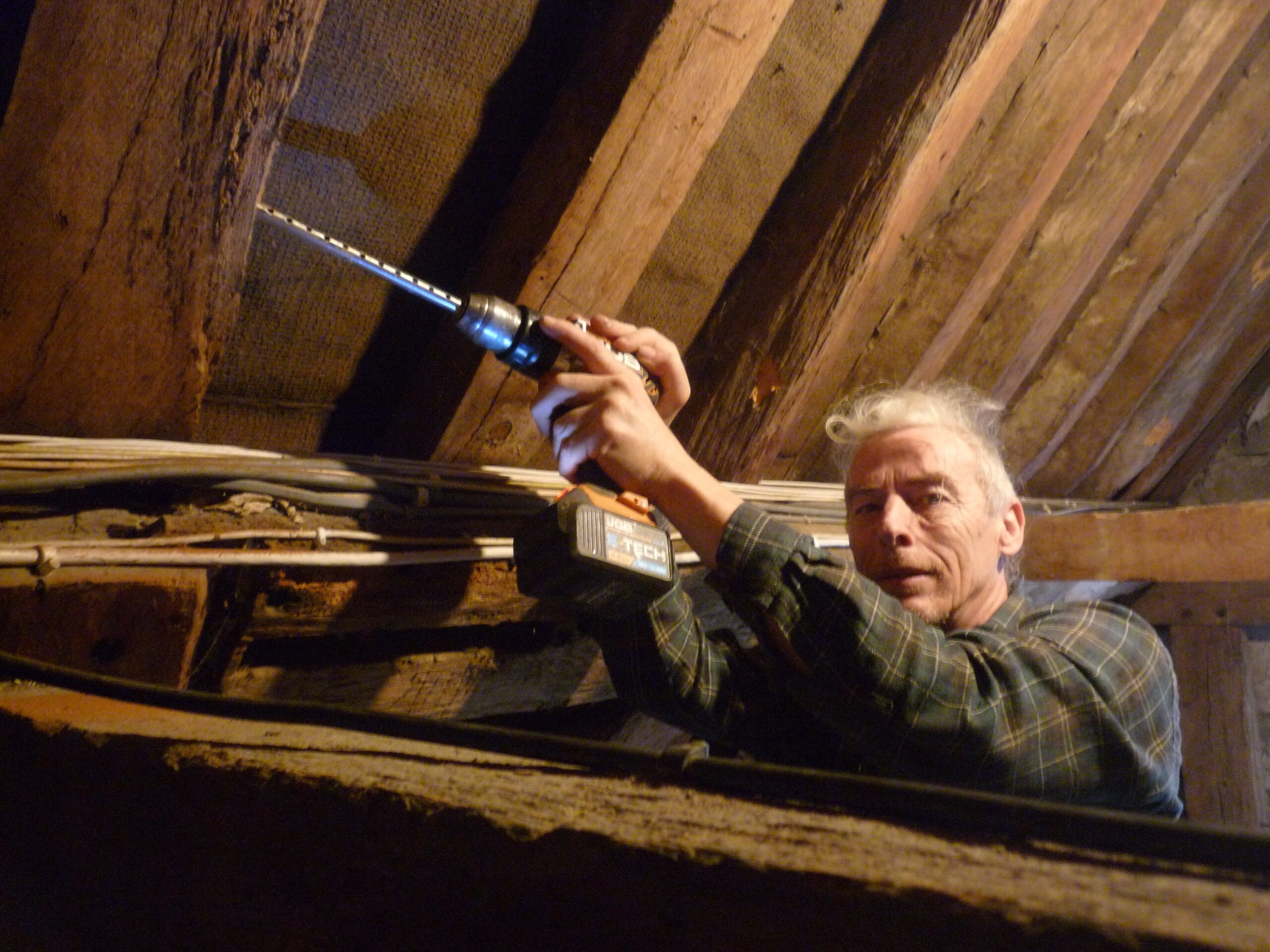
Dr Andy Moir of GHBG taking one of the 30 core samples from the roof.

The 2026 project saw 30 pencil-like core samples drilled from the castle roofs. Tree-ring series from twenty of these timbers matched together to form a 159-year mean chronology that was dated to span 1413 to 1571. The oldest tree used in construction of the roof started growing in 1413 and the trees were all felled between the spring of 1569 and the winter of 1571/2.  As it was common medieval practice to convert the tree into timbers before they seasoned, construction of the east, north and west range roofs of the outer courtyard likely occurred between 1569 and 1572. To give some idea of the scale of the construction, the west, north and east range roofs are around 36m, 38m and 46m in length, respectively. Yet still the carpenters of the day likely managed to complete this huge construction over just three years. This result therefore overturns the previous history which indicated that the castle roofs were destroyed during the Civil war and identifies that the roofs were likely built by Edmund Brydges (the 2nd Lord Chandos). A fantastic development in the history of Sudeley Castle.

Subscribe to our quarterly newsletter