Castle Studies Trust 2026 Grant Awards

The Castle Studies Trust is delighted to announce the award of eight grants, totalling a record  £44,500, to a wide range of projects involving a wide variety of research methods. This total means that, since our foundation, we will have given nearly £350,000 to castle research projects – a landmark to celebrate.

Subscribe to our quarterly newsletter

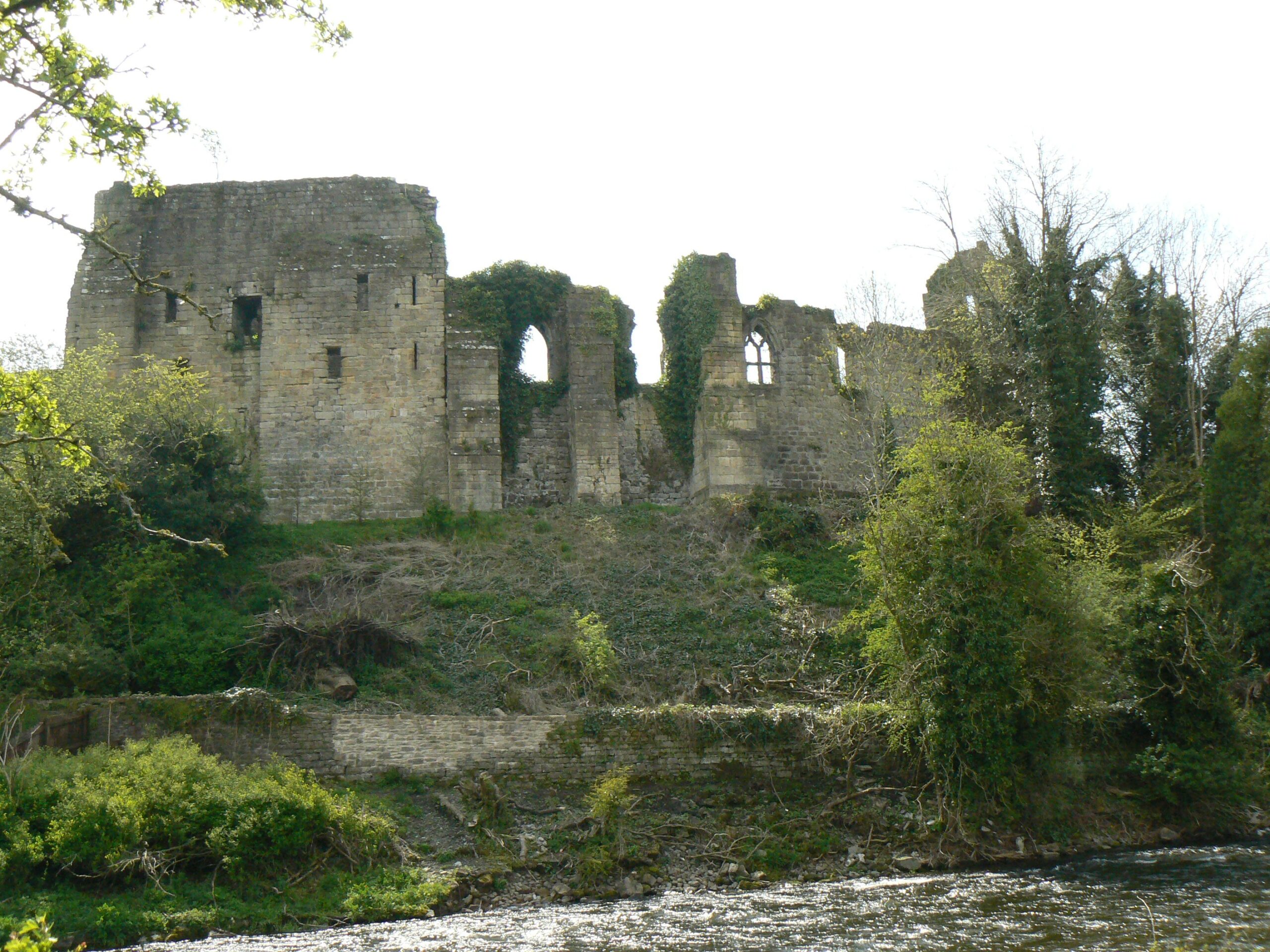
Cockermouth Kitchen Tower and Great Hall Range from river, copyright Richard Oram

Cockermouth, Cumbria: Cockermouth Castle is an extensively surviving major multi-phase northern fortress whose evolutionary history has never been subject to systematic or formal assessment.  The building survey will focus upon developing a detailed understanding of the physical fabric of the castle’s inner ward structures with a view to mapping their evolution, and to provide contextualization by relating the major building periods to the site’s known history and occupancy, and in terms of the broader evolution of castle architecture. The survey will be carried out by Tom Addyman with the support of Edward Impey and Richard Oram.

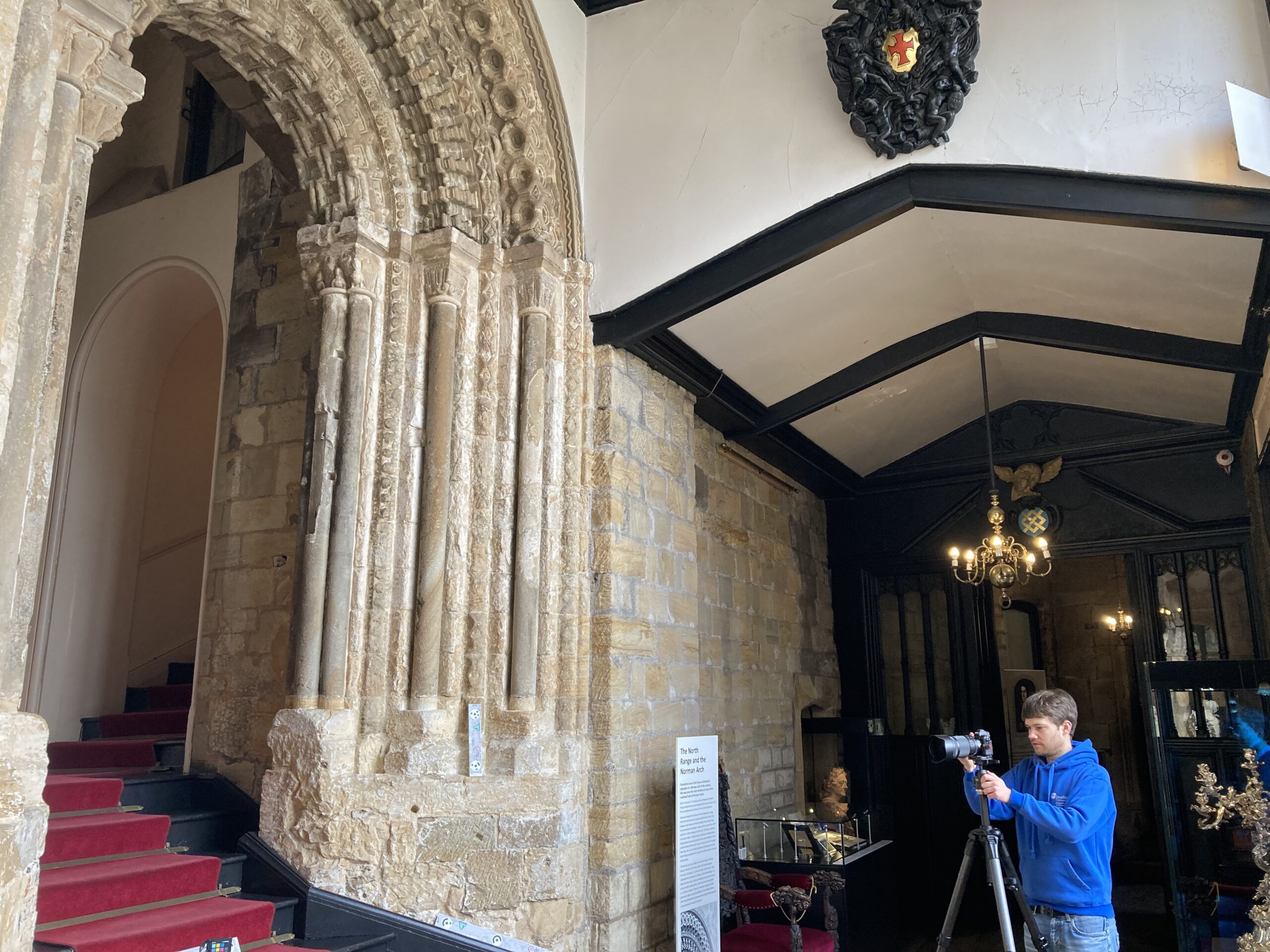
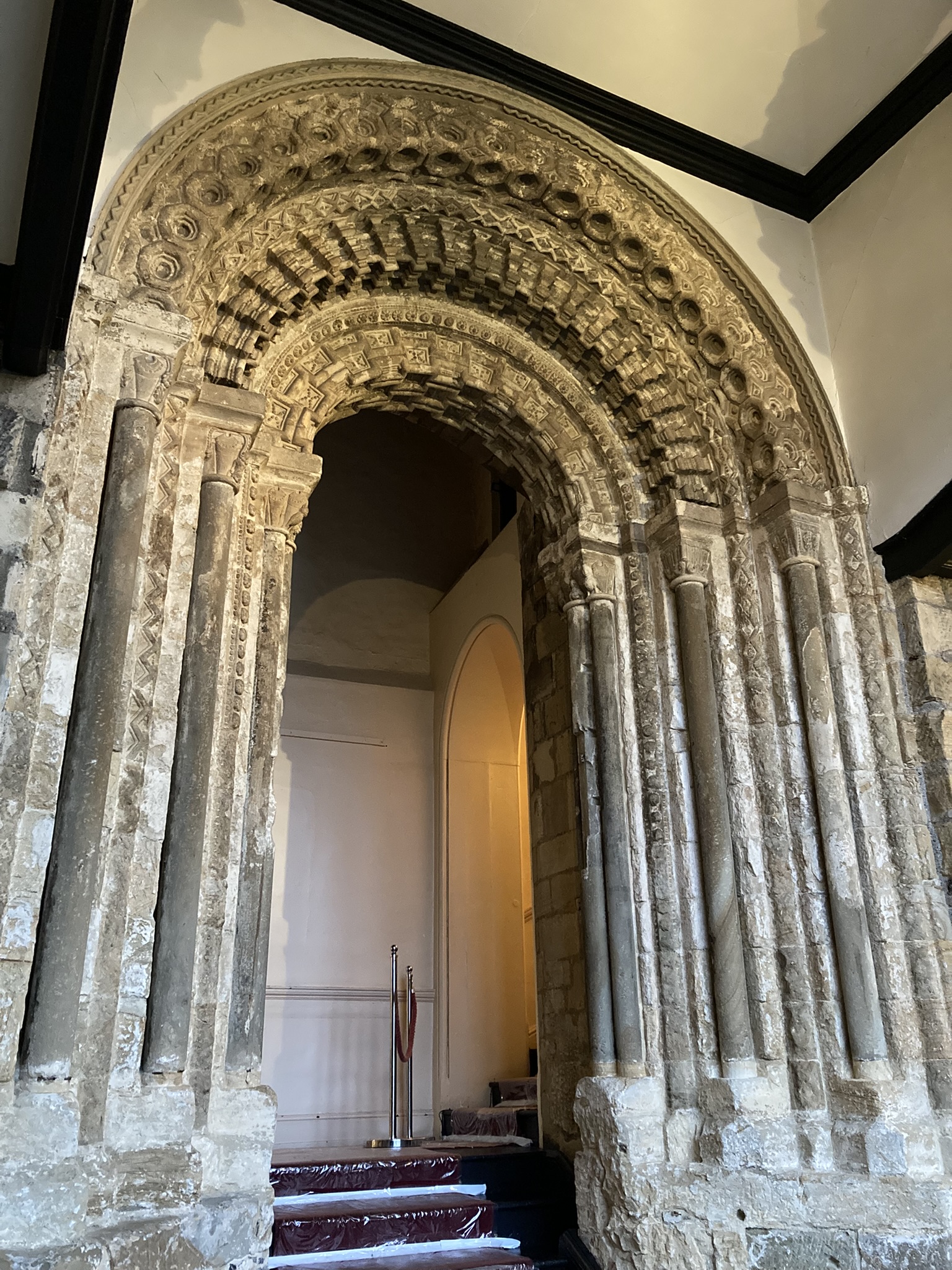
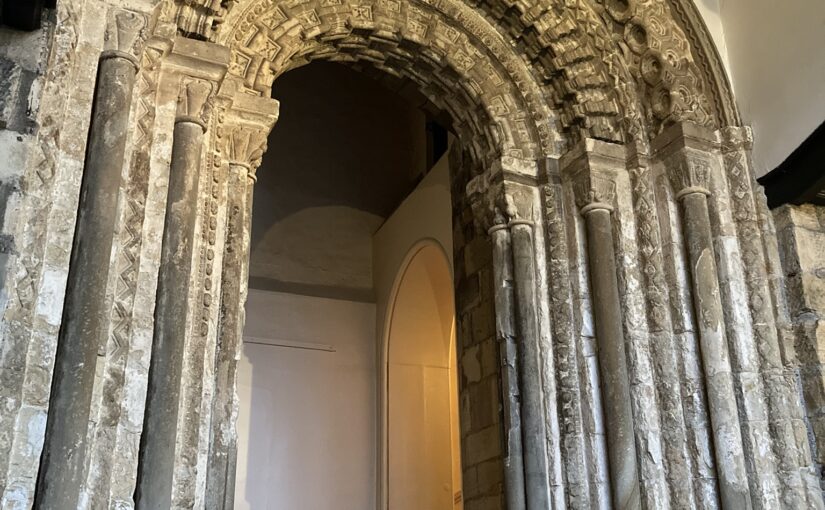
Durham Castle’s twelfth century entrance way, copyright Dr Andrew Ferrara

Durham Castle, County Durham: Investigating the Twelfth-Century Entranceway of Durham Castle. The aim of the project is to utilise digital archaeological techniques to create high-resolution images and models of the twelfth-century archway into Durham Castle’s North Range, enabling detailed investigation of the architectural features. The Durham University team carrying out the work will be led by Andrew Ferrara and Giles Gasper.

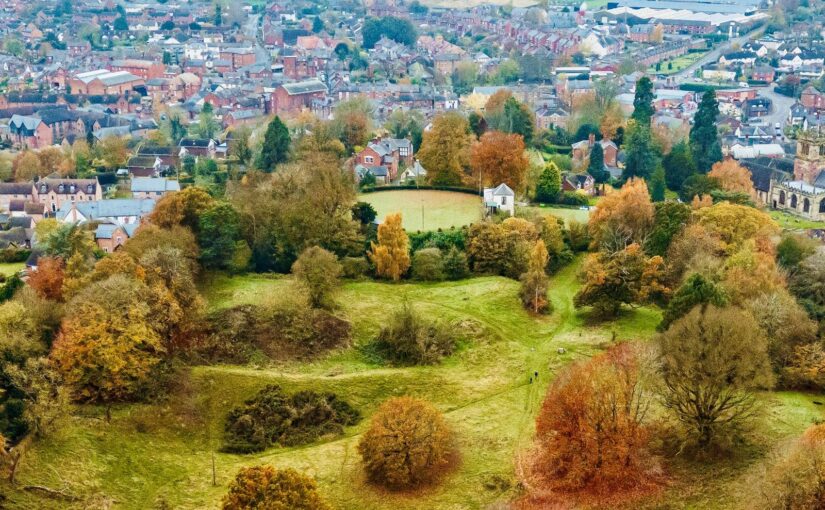
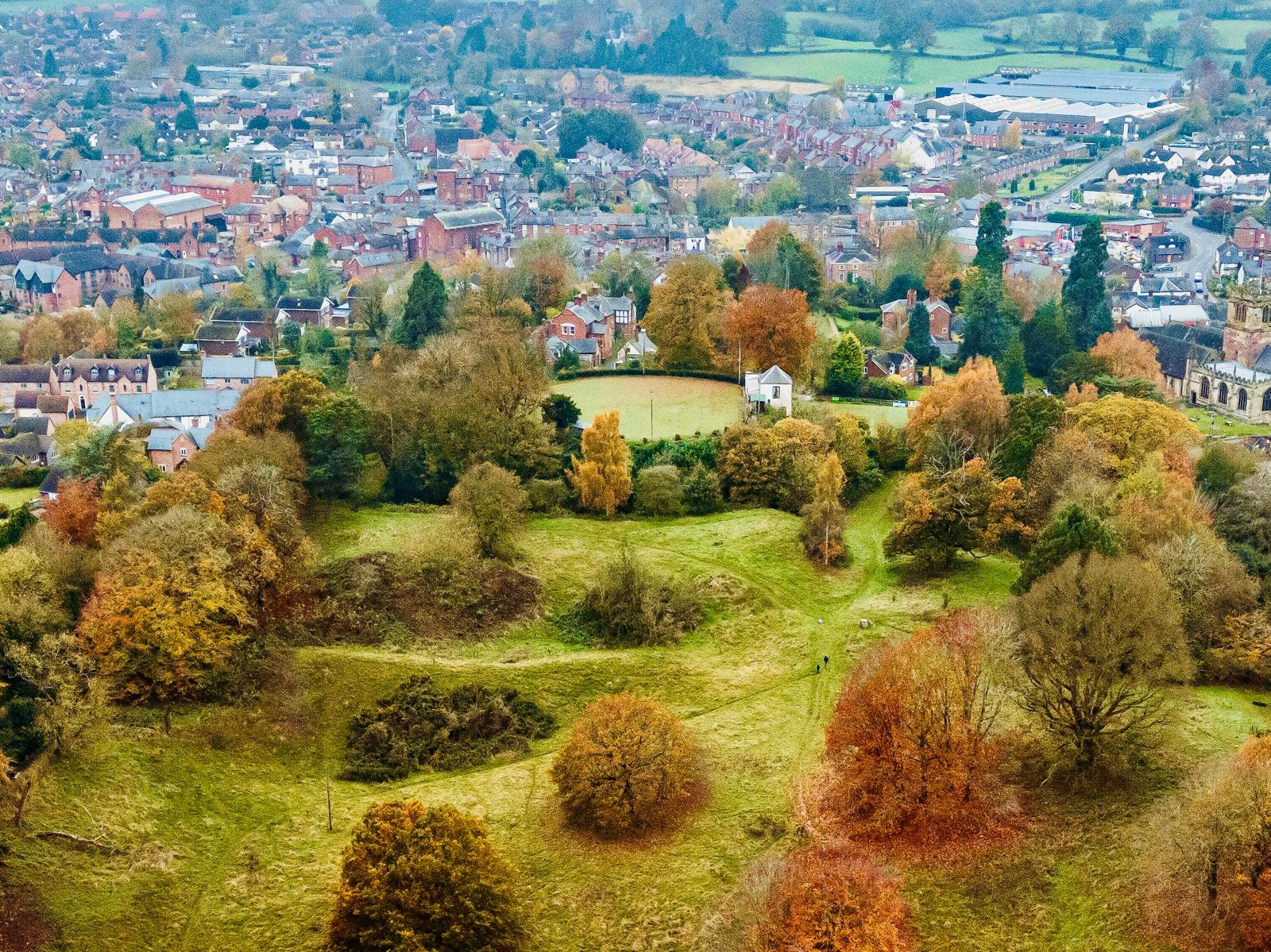
Ellesmere Castle from the air, copyright Joe Bickerton

Ellesmere, Shropshire: Geophysical survey of the large motte and bailey castle in Shropshire which, prior to June 2024, had never been surveyed before when the large motte was surveyed by GPR which revealed possible buildings. The resistivity and magnetometry surveys would confirm that, as well as extend the survey to the rest of the site which played an active part in the Marcher disputes in the reign of Henry III. The survey, carried out by Heneb, will take place in the week starting 9 March, with the results ready in the early summer.

Subscribe to our quarterly newsletter

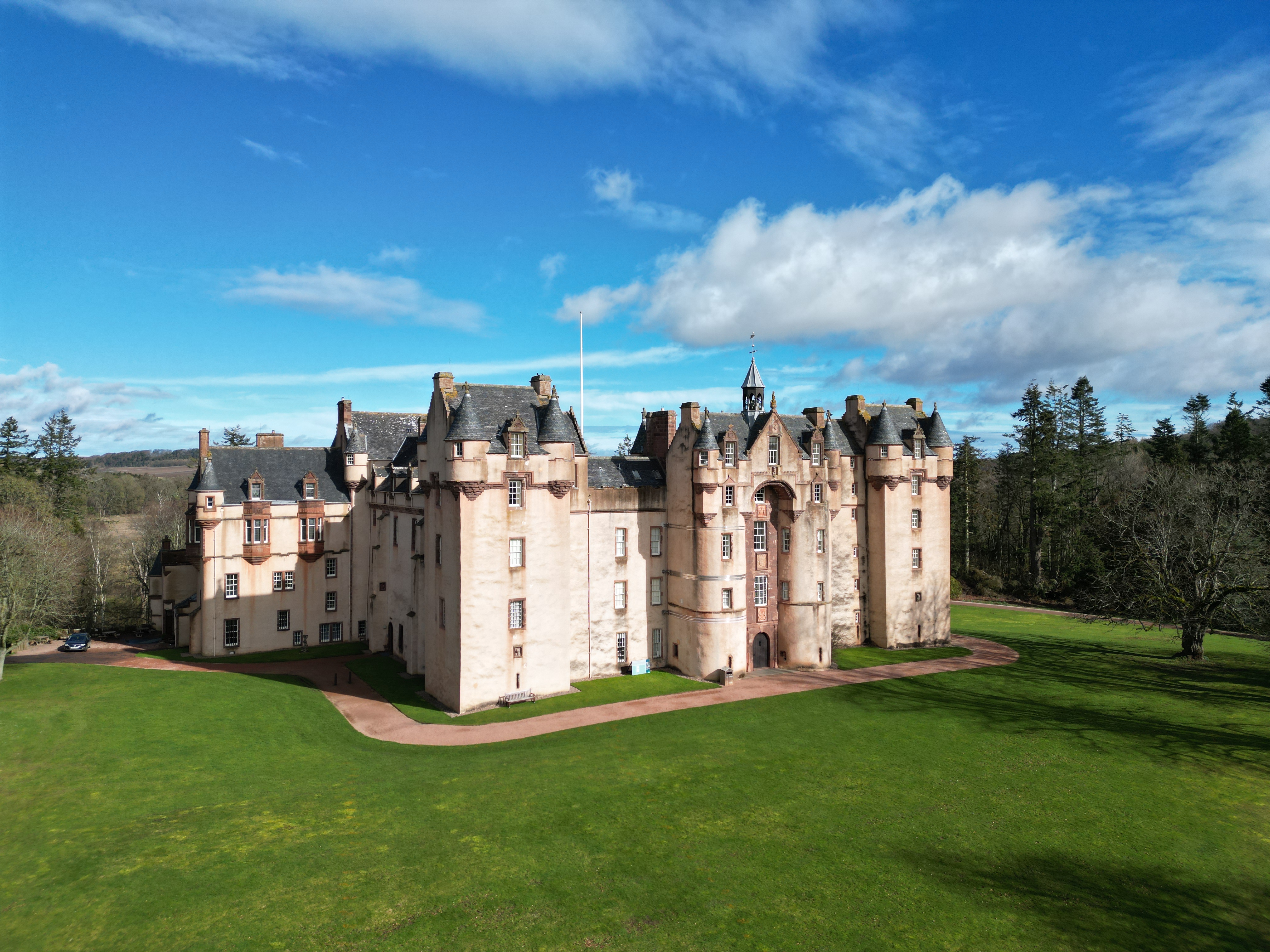
Fyvie Castle, copyright National Trust of Scotland

Fyvie, Aberdeenshire: The project aims to create new interpretation drawings to showcase key stages in the architectural development of the castle, which dates to the thirteenth century, and share these as part of outreach and engagement. The drawings by Jan Dunbar will be commissioned by Annie Robertson of the National Trust and are expected to start in April.

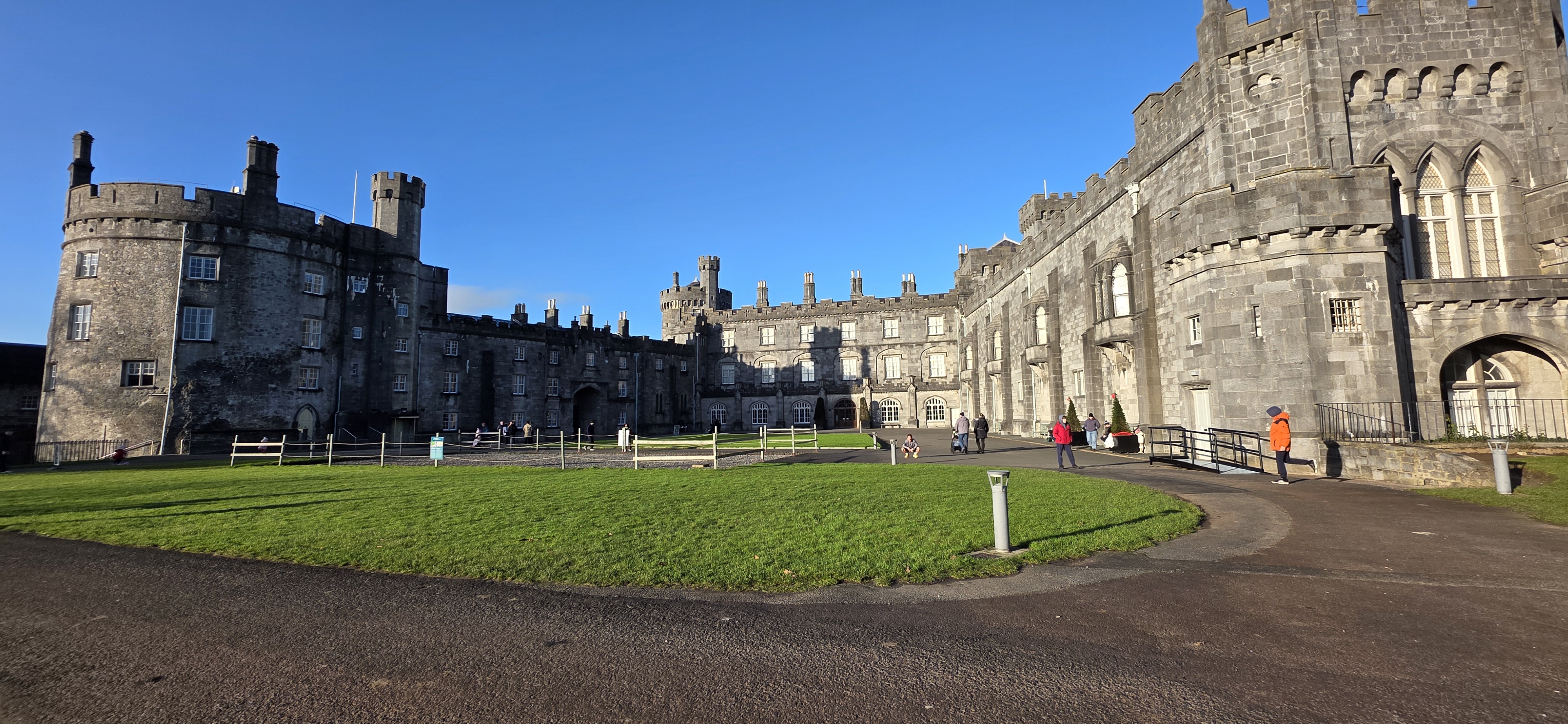
Kilkenny Castle, copyright of the Discovery Programme

Kilkenny, Leinster, Republic of Ireland: This project proposes the use of geophysical survey to locate and map the lost Flemingstown of Kilkenny Castle – a unique example of a purpose-built Flemish colonial suburb. While some of the outer ward has already been investigated, the one area missing has been around the site of the township’s tower. The geophysical survey will be carried out by The Discovery Programme and will take place in early to mid March, led by David Stone with the support of Susan Currant and Coilin O Drisceoil.

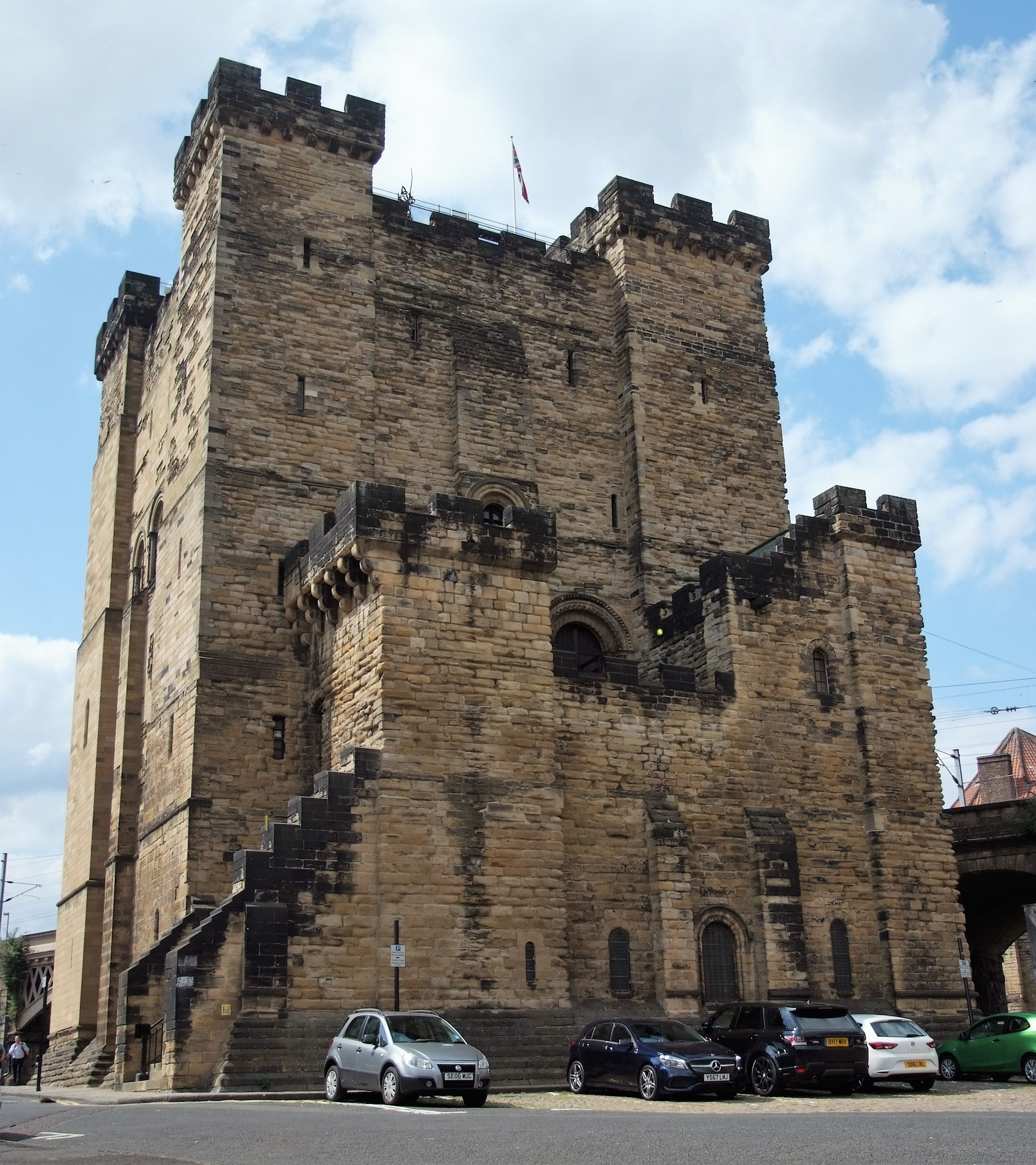
Newcastle Keep, copyright Peter Purton

Newcastle, Northumberland: To co-fund the publication of the report of the excavations of Newcastle Castle, one of the major royal castles in the North East of England, which took place over 20 years between 1974-95. The funds will be for synthesising all the different excavations, updating specialist reports and preparing relevant reports. We are only part funding £2,000 of the £8,000 asked for, as we lacked the means to fund any more. . The grant from the CST will allow him to commission the illustration work for the building interpretation and the excavation illustrations. The part funding has also spurred on other funders to cover the remaining part of the grant. The project will be led by Don O’Meara of the Society of Antiquaries of Newcastle with the support of John Nolan and Richard Pears.

Subscribe to our quarterly newsletter

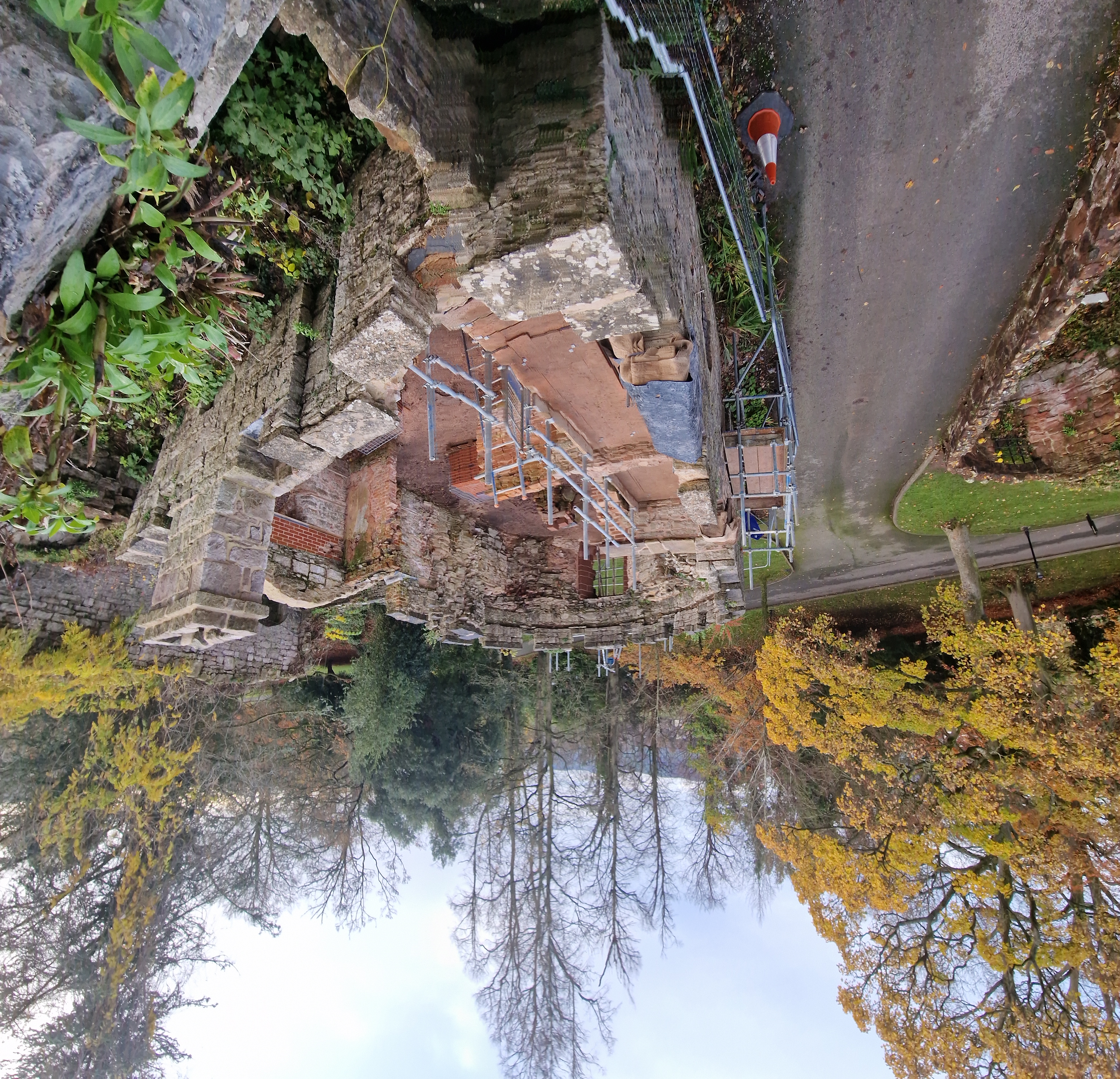
Ruthin Castle great gatehouse, copyright Ruthin Castle Preservation Trust

Ruthin, Denbighshire: Co-funding a structural survey and analysis of the great gatehouse of this formidable thirteenth century baronial castle that was a key part of Edward I’s strategy to secure the conquest of Wales. The project is led by Fiona Gale, chair of the Ruthin Castle Preservation Trust who will commission Mann Williams to do the survey with add context provided by Will Davies from Cadw.

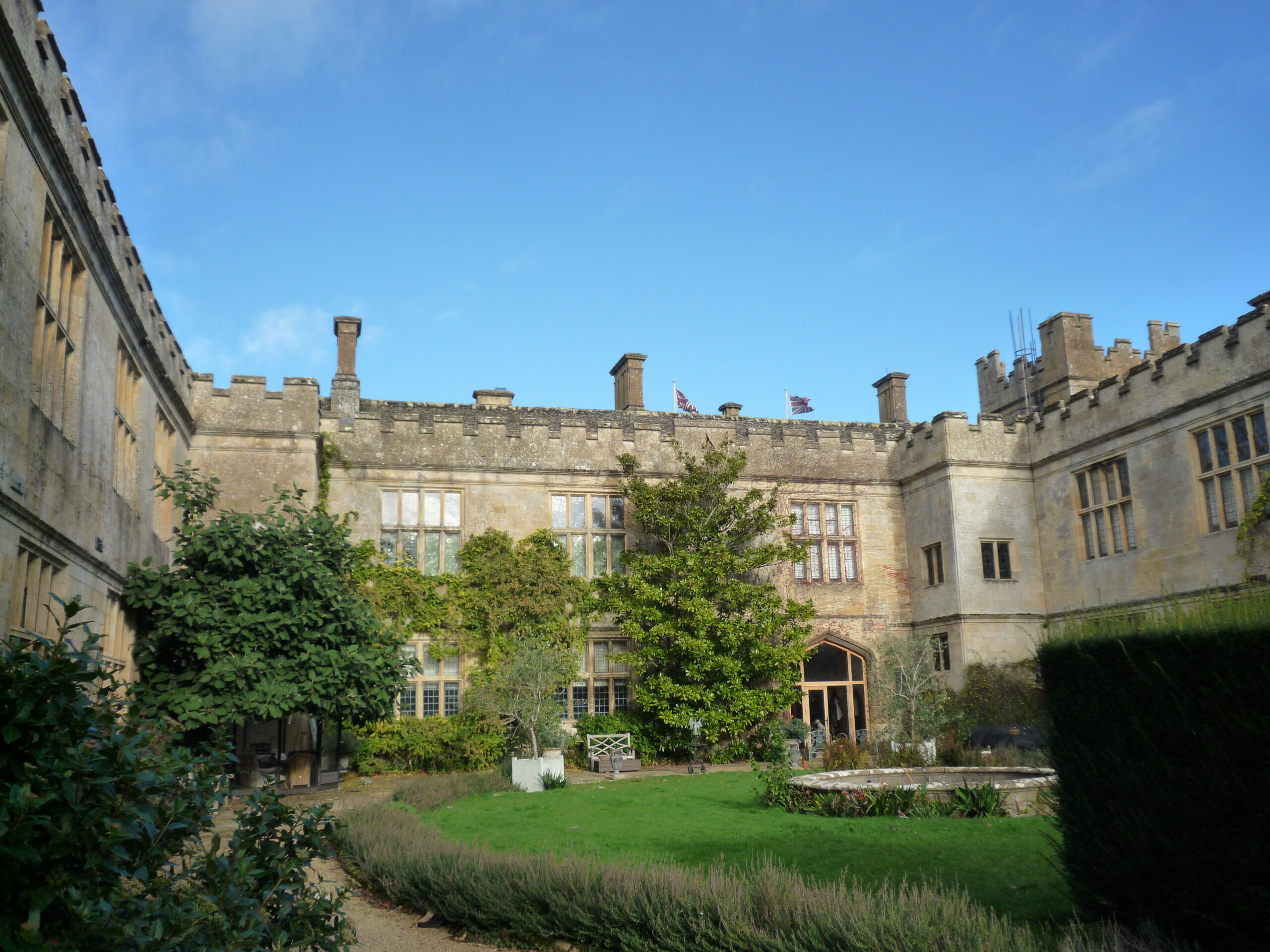
Sudeley Castle outer courtyard, copyright Andy Moir

Sudeley Castle, Gloucestershire: Tree-ring dating and recording with 3D imaging the original roofs of Sudeley Castles Outer Courtyard Ranges. The castle site dates to the anarchy but the castle was rebuilt in the fifteenth century by Lord Sudeley. The sampling and photography will take place on 25 and 26 February. The project will be led by Andy Moir of the Gloucestershire Building Recording Group.

Subscribe to our quarterly newsletter

How Civil Engineering Techniques Can Be Used To Help Inform Cultural Heritage Conservation

Post graduate student Tom Davies explains how he has taken some of the latest civil engineering techniques to help understand the condition of the stone work of old buildings, using Durham Castle as a case study.

Durham Castle was the building of interest for my master’s research project in 2023/4. Durham Castle has an incredible history, being founded in 1072 on the orders of William the Conqueror, to being the seat of the Prince Bishops, to now being part of a UNESCO World Heritage Site and University College for Durham University. The Castle’s rich history and architectural significance makes it preservation crucial, ensuring that its historic features are maintained for future generations.

Subscribe to our quarterly newsletter

Copyright Tom Davies

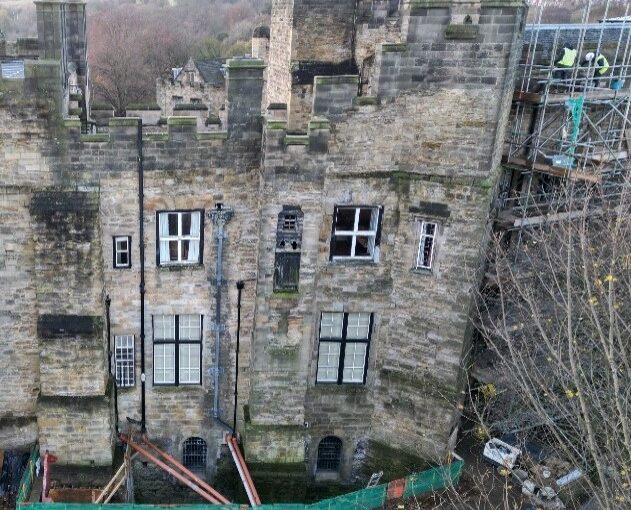
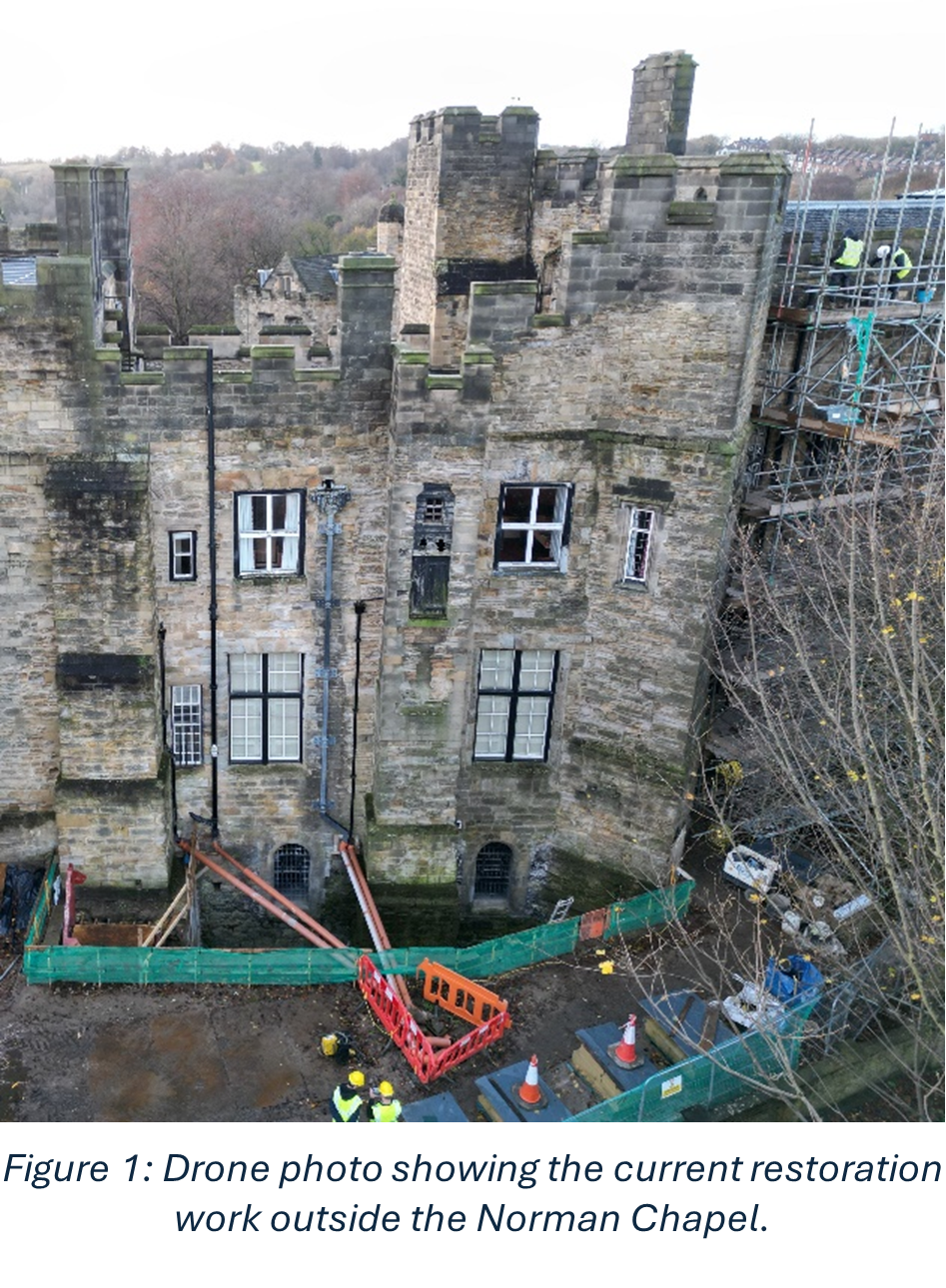
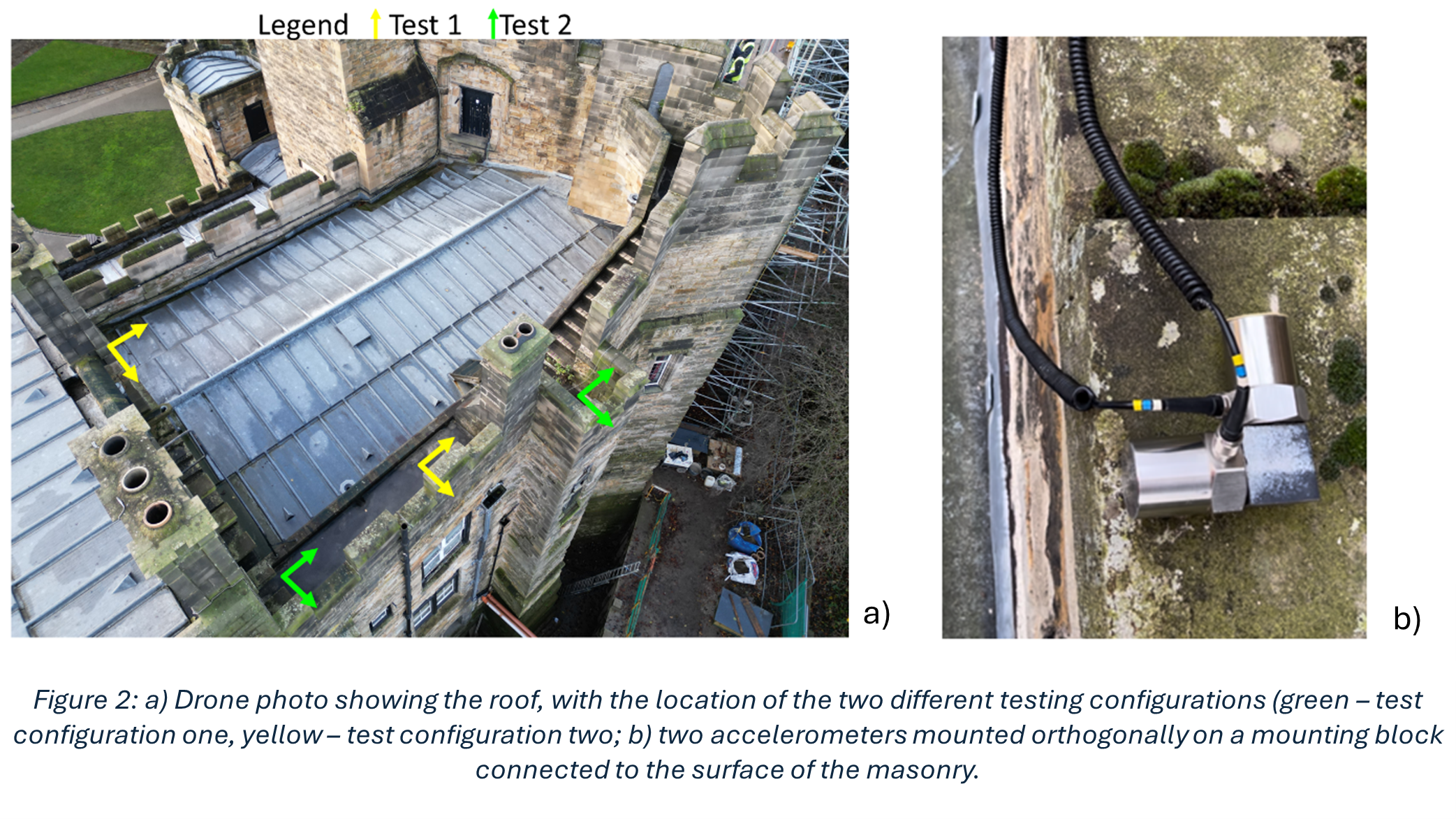
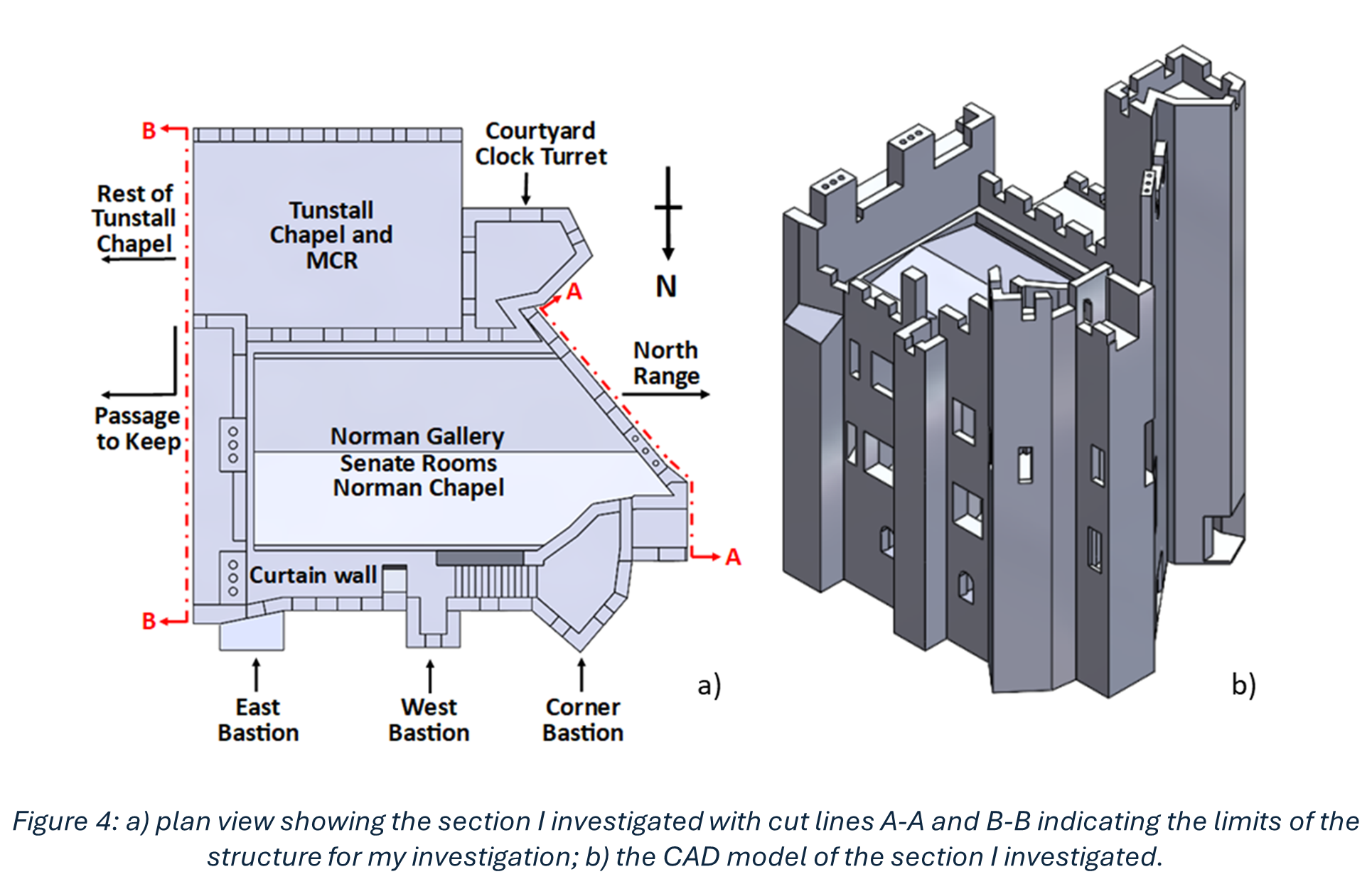
My research was based on understanding how a section centred around and above the Norman Chapel, the oldest building in County Durham, behaves under ambient excitation. Every structure experiences ambient excitation under normal operating conditions, it is the study of how a structure moves due to natural stimuli such as how it reacts to windy conditions and how it responds to when people move through the structure. Within the section I investigated, the Norman Chapel was on the ground floor, the Senate Rooms on the first floor, and some of the rooms of the Norman Gallery were on the second floor, with the roof above. These spaces, along with their remarkable examples of Norman architecture, make the conservation of this part of the Castle especially vital. The first non-destructive in situ testing I conducted was ambient vibration testing. This involves using multiple accelerometers in orthogonal directions (at right angles, seen in Figure 2) to record how the structure responds to ambient excitation, in this case measurements were undertaken on a windy day. Every building vibrates naturally at its natural frequency, which is determined by the building materials and structural connections of the building among other conditions. The taller the building, the lower the natural frequency, as they are more flexible. The Castle section I looked at is 3 storeys high, so one would expect a higher natural frequency than that of a structure such as the main tower of Durham Cathedral, which is 66m tall. The recorded accelerations were converted into frequency measurements which revealed information about the natural frequencies. This conversion is important, as when plots are made, it is possible to see different modes of vibration.

Copyright Tom Davies

In order to characterise the masonry parameters that were used in the numerical model and subsequent simulations, another type of non-destructive in situ test was performed, sonic tests. Some tests were undertaken within the Norman Chapel, as this is the oldest part of the Castle, and its masonry has therefore been subject to the most deterioration of any internal section of the Castle due to its age. Additional tests on a masonry panel in a Gallery (corridor) just outside the Norman Chapel were conducted, this is because this Gallery is a very similar age to the masonry of the rooms above the Norman Chapel, from around the 1600s. From this, the different ages, and therefore state of deterioration, of the masonry within the Castle could be included.

Copyright Tom Davies

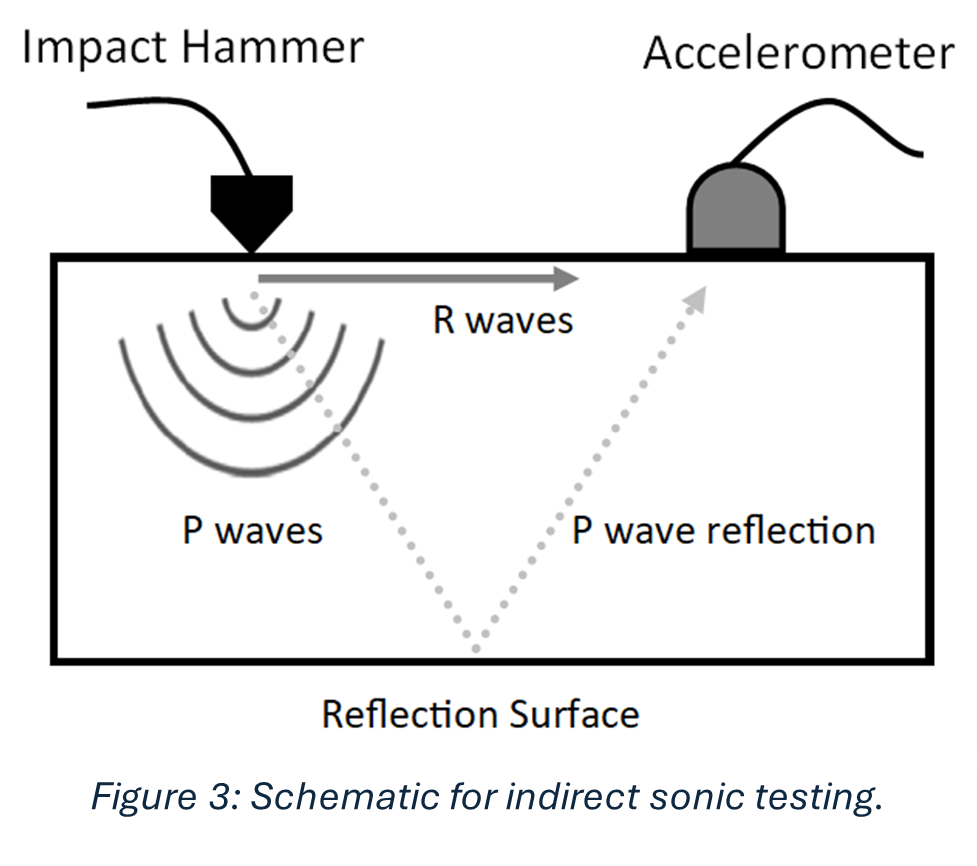
Sonic tests involve hitting the masonry, gently, with an instrumented hammer, shown in Figure 3,  and recording the time it took for the subsequent waveform to be registered on an oscilloscope (a machine that shows waves) connected to an accelerometer. Figure 3 shows how this process works, there are two types of waves: P and R waves. The main difference is one travels along the surface of the stone, and the other travels into the stone and reflects off the back of it and returns to the surface. I will focus on the P waves (their names are quite confusing, but it is interesting to know that you can obtain the desired outcome, here the determination of material properties, using either wave). From the recorded wave you can work out the speed of the wave, and using equations you can work out material properties. This is an incredibly important in defining the characteristics of the material within the numerical model. I constructed a finite element model and applied appropriate boundary conditions to represent the foundations of the building, as well as the connections between the section I was investigating and the rest of the Castle. I used the results of the sonic tests mentioned above to determine the masonry material parameters. From the numerical simulations, global frequencies were determined and compared to the results of the ambient vibration testing. global frequency, I mean results that represent the structure as a whole, rather than only a little part of it such as the tower you can see in Figure 4b, or an individual wall. The goal of the finite element model was for its results to be as close to the results of the ambient vibration testing as possible, as this would indicate the model was good at replicating the actual behaviour of the building.

Copyright Tom Davies

Looking forward, there is a plan to undertake a multi-year project to investigate Durham Castle on a much larger scale, building on the work I have done with the target of investigating the entire Castle. The most intriguing prospect is that when a full finite element model of the entirety of the Castle is built, simulations of different loading conditions can be investigated. This would allow different situations to be modelled and the results determined before any physical changes were done to the Castle.

Subscribe to our quarterly newsletter