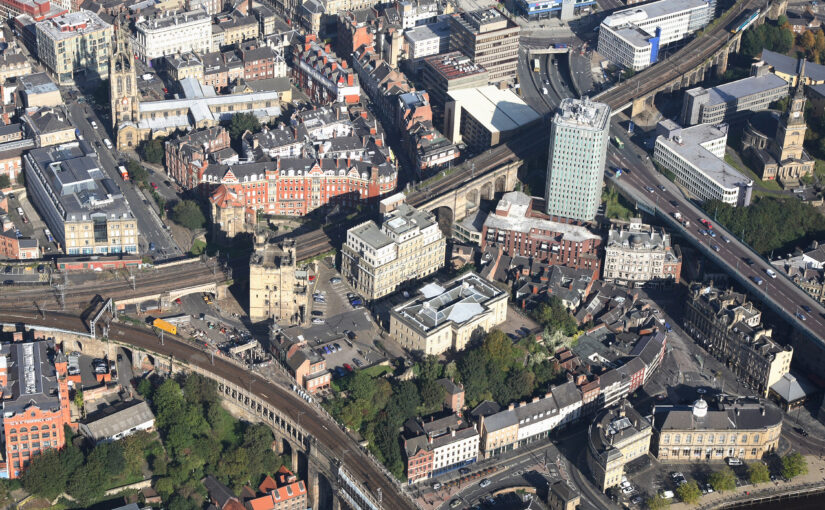
Rediscovering Newcastle Castle: publishing 30 years of historic excavations

Don O’Meara, President of the Society of Antiquaries of Newcastle upon Tyne John Nolan, archaeologist Richard Pears, buildings historian, project leads for the publication of the decades of excavations that took place around the major urban fortress of Newcastle.

Many towns and cities in England derive their name from fortified positions. However, perhaps none so prominently as when the pre-Conquest settlement of Monkchester was fortified with a royal castle, and became thereafter Novum Castrum super Tynam. Newcastle is fortunate in the survival of its 12th century stone keep against the forces of siege, neglect and demolition, which denuded so many other castles and fortifications across the country, including that which befell our homonymous distant relative under-Lyme.

Subscribe to our quarterly newsletter
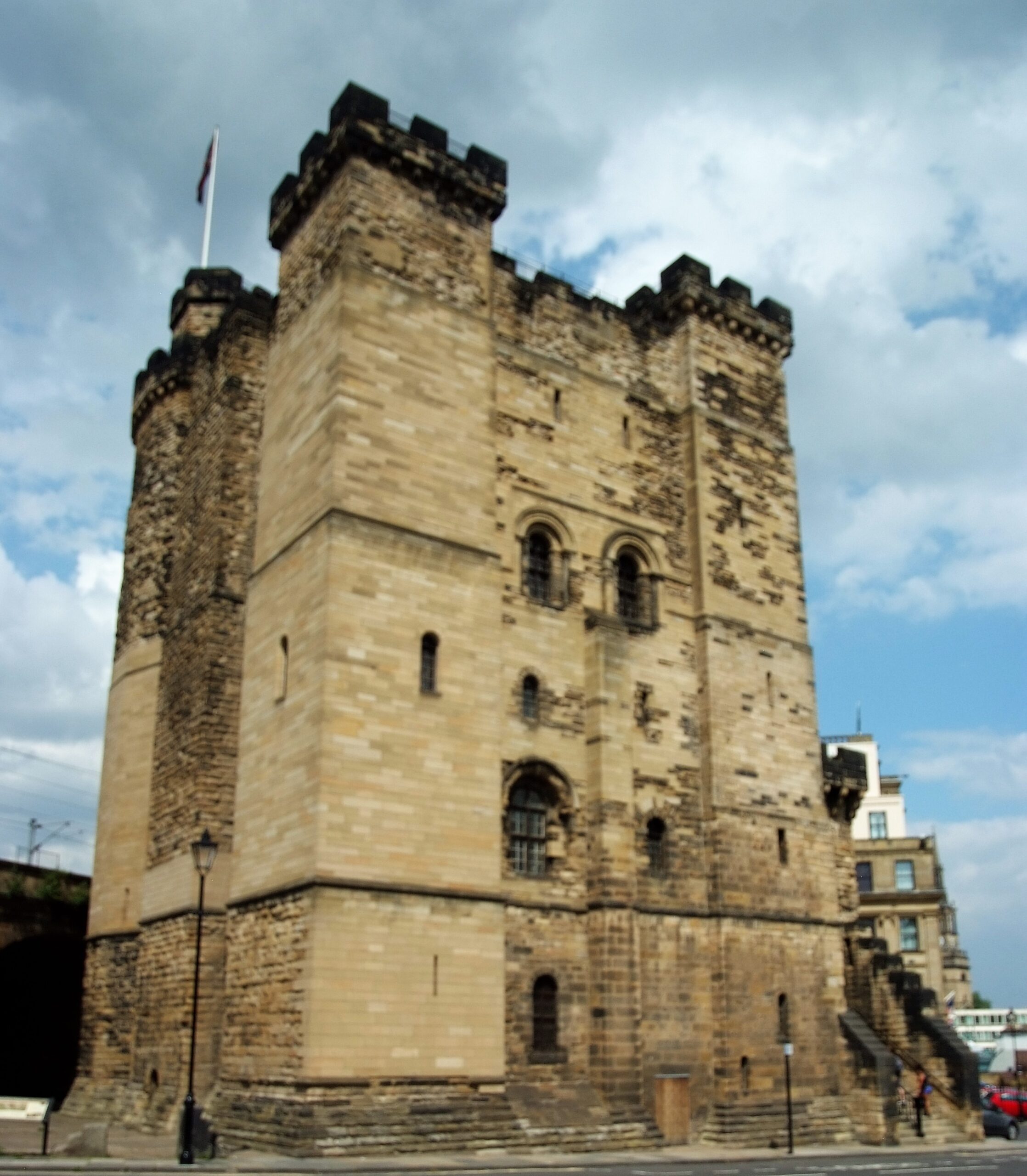
Newcastle Keep, copyright Don O’Meara

The keep at Newcastle also has a special place in the history of the Society of Antiquaries of Newcastle upon Tyne, the oldest such provincial society. For over 200 years the image of the keep has appeared on the book plate of our journal (Archaeologia Aeliana), reminding members of our role in preserving it from destruction at the hands of 19th century development (particularly railway construction), as well as our role renovating and managing the building until 2013.

Subscribe to our quarterly newsletter

The royal castle from which Newcastle derives its name was founded by Robert Curthose, son of William the Conqueror, in 1080 as a statement of Norman control in a region coveted by the kings of Scotland and with a history of independent-minded local rulers. In the late 1160s and early 1170’s the earth and timber castle was refortified in stone, which included the keep which stands today and which, in the eyes of many Novocastrians, is ‘The Castle’.
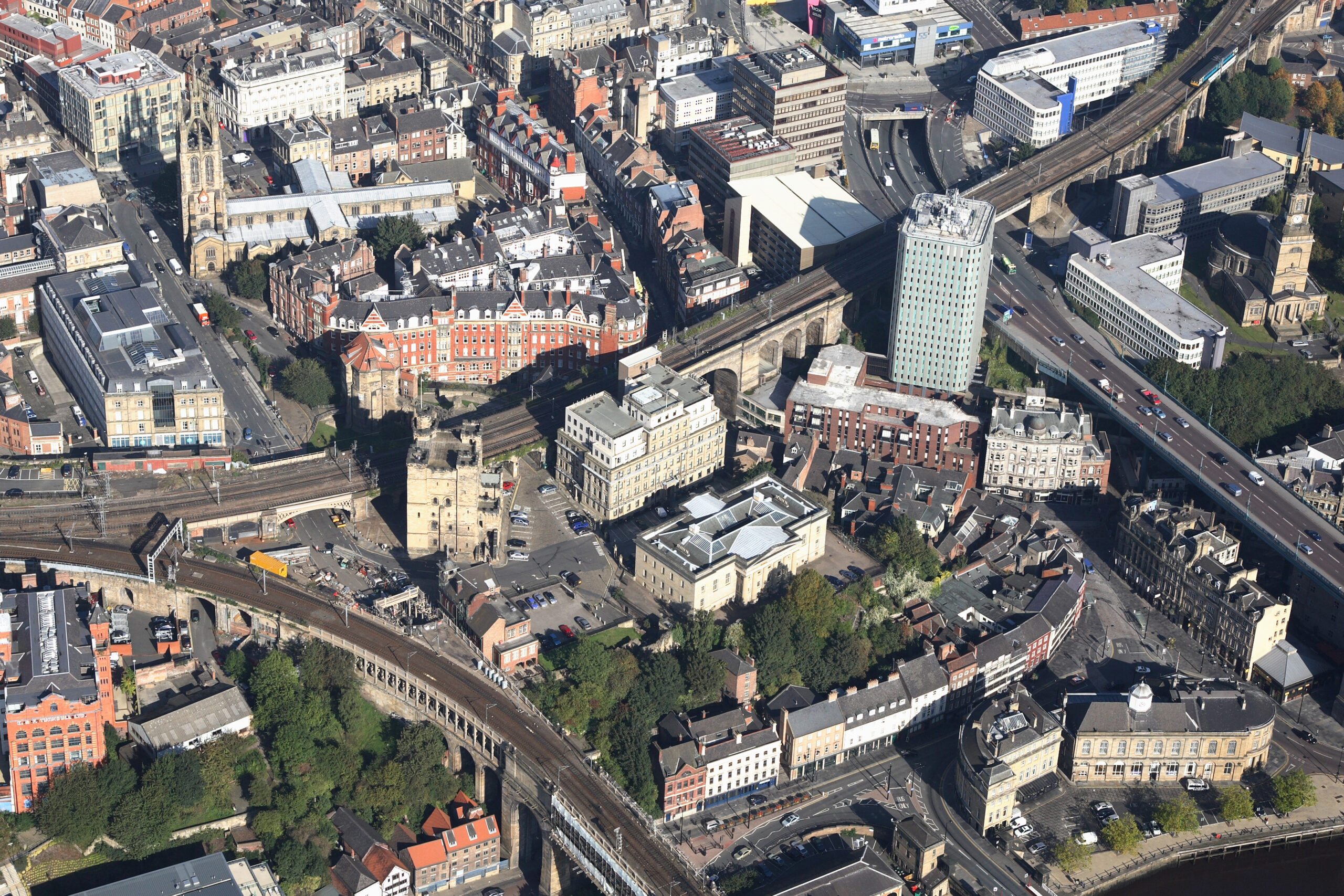
Newcastle Castle from the air, copyright Newcastle City Council

The site is the most archaeologically investigated ‘urban’ castle in North East England, albeit excavations, begun in 1960 and for many years led by Barbara Harbottle, have principally focused on the defensive circuit. Excavations showed how an apparently linear development model can be an oversimplification, highlighted gaps in the understanding of the castle as a whole and revealed problems of correlating archaeological evidence with medieval documentary records. The excavations were also significant in charting the evolution of archaeological practice from essentially amateur archaeological techniques in the 1960s to more modern, scientific investigation. Analysis of the finds offers to reveal new insights into the material culture of the castle’s occupants. Despite the importance of investigations at this site, there has been no published report on the medieval excavations since 1981. This project aims to complete this.

Subscribe to our quarterly newsletter

Between 1981 and 1992 further excavations on the castle site revealed more evidence for the evolution of the castle and aspects of its associated infrastructure. It has been a long running ambition of this Society to see these works brought to publication and to wider academic attention.  In 2024 the principal excavator of the site in the 1990s John Nolan, buildings archaeologist and historian Richard Pears, and I in my capacity as editor of Archaeologia Aeliana sought to rectify this situation.

This project involves a synthesis of 30 years of excavations and a reassessment of their results, a new building analysis and interpretation of the site, and the compilation and editing of these results into a single text. With gratefully received funds from Newcastle City Council, the Castle Studies Trust, and the Castle Studies Group we are now progressing with the preparation of a special edition of Archaeologia Aeliana which will achieve the aim of disseminating these important results.

Though there are still funds required that would allow for a full open-access publication, we aim to publish this special edition monograph in early 2027.
Subscribe to our quarterly newsletter

Investigating the Twelfth-Century Entranceway of Durham Castle

Dr Andrew Ferrara of Durham University, and project co-lead for investigating the Romanesque entrance looks at what they are doing and also hoping to learn from this detailed study of this spectacular doorway.

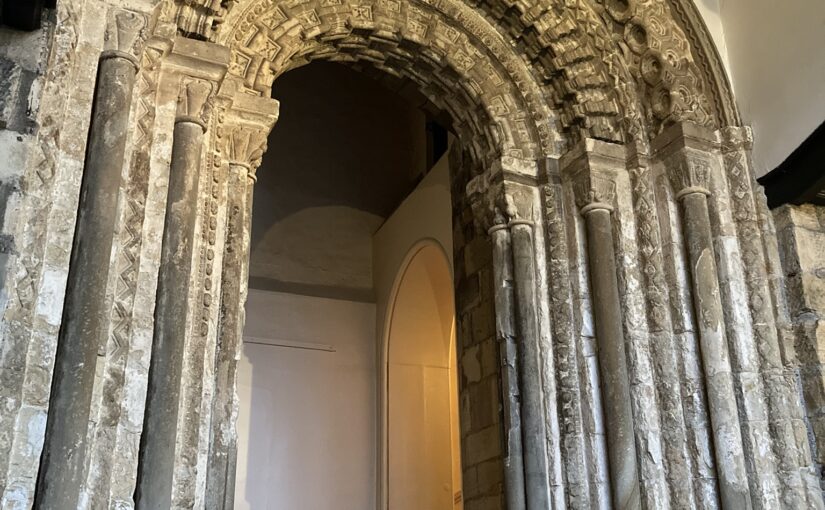
Durham Castle is one of the most prominent and renowned twelfth-century episcopal castles in Britain, sitting in the wider Durham UNESCO World Heritage site along with the cathedral. Construction is recorded as beginning in 1072, and the site has been in continuous occupation ever since. It operated as one of the bishop’s principal residences, right up until the nineteenth century when it was given to Durham University. As such, the complex has undergone multiple changes and alterations through the centuries, including significant interior and exterior works in the seventeenth and eighteenth centuries, with many of the medieval structures enclosed or adjusted by later development. Amongst the most significant building phases was the work undertaken during the episcopate of Bishop Hugh de Le Puiset (1153-95) and one of the most dynamic features from that period is the grand archway entrance inserted into the south façade of the castle’s North Range. Despite its longevity and pedigree, the castle has received surprisingly limited investigation or scholarly attention over the past century.

Subscribe to our quarterly newsletter

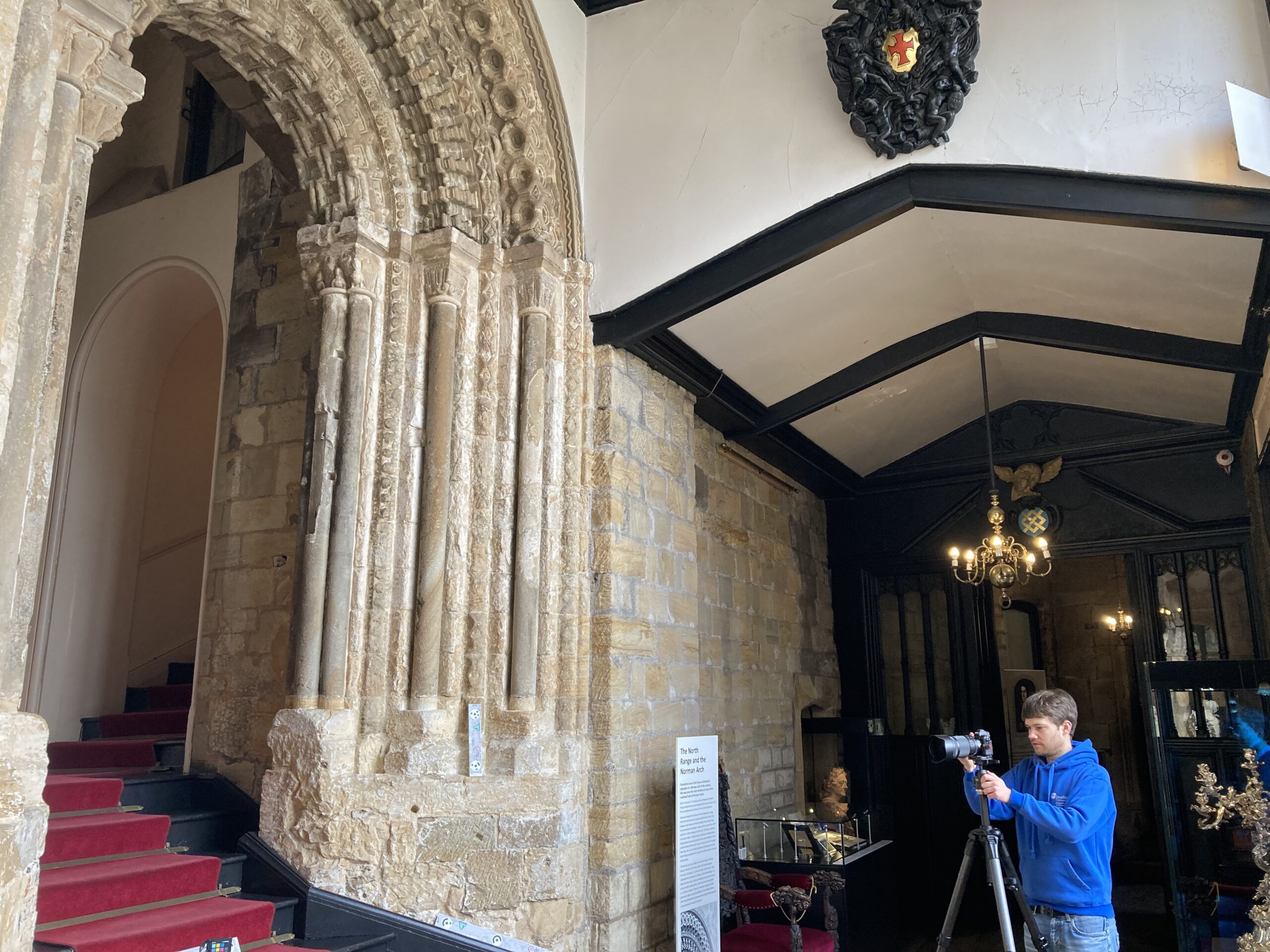
The current project, made possible through generous funding by the Castle Studies Trust, and led by Dr Andrew Ferrara and Professor Giles Gasper, is undertaking non-destructive photogrammetry of the Le Puiset archway. This methodology will result in a highly-detailed 3D model of the structure, ideal for detailed remote study. The same 3D data can then be used to generate orthographic projections, functioning as highly accurate blueprints of the arch. In addition, targeted high-resolution photography of details and additional 3D laser scans of the capitals will be undertaken. These combined methods will result in the most detailed and state-of-the-art records of this part of the castle for wider research and dissemination.

Durham Castle: Door scanning in action, copyright Dr Andrew Ferrara

This research focus has emerged from a renewed interest in the castle complex, catalysed by recent conservation and refurbishment works around the site which have revealed previously unknown architectural features. While the archway is exceptionally elaborate, it has never been subject to in-depth examination and set within the wider context of both Romanesque sculpture and the understanding of Durham Castle. The detailed modelling will allow for a thorough inspection of the features to be undertaken, in particular of diagnostic sculpture elements, enabling thorough comparison with other contemporary architectural outputs across the region and country. It is hoped that this will help tighten the chronology of the archway and set it in the context of other building projects undertaken by Bishop Le Puiset and other elite patrons. This will then further help inform understanding of the movement and concurrent projects of different master masons, and the sharing of architectural templates between secular and ecclesiastical sites and patrons in that milieu.

The project will also examine how the archway would have operated with the wider complex, to enable or restrict access and movement between the courtyard and internal spaces. This is crucial for better understanding the layout of the castle site in the late twelfth century, and how it would have looked and operated as the bishop’s See seat and one of the core centres of his palatine administration.  The project will also explore the Durham archway within the context of ceremonial and embellished entranceways at contemporary castle structures like Newcastle, helping to understand where Le Puiset’s sponsored work sits within the wider corpus of elite buildings across the region.

All of this should result in a better comprehension of the layout and operation of the Durham castle in the late-twelfth century, and also of how this archway feature compares with other contemporary and preceding royal and local castle sites.

Subscribe to our quarterly newsletter