Castle Studies Trust 2021 Grant Awards

The Castle Studies Trust is delighted to announce the award of six grants, totalling a record £31,000 not only covering a wide geographic area but also a wide range of different types of research:

Subscribe to our quarterly newsletter
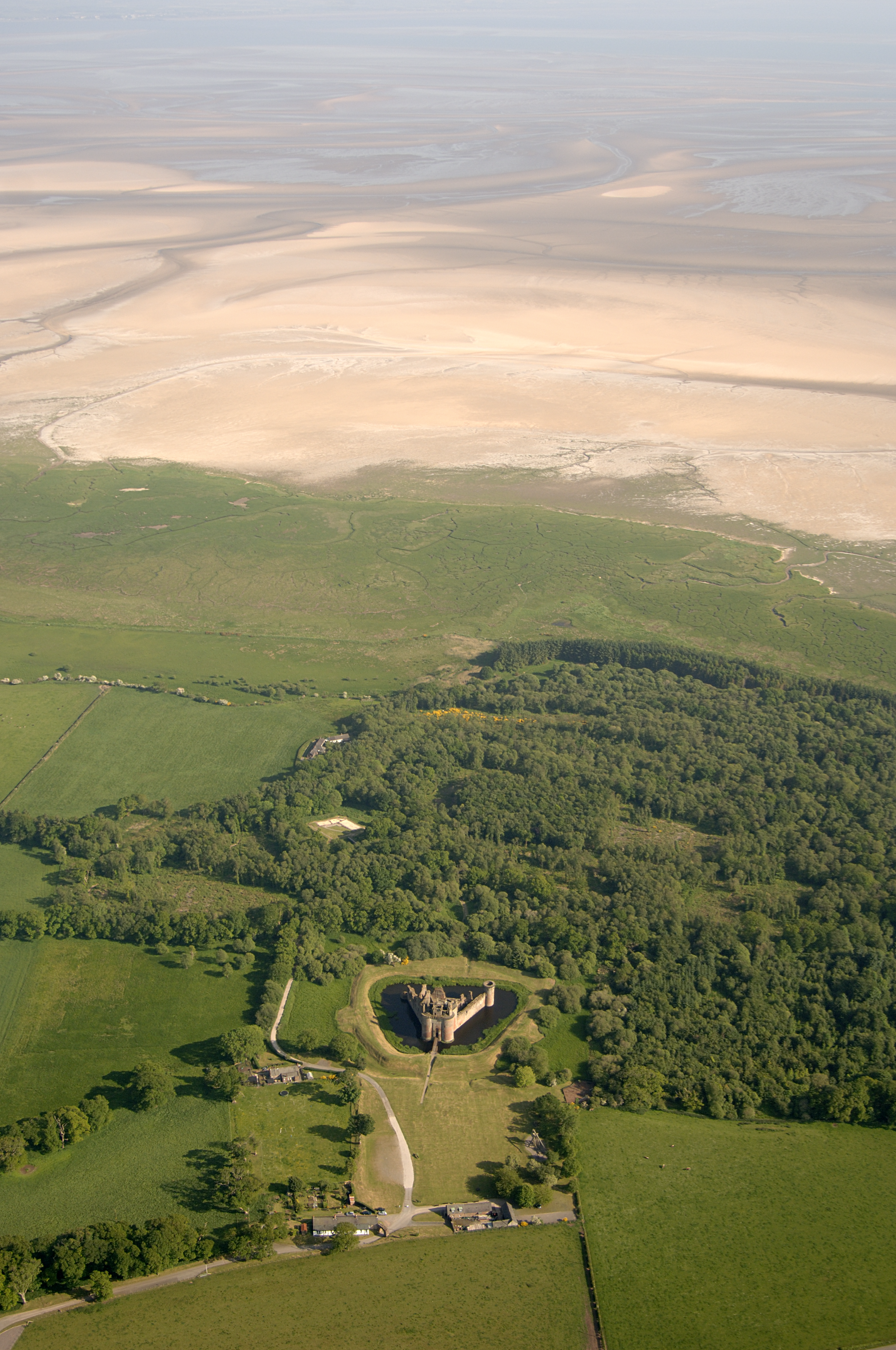
Caerlaverock new castle with old behind it and the coastline Crown Copyright Historic Environment Scotland

Caerlaverock, Dumfriesshire

The aim is to understand the chronology and geography of extreme weather events in the high medieval period, and the effects they wrought on archaeological features that led to the abandonment of the old castle built in c.1229 in favour of the new built 200m away in c.1277. The latest thinking is that it was a series of extraordinary storm surge events which pushed a series of storm driven gravel ridges across the River Nith.

The methodology to find this out is interdisciplinary, using scientific methods to enhance understanding of archaeological fieldwork. The fieldwork will involve the establishment of a series of transects across the site and surrounding landscape from which cores and samples will be extracted for sediment description, stratigraphic analysis, and Carbon 14 dating.

Depending on Covid restrictions, the aim is to start doing the work in May this year with the receipt of the final data in the autumn.
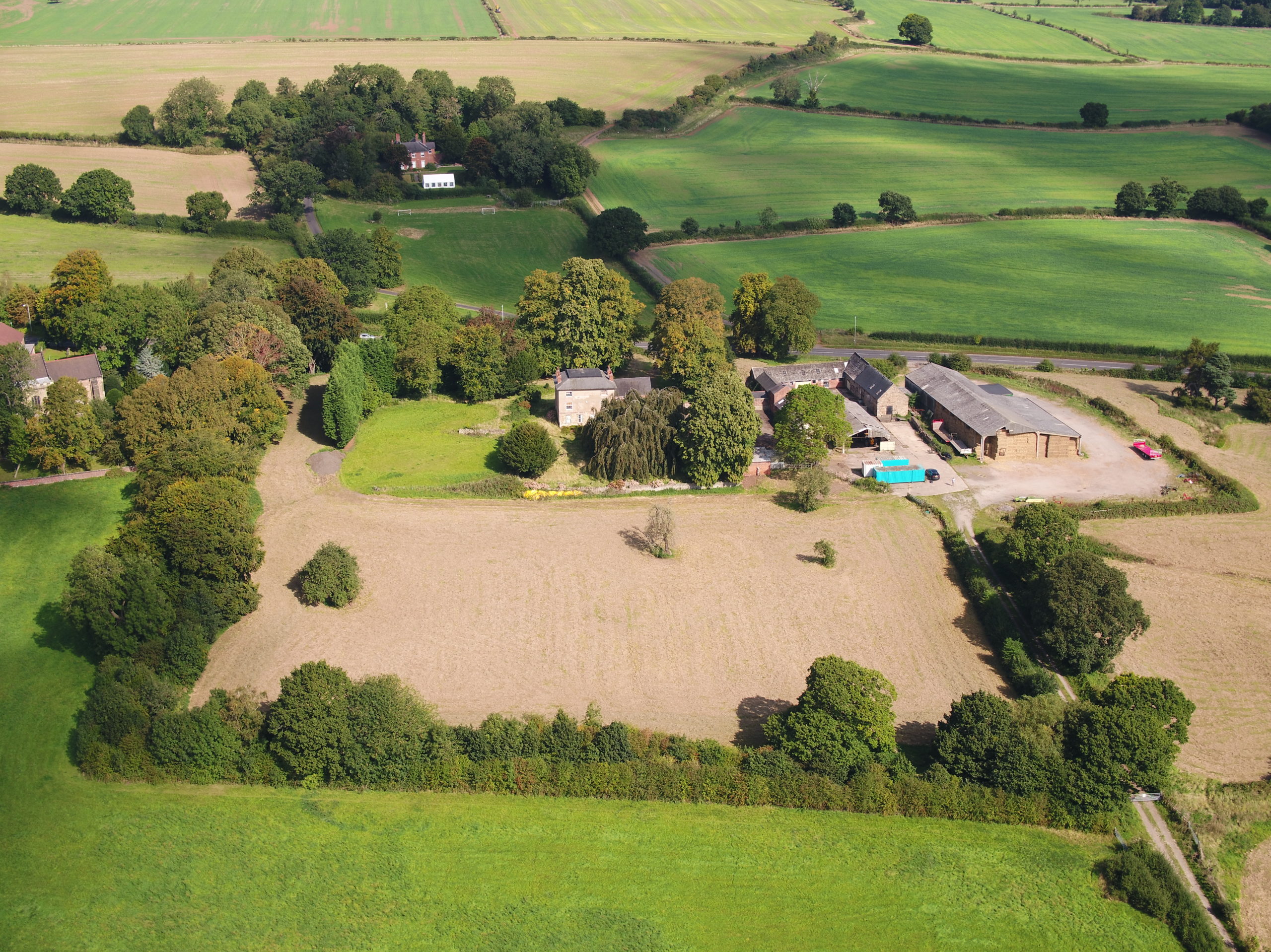
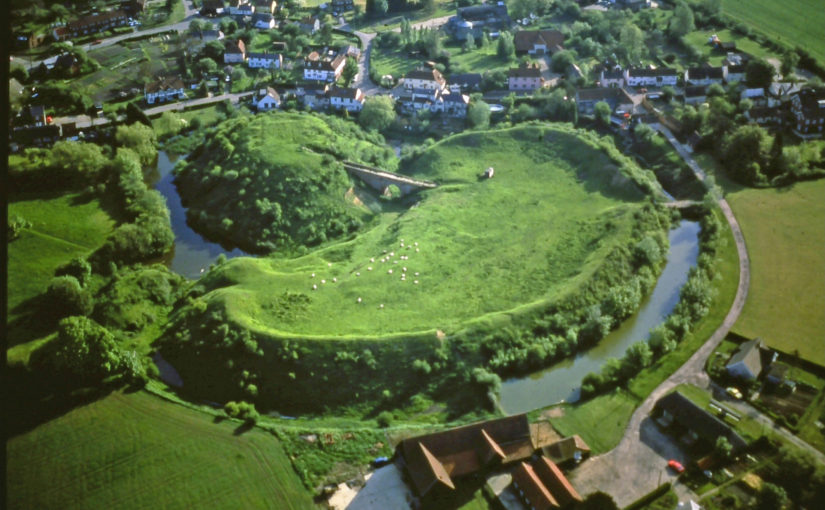
Greasley_Castle from air copyright Neil Gabriel

Greasley, Nottinghamshire

The production of an interpretative phased floor plan for Greasley Castle in Nottinghamshire.  The castle, built in the 1340s, has an obscure history and the understanding of its architectural phasing is at best very cloudy. The site is now a working farm and a number of post-mediaeval structures have been conglomerated around the remains of what is suspected to be a fourteenth century courtyard house with projecting corner towers.

The survey will act as baseline research data for a site which has not previously received serious fieldwork or publication and provide a basis for further research but also for any future conservation needs.

Work on the project will start in the early summer when covid restrictions ease.   
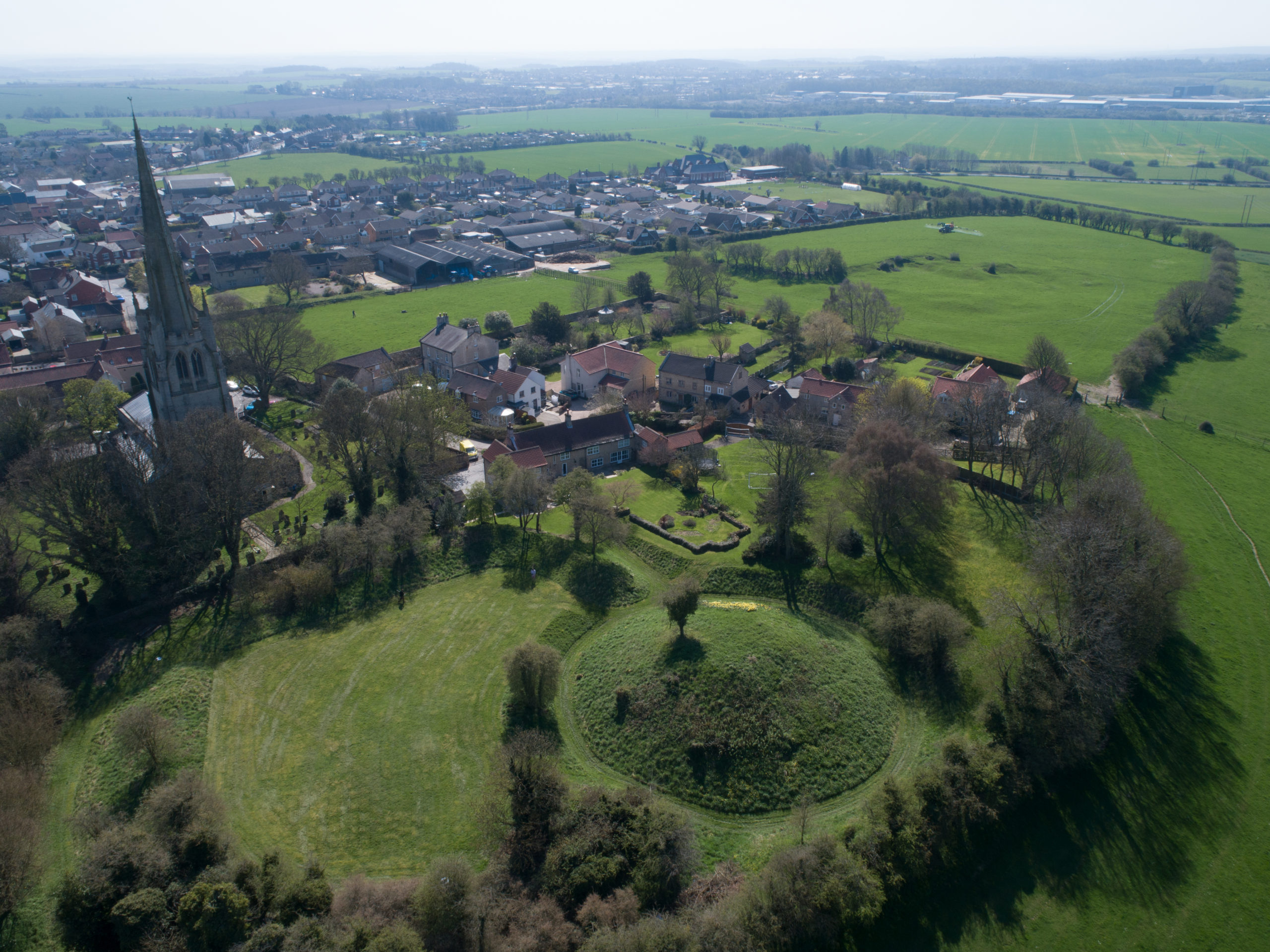
Laughton-en-le-Morthen motte and bailey castle and church

Laughton-en-le-Morthen, South Yorkshire

To provide professional illustration and reconstruction which will also be integrated into a co-authored academic article based on the two previous research projects carried out on the site by Dr Duncan Wright and funded by the Trust. A geophysical survey and then small-scale excavation which give a strong indication that the Normans had built a motte on the site of a high-status Saxon dwelling.

Part of the monies will be used to produce phase plans of Laughton during key stages of its development, and a small percentage will pay for a line drawing of the 11th century grave cover incorporated into the fabric of the nearby church. The aim will be to start the work as soon as possible.
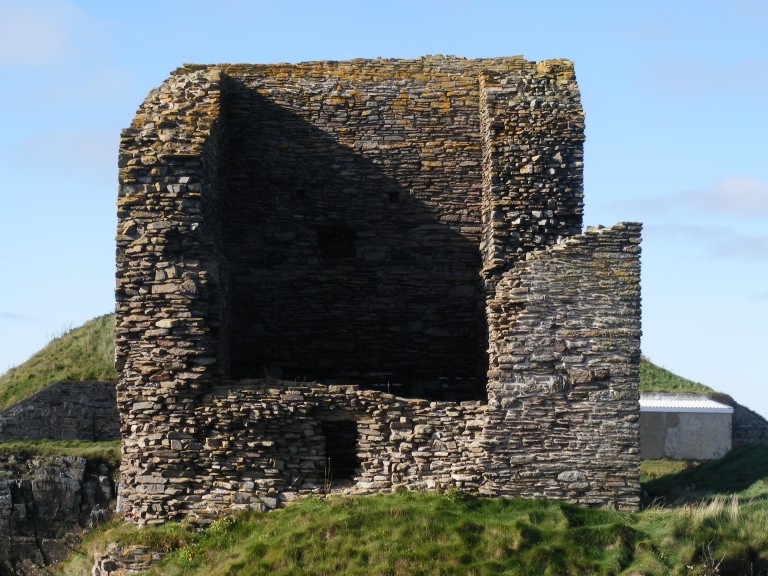
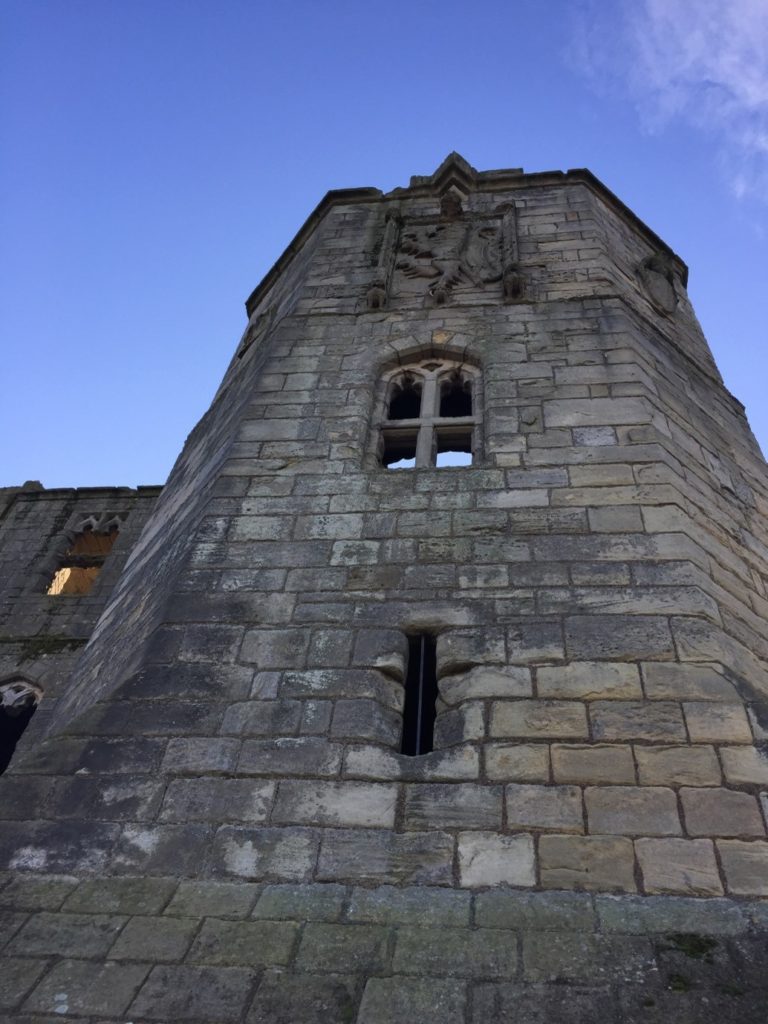
Old Wick Tower copyright Historic Environment Scotland

Old Wick, Caithness

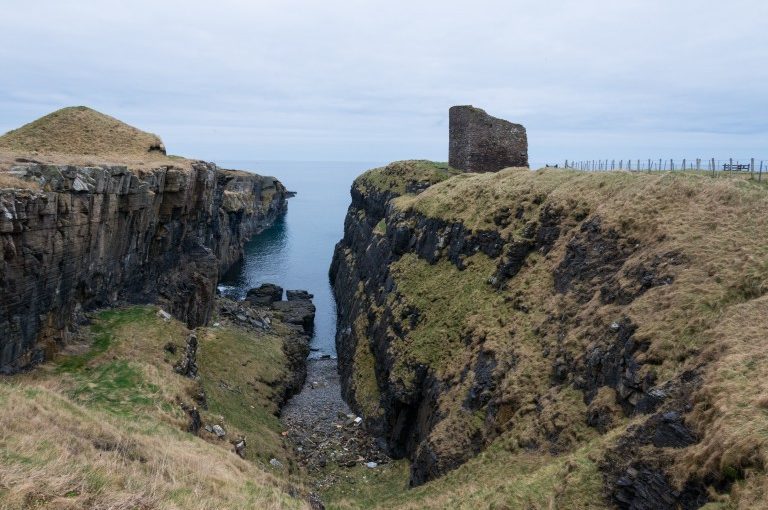
Dendrochronological assessment of timber at the Castle of Old Wick, Caithness thought to be one of the earliest stone castles in Scotland dating from the12th century and the period of Scandinavian ascendency. Current thinking though ascribes the date to the 14th century. Analysing these samples will hopefully provide an answer.

With no architectural features or physical “independent” evidence analysing the remains of a timber joist-end (in poor condition) in one of the joist ends remains the best chance of being able to find an answer. 

The taking of the samples is likely to take place in September when conditions are still going to be favourable as the castle is situated next to the North Sea and the sample can only be found 8 metres above ground level. 
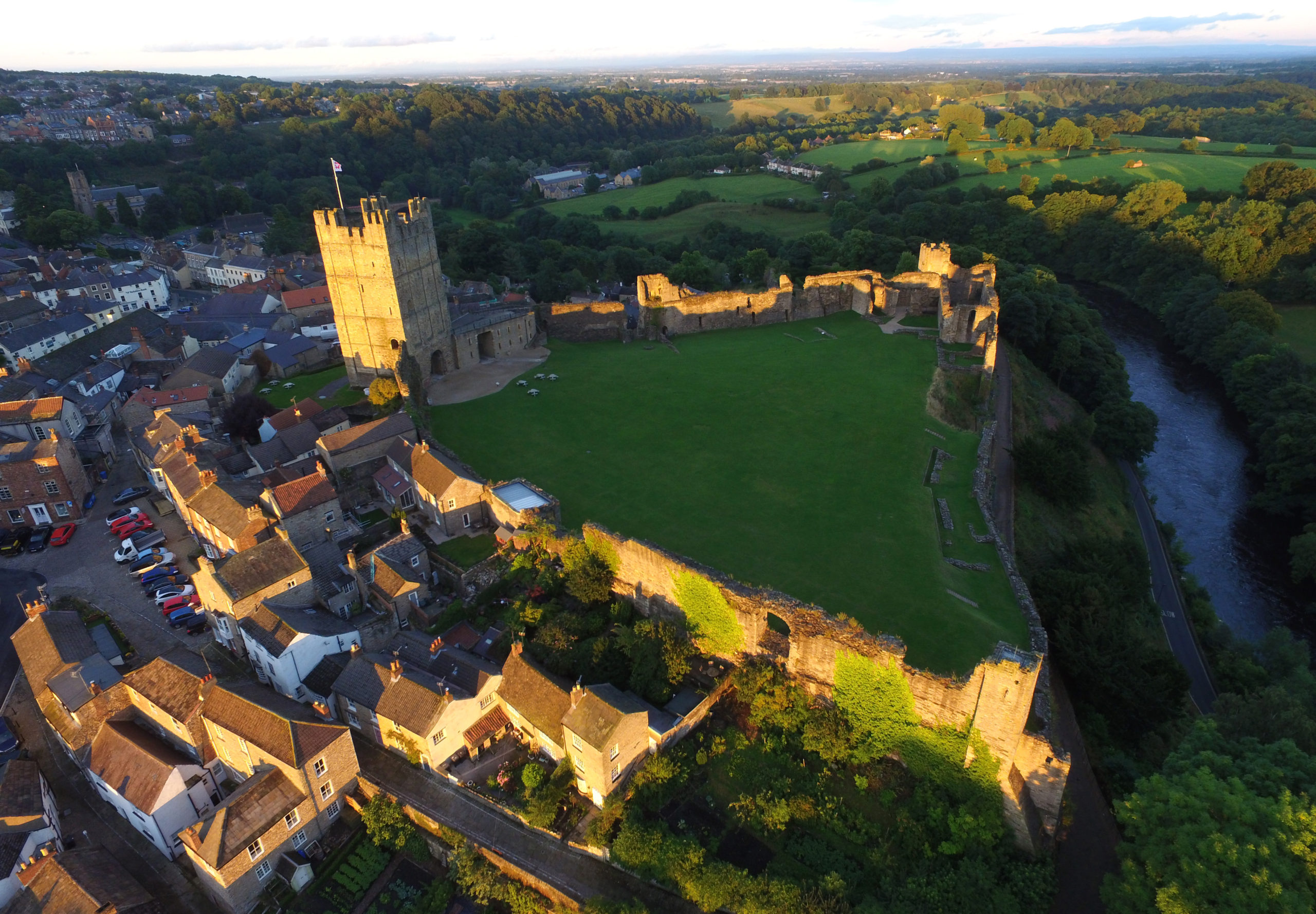
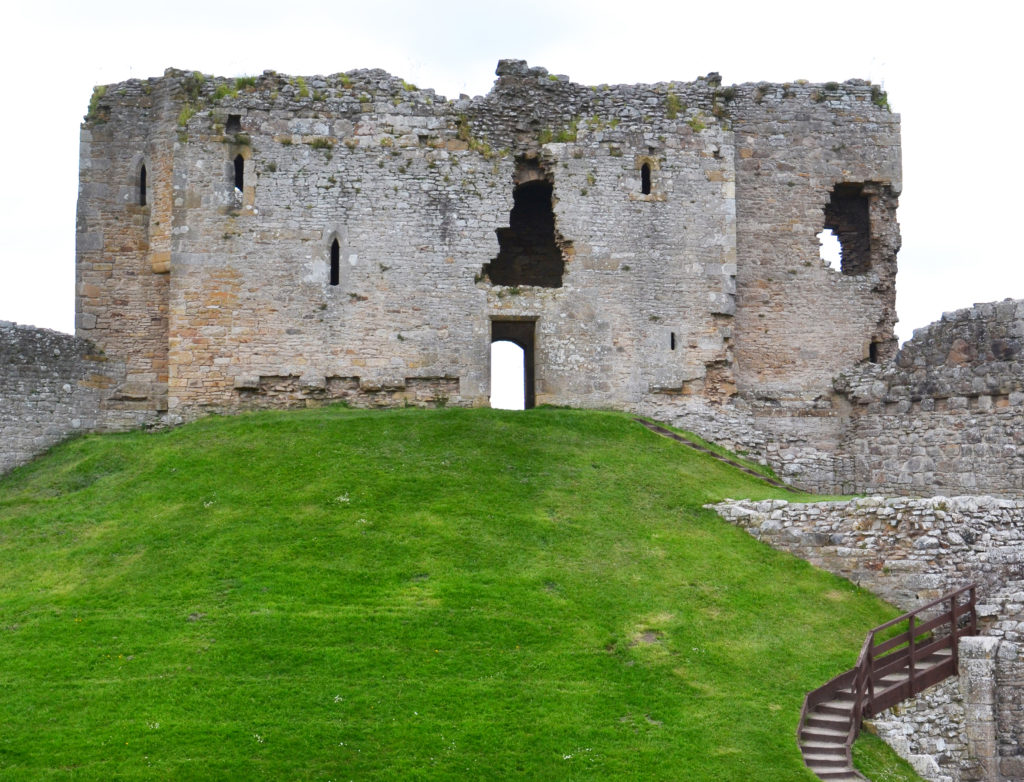
Richmond Castle copyright English Heritage

Richmond, North Yorkshire

Co-funding a three-week excavation of Richmond Castle, one of the best preserved and least understood Norman castles in the UK. The aim is to understand better the remains of buildings and structures primarily along the eastern side of the bailey including near the 11th century Robin Hood tower and near Scolland’s Hall.

Subject to the scheduled monument consent being granted the excavation will take place in late July.
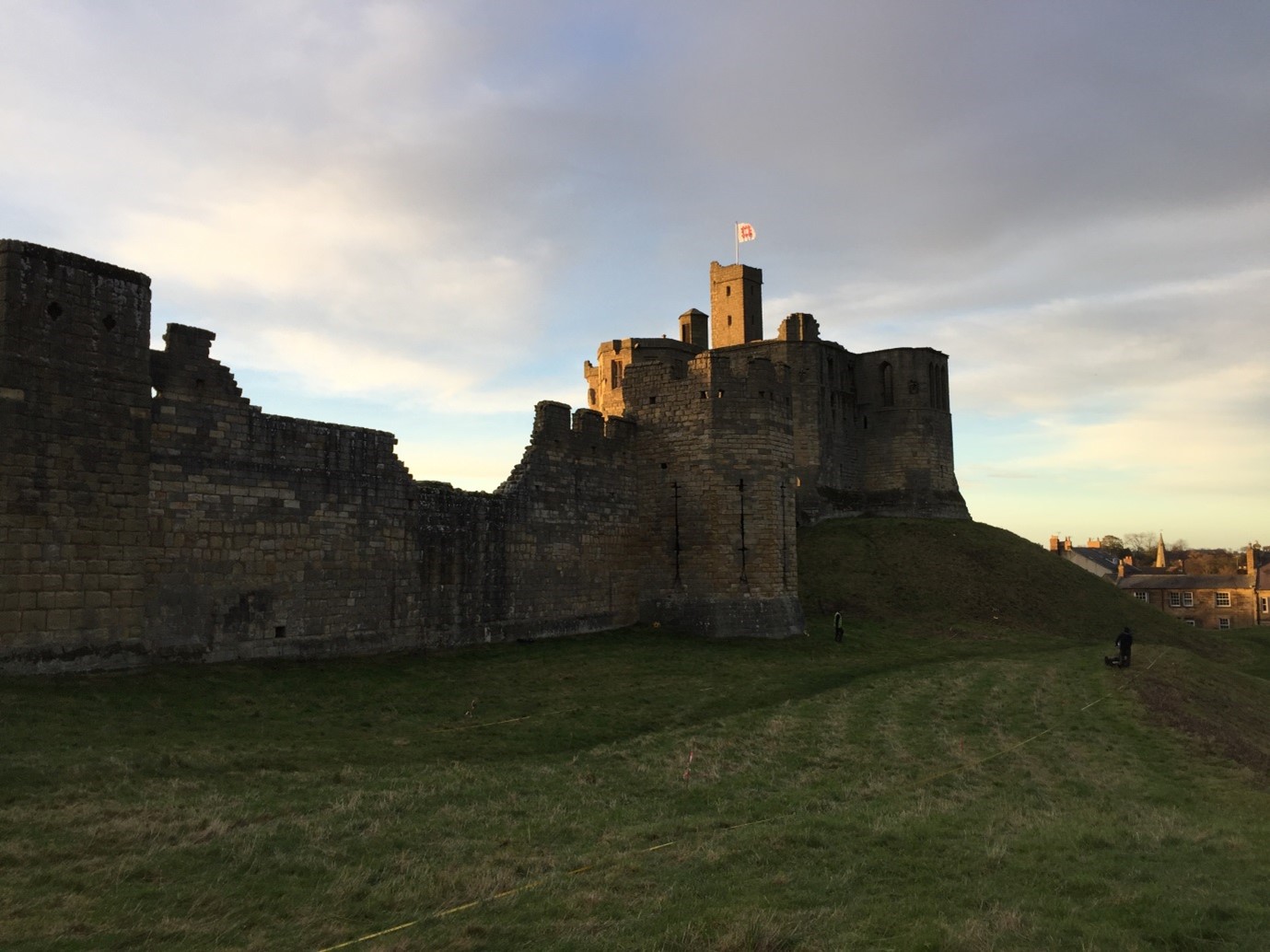
Warkworth Castle, copyright William Wyeth

Warkworth, Northumberland

Geophysical survey to explore evidence for subsurface features in and around the field called St John’s Close in a field adjacent to the castle with the aim to establish the location and eastern extent of the castle’s deer park in the 16th century as well as its entrance way. It also hoped to find evidence of a routeway running parallel to the possible park boundary which could represent an early route to the castle’s gatehouse from the south-west.

The plan is to do complete the geophysical survey by the end of March.

To keep up to date with how these projects progress over the coming months you can:

Subscribe to our quarterly newsletter

And if you donate at least £50 here and be invited to our exclusive visits to these projects: https://donate.kindlink.com/castle-studies-trust/2245 

Featured image: Old Wick Castle, Caithness, copyright Historic Environment Scotland
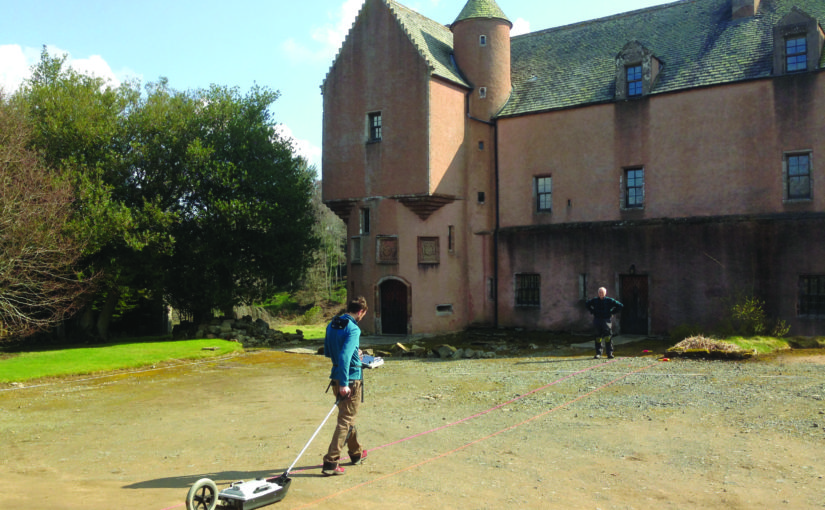
What lies beneath: what a ground penetrating radar survey reveals of Druminnor Castle

Lead Archaeologist on the Druminnor Castle excavation, Dr Colin Shepherd, looks at the results of the ground penetrating radar (GPR) survey of the castle in funded by the Castle Studies Trust in 2019 and what that means for future work at the site.

As a consequence of the GPR geophysics, that were generously funded by the Castle Studies Trust, we have a number of new and potentially interesting anomalies to be investigated. Furthermore, the GPR research has also been instrumental in clarifying other aspects of previously excavated evidence. This has been made possible as, contrary to most instances, the geophysics at Druminnor have been incorporated into the ongoing investigation rather than simply as a precursor to excavation.

Subscribe to our quarterly newsletter

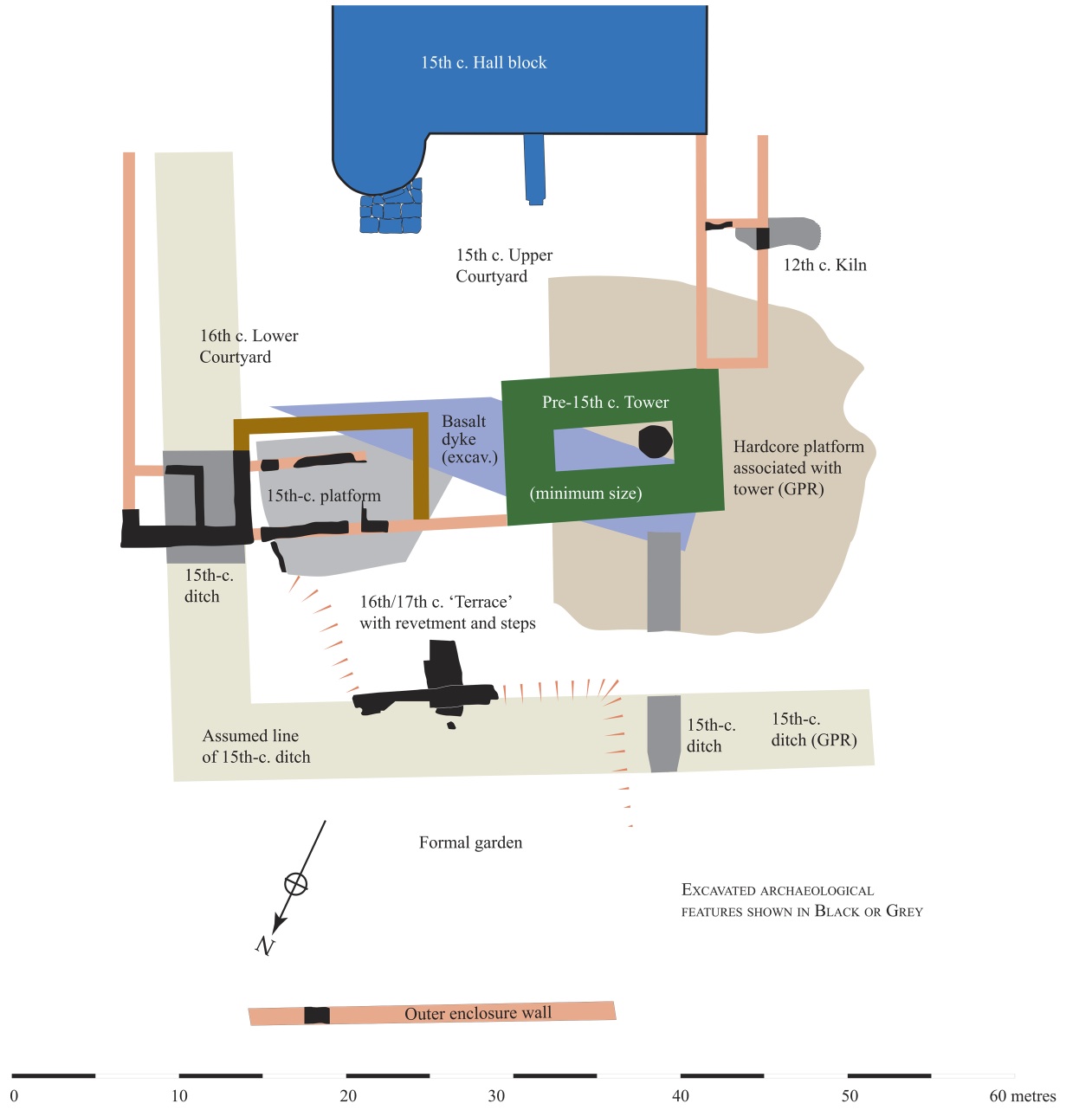
The GPR generated 286 ‘radargrams’ or sections across the site and much time and effort has gone into analyzing these. The radargrams were compared to actual excavated sections. This permitted the creation of a ‘key’ that has allowed us to extrapolate from the excavated sections to unexcavated parts of the site. As a result, we can, fairly comfortably, suggest a developmental plan of Druminnor spanning the 13th to 18th centuries (Figure 1).

Suggested phasing of Druminnor Castle by Colin Shepherd

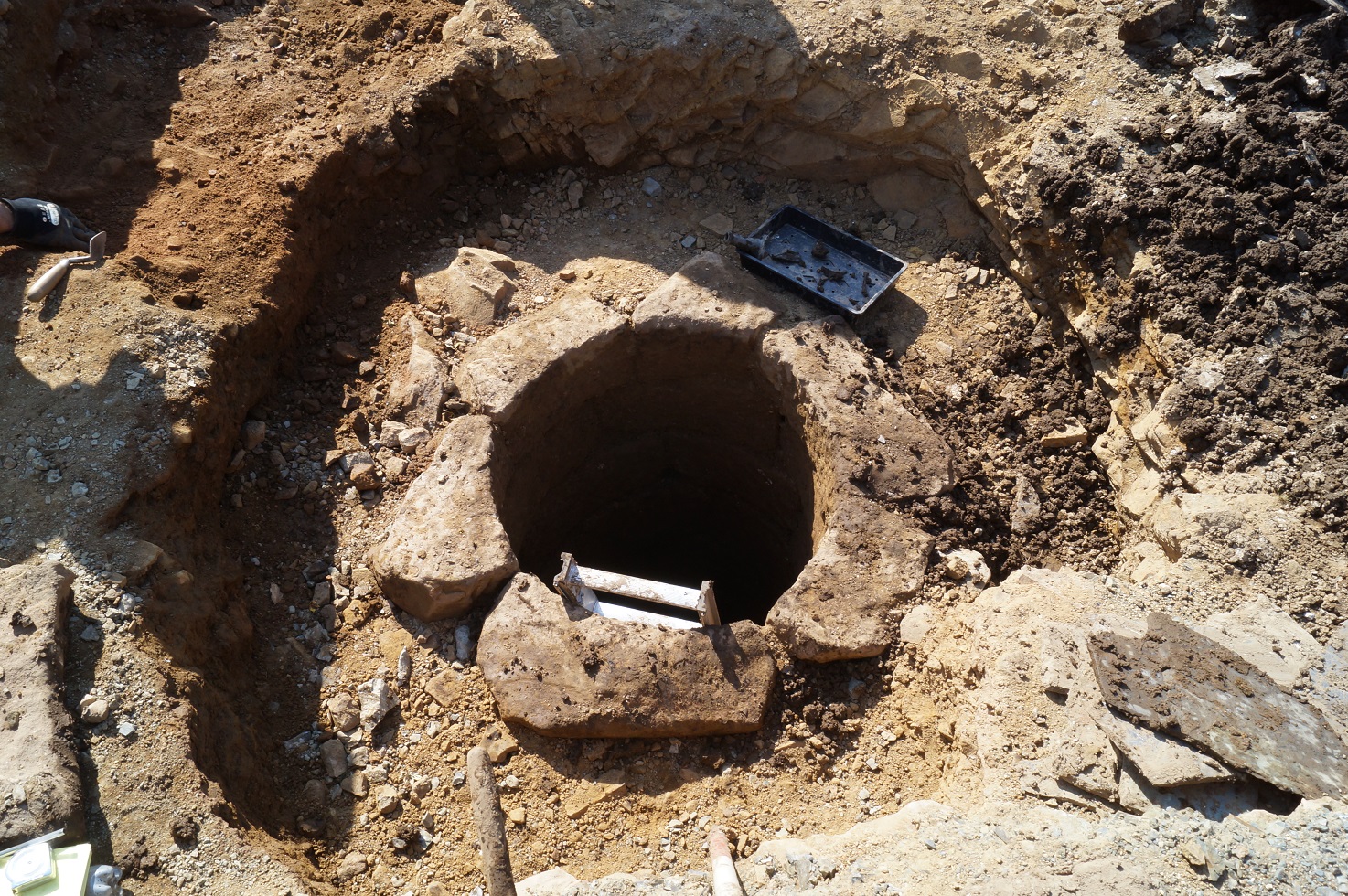
The GPR has suggested the extent of a hardcore platform that appears to have supported the ‘Old Tower’. This was thought to have been the earliest part of the castle but without hard evidence. We hope to test the presumed limit of this platform as we extend our trench southwards from the well that sat within the tower. (As you will recall, the GPR alerted us to that remarkable feature that became a focus for our 2019 season.) The GPR suggests that there may be a revetment supporting the platform at that point. Also, any relationship between this platform and the mid 12th-century kiln will be important in attempting to date that platform and, by extension, the Old Tower itself.

Well found in tower as a result of the GPR survey

The radargrams have also demonstrated the probable line of a terrace and sunken formal garden (red hachures on plan) and permits the excavated section of revetment and steps (shown in black) to be placed in its proper context. This garden probably dates to the 16th or 17th century, though exactly when is still debatable. The construction of the terrace removed all trace of the earlier (early to mid 15th century) ditch and so must post-date that. A late 17th-century Dutch pipe bowl found in the fill of a post hole associated with the steps suggests its removal at around that time or shortly thereafter. No trace of the terrace appears on the estate plans of c.1770.

The line of the defensive ditch has been shown by the radargrams to extend westwards from the excavated portion in Trench 11. This gives us an accurate alignment permitting its course to be drawn, even though the middle section was removed by the terrace. Where its return is at the western end of the site is still a mystery. The eastern arm was excavated in Trench 2 lying beneath the later (early 16th-century) lower courtyard. The 15th-century upper courtyard incorporated the tower with the surviving hall block (shown in blue). The courtyard’s west range can be estimated from remains found during the kiln excavation, but its eastern boundary was removed when the lower courtyard was added.

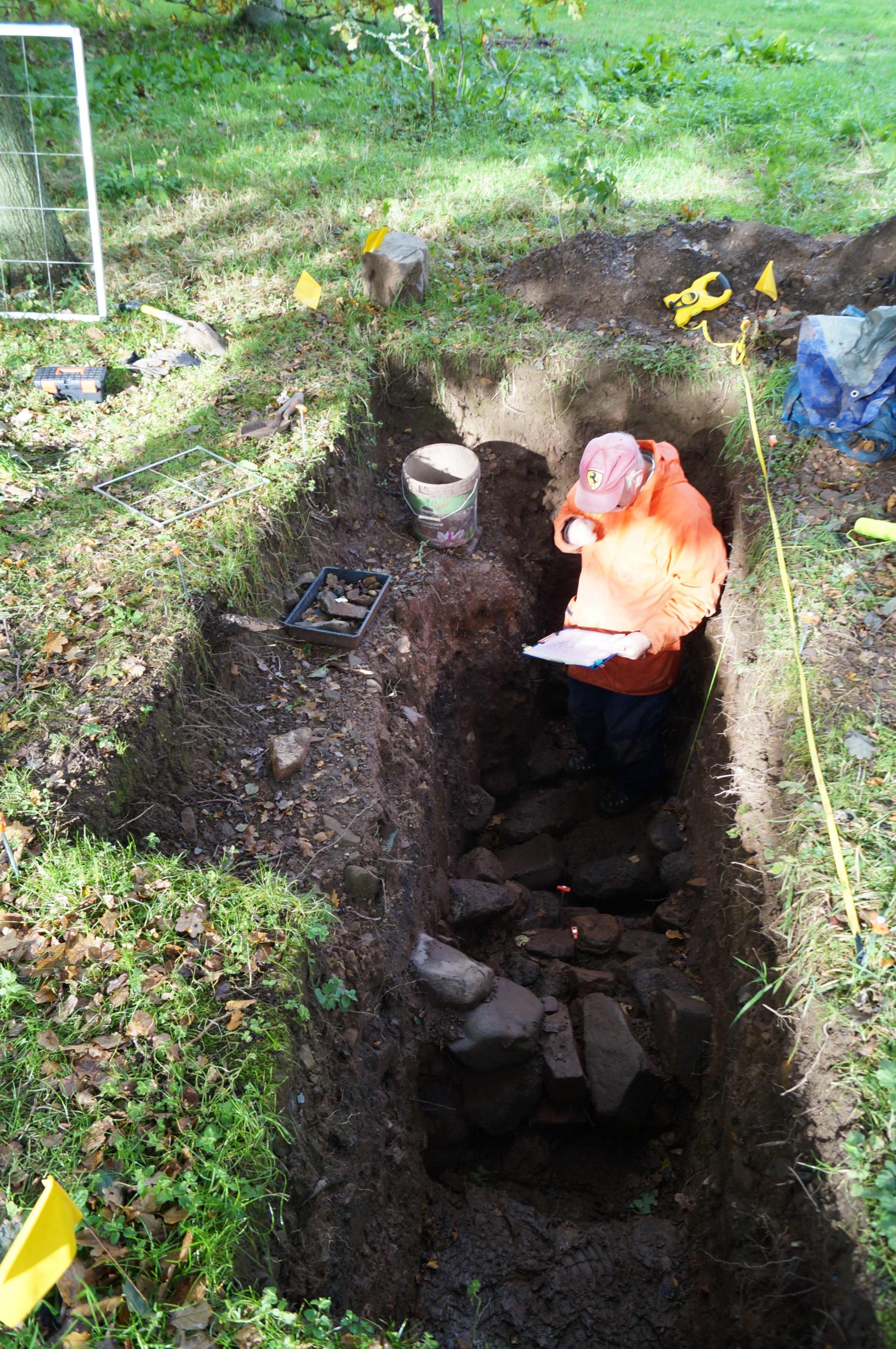
Finally, the GPR revealed the line of the outer enclosure wall as depicted on the estate plans. This was sampled in 2019 and the base of the wall found. The date of this feature is presently unknown and further work needs to be done to try to clarify that matter.

Evidence of landscaping material in outer enclosure copyright Iain Ralston

Sadly, work planned for 2020 included the extension of the ‘well trench’ in the car park to look for the possible revetment suggested by the GPR as well as opening a much bigger area across the outer enclosure wall, as located by GPR. This sits beneath a good metre and a half of later landscaping material (see picture, courtesy of Iain Ralston) and, for safety and archaeological reasons, demands a much larger trench. The keyhole sample trench indicates good survival and, it is hoped, evidence will be found to date the feature and to help explain when this became the northern boundary of the castle enclosure.

The excavated evidence together with the GPR results permit this developmental plan to be made and rough dates affixed. It is worth noting that, prior to our investigations, Druminnor was believed to have consisted solely of the surviving hall block with an attached tower at its western end. Everything not in blue on the plan, therefore, was formerly completely unknown.

Access in 2021 is still, sadly, in the laps of the Gods owing to Covid, but it is hoped that we will be able to get back on track later this year to look for more goodies!

Subscribe to our quarterly newsletter

A pandemic and some missing castles!

Castle Studies Trustee Charles Hollwey looks at the intriguing case of Humphrey de Bohun and the 10 licences to crenellate awarded to him on the eve of the Black Death and what happened to them.

In December 1347, Humphrey de Bohun, 6th earl of Hereford, 5th earl of Essex, was given a licence to crenellate, i.e. to fortify, 10 of his manors. These were:-

  • Writtle, Brymshoo, Apechilde, Depeden, Saffron Walden; Essex
  • Enfield; Middlesex
  • Oaksey, Upavon, Seend; Wiltshire
  • Whitminster; Gloucestershire

The number of licences is the most ever given, at one time, to a medieval noble or gentry. You can find them all on the Gatehouse castle gazetteer website[i]. However scrutiny here would indicate that there is little to see now or indeed was in the past. Most of the sites would appear to have been not much more than lightly fortified manor houses. Only at Saffron Walden is there what would be commonly described as a castle. However here and elsewhere there is little evidence that any building work was done by Humphrey.

Subscribe to our quarterly newsletter

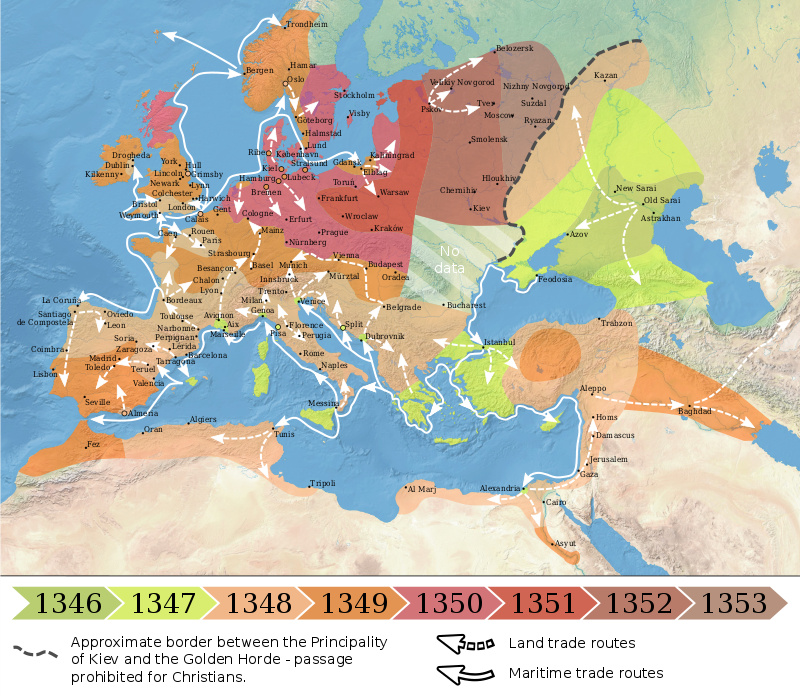
A possible explanation could be the date. In 1348, the Black Death reached England. It was first recorded at Weymouth in June, reaching London by the autumn and was across all southern England by March 1349. It was only in December 1349 that some form of normality returned.

Map of the Progress of the Black Death

Like our current pandemic there were drastic consequences with an estimated 40 to 60% of the population dying, the greatest loss being amongst the working classes. There was a curtailment of much activity for instance major campaigns in the 100 Years’ War with France were halted until 1355. Post the pandemic there was a shortage of labour with an increase in wages, meaning building projects would have been more expensive.[ii]

Dance of Death (replica of 15th_century fresco; National Gallery of Slovenia)

In such a situation did Humphrey cease his building plans? Before jumping to this conclusion we need to probe into the impact on castle construction, the nature of licences to crenellate and the life of Humphrey.

  • Impact on castle building? The consensus view seems to be, certainly in the long term, this was not great. John Goodall, the eminent castle expert suggests it raised the financial threshold of construction and increased the relative importance of royal works. However it did not “deter the very richest—from embarking on splendid building projects”[iii]
  • Nature of licences to crenellate?  It is not unusual to have licences without ensuing building work. The research of the late Charles Coulson and Phil Davies has highlighted that the true nature of such licences was not to control castle building but for the recipients to obtain the prestige, status and legitimacy of having such documents, whilst also generating revenue to the crown.[iv] Many were made after castle building or were given to buildings with minimal fortifications and many seemed to have led to no construction. The number given to Humphrey whilst high was similar to a few Bishops, for instance the bishop of Salisbury received licences for 10 sites in 1377 and the bishop of Chichester for 12 houses in 1448. Similarly to Humphrey, there was little consequently to see.
  • Life of Humphrey? Born in 1309 a younger son, inheriting in 1336, he served in the Breton campaigns of the Hundred Years’ War with involvement in the victories of Morlaix (1342) and La Roche-Derrien (1347).[v] However I am unaware of any subsequent campaigning and despite being the Lord High Constable of England he was never a favourite of Edward III. He died in 1361 at Pleshey Castle leaving his nephew as heir.

There is not a simple answer to this plethora of licences and missing castles. It is possible some were to underpin his legitimacy to manors where his inheritance might have been disputed, such as Seend and Upavon. Similarly at Saffron Walden, which had been slighted as a castle during the anarchy. Others might have been to emphasis his premier noble status.

Perhaps what was important pre-pandemic was not so afterwards? The impact on his psychological wellbeing is unknown but might be significant as can occur in our pandemic. In 1350 he commissioned the translation of the romance poem ‘Guillaume de Palerme’. He did not seem to have married or had children.

In my view the answer to this mystery is not simply the pandemic but it might have been a factor. I do think more understanding of his life might be the key.

Subscribe to our quarterly newsletter

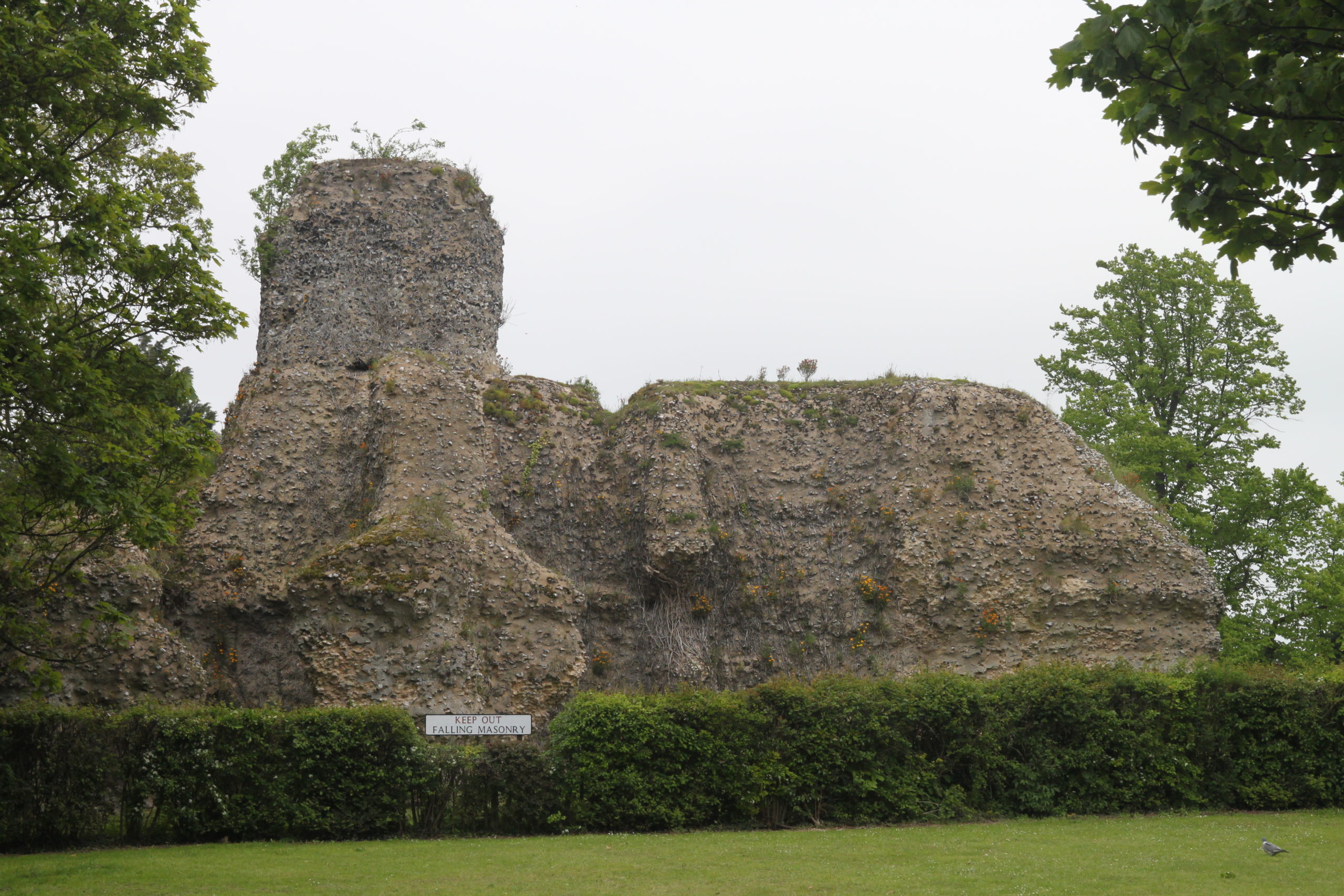
Featured Image: Walden Castle, Saffron Walden, slighted during the anarchy.


Footnotes

[i] www.gatehouse-gazetteer.info

[ii] Black Death in England Wikipedia

[iii] Goodall, John (2011), The English Castle, Yale University Press, p 258

[iv] Davis, Philip (2009), ‘Licences to Crenellate‘, Castle Studies Group Journal 22

[v]  Chisholm, Hugh, ed. (1911). “Bohun“. Encyclopædia Britannica. 4 (11th ed.). Cambridge University Press. p. 138.

All pictures sourced from Wikimedia Commons; Links, attributions and licences as follows

https://commons.wikimedia.org/wiki/File:Walden_Castle_in_Saffron_Walden.JPG

https://commons.wikimedia.org/wiki/File:Dance_of_Death_(replica_of_15th_century_fresco;_National_Gallery_of_Slovenia).

https://commons.wikimedia.org/wiki/File:1346-1353_spread_of_the_Black_Death_in_Europe_map.svg

Castle Studies Trust Christmas Quiz – the Answers

So how many did you get right? Find out below

  1. Lincoln (2020 project)
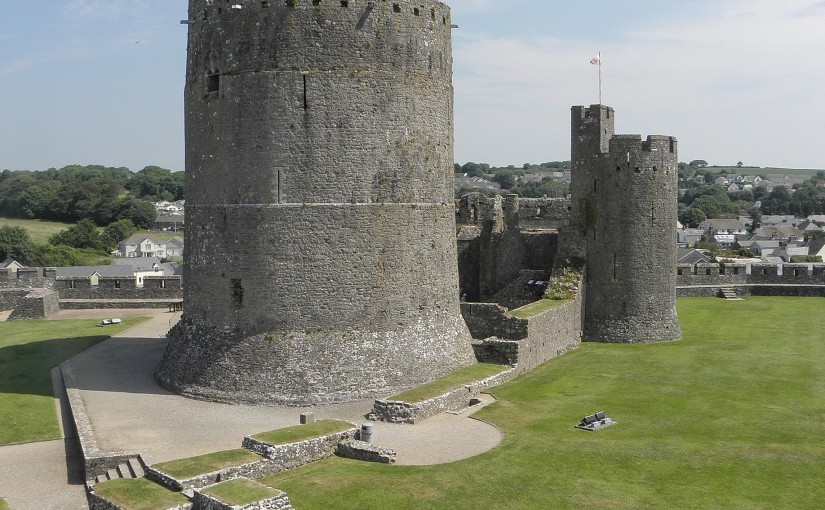
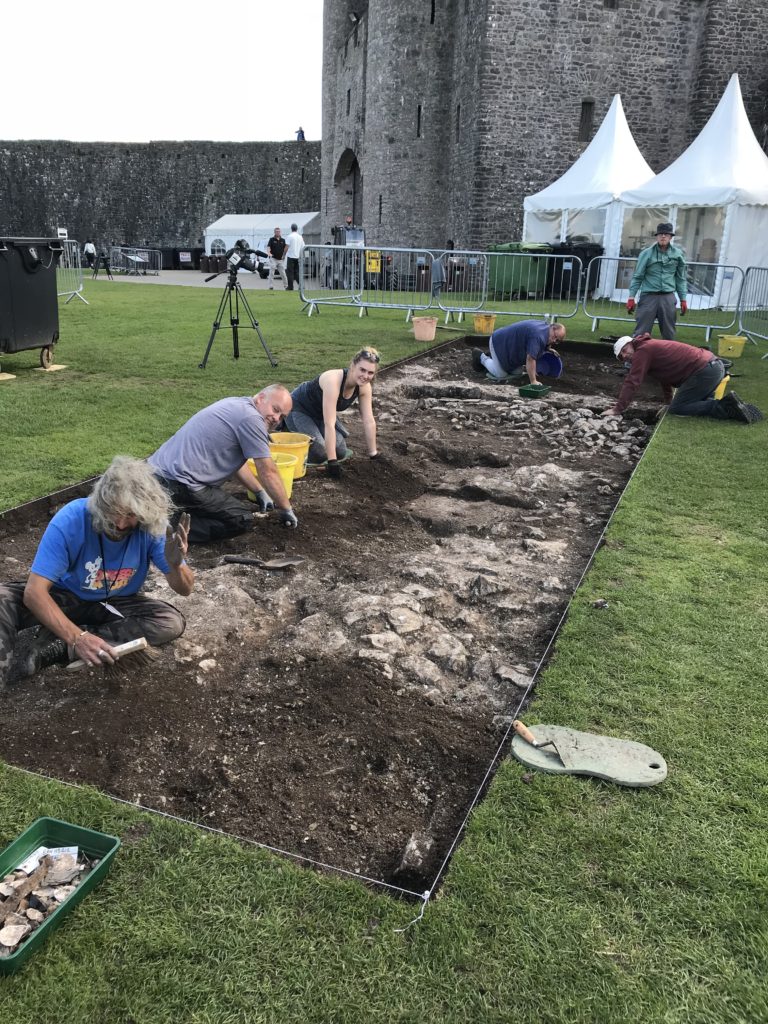
  2. Pembroke (2018)
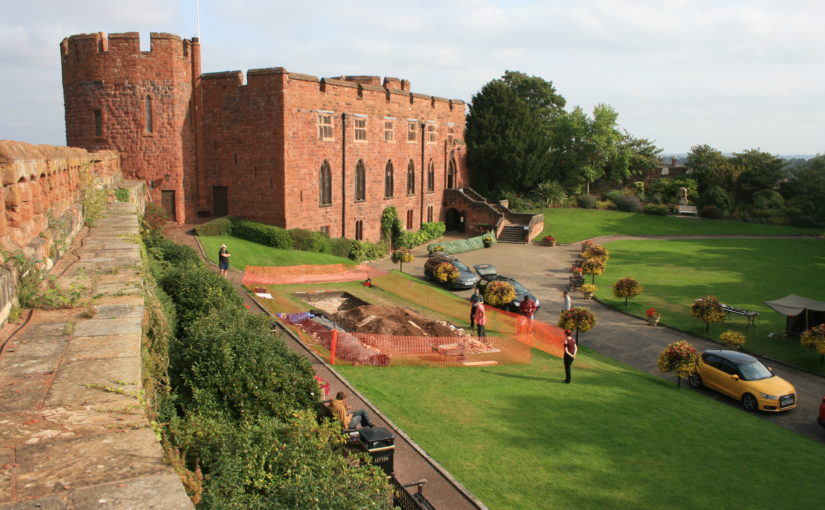
  3. Shrewsbury (2018 and 2019)
  4. Pulverbatch, Shropshire (2017)
  5. Pleshey, Essex (2015)
  6. Druminnor, Aberdeenshire (2019)
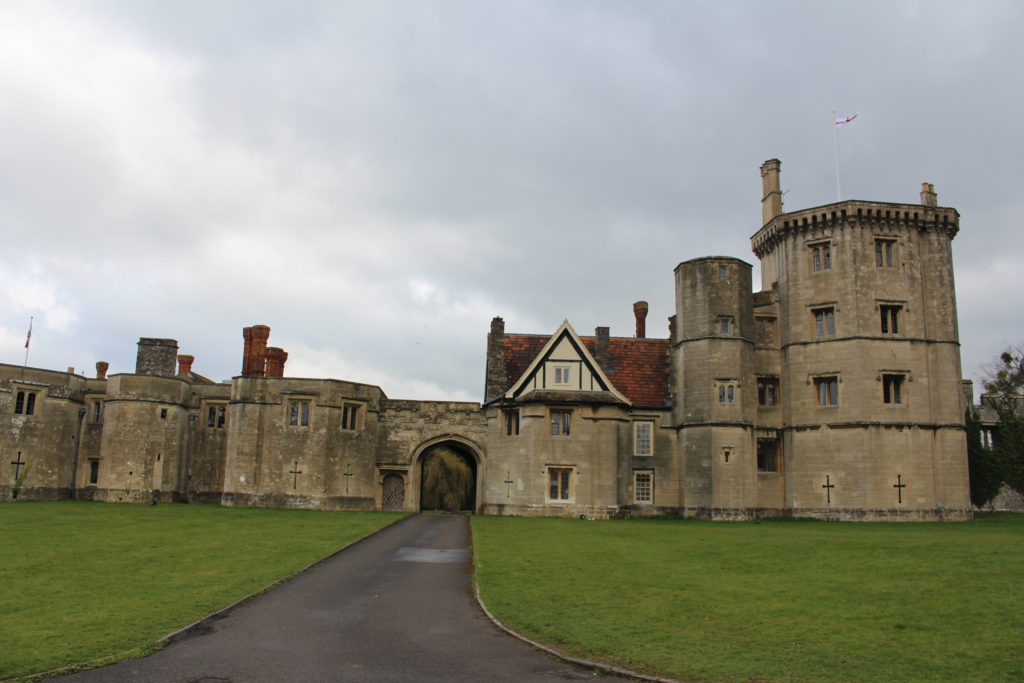
  7. Thornbury
  8. Warkworth (2020)
  9. Ruthin
  10. Ravenscraig, Aberdeenshire
  11. Hoghton Tower, Lancashire (2019)
  12. Wigmore
  13. The Wirk (2020)
  14. Slingsby, Yorkshire – article by Bethany Watrous on her digital reconstruction
  15. Caus, Shrophshire (2016)
  16. Gleaston, Cumbria (2015)
  17. Laughton (2018, 2019)
  18. Shrewsbury again (found during 2018 execavation)
  19. Clifford, Herefordshire (2017)
  20. Ballintober, Ireland (2014)

Subscribe to our quarterly newsletter

Castle Studies Trust Christmas Quiz

To help keep you entertained during this strange and hopefully unique Christmas the Castle Studies Trust has prepared a Christmas quiz. Can you name the castles these pictures are or images are taken from either our projects from all years or blog posts during the year?

Subscribe to our quarterly newsletter

  1. Where is this?

2. Where did this CST funded excavation take place?

3. Where is this?

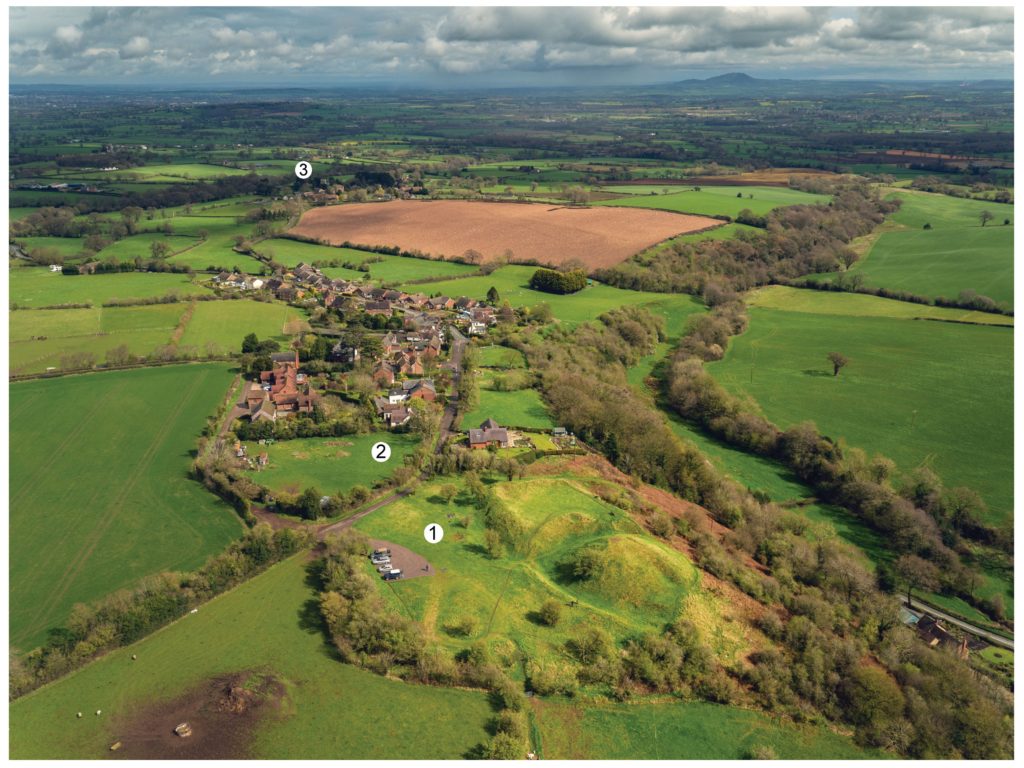
4.What motte and bailey castle, which we funded a geophysical survey for, is this?

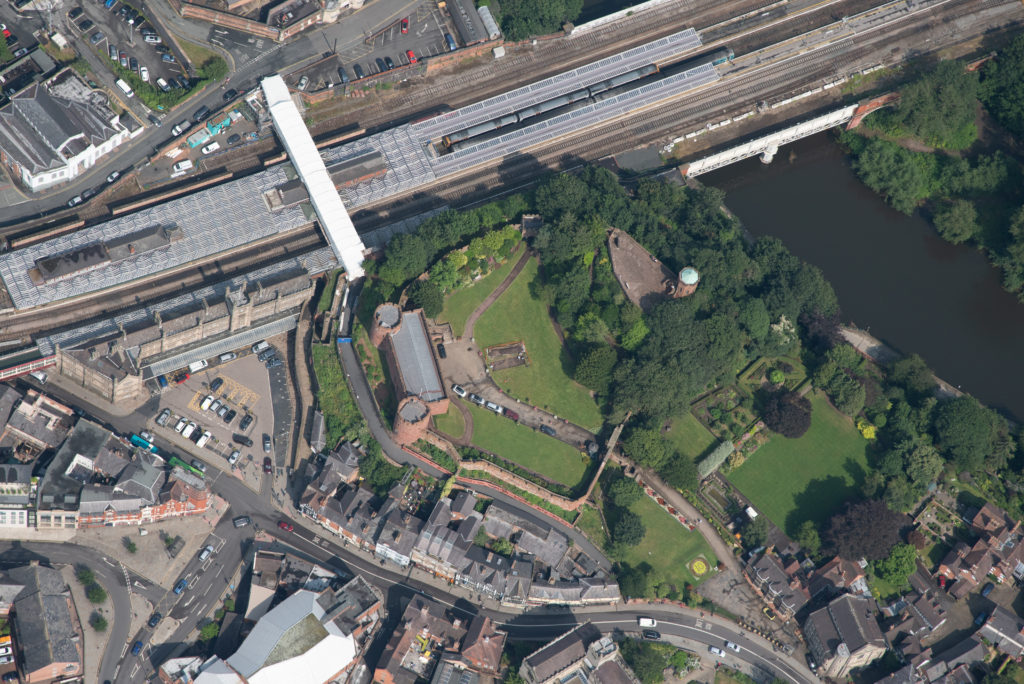
5. Where can you find this bridge which the Trust co-funded post excavation work on?

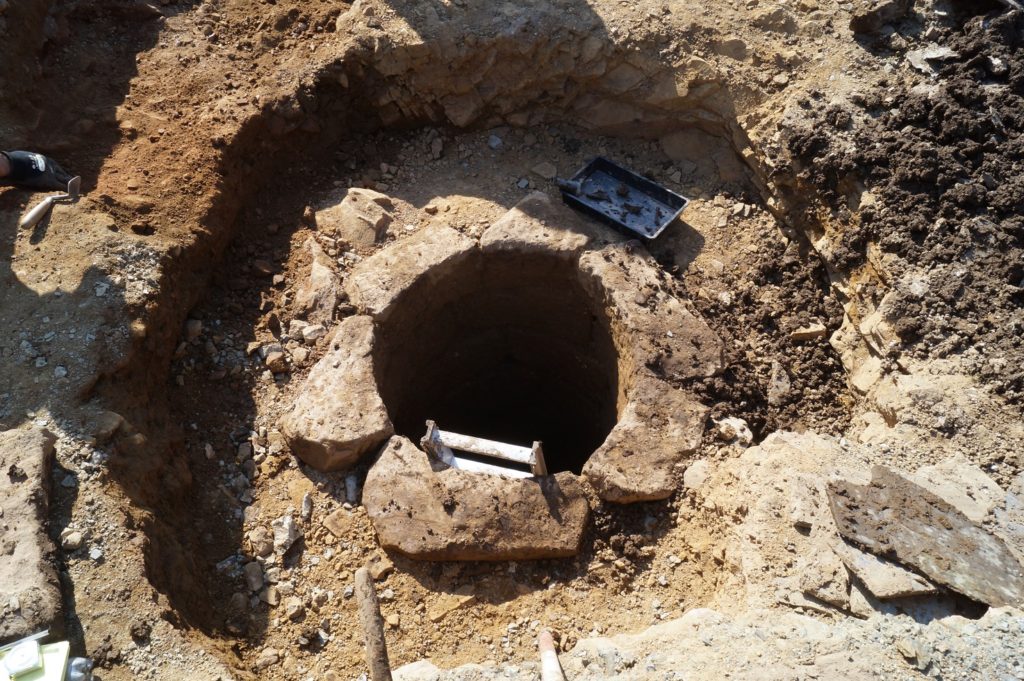
6. In which Scottish castle did the geophysical survey we funded find this well?

A latter coming protruding from a circular opening in the ground.
Photo by Iain Ralston and licensed under a Creative Commons Attribution ShareAlike 4.0 licence.

7. Where is this?

8. Where is this great tower?

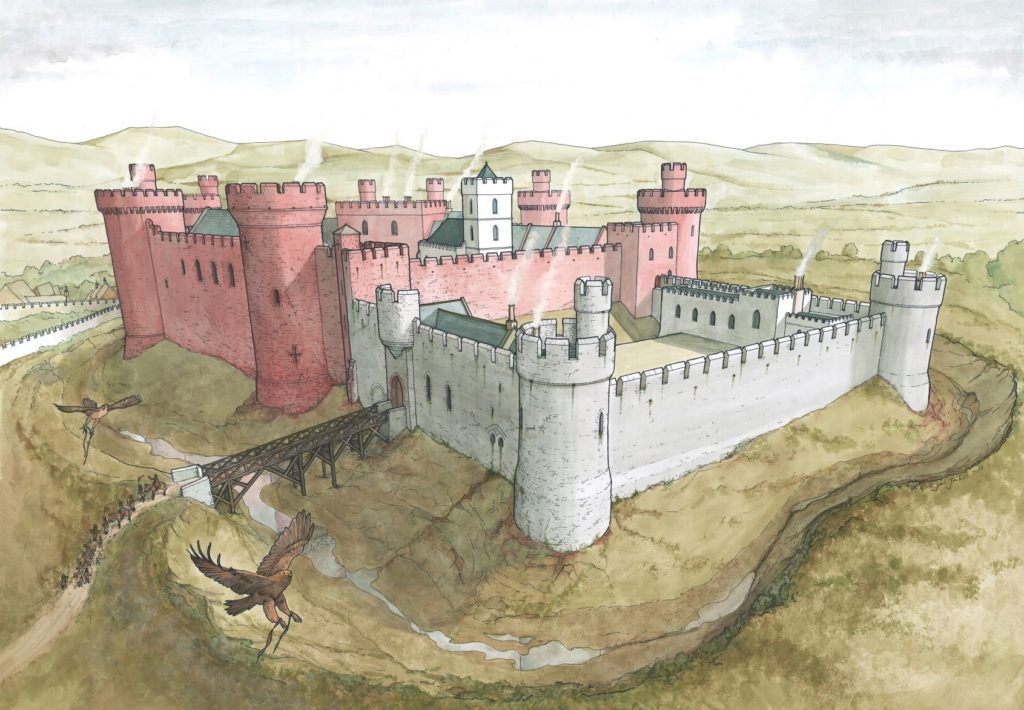
9. This is a reconstruction drawing of which castle?

10. Where is this castle built by a queen?

Subscribe to our quarterly newsletter

11. Where is this castle?

12. The entrance to which border castle is this?

13. Where is this base a tower? It’s one of the projects the CST has funded

14. Where is this?

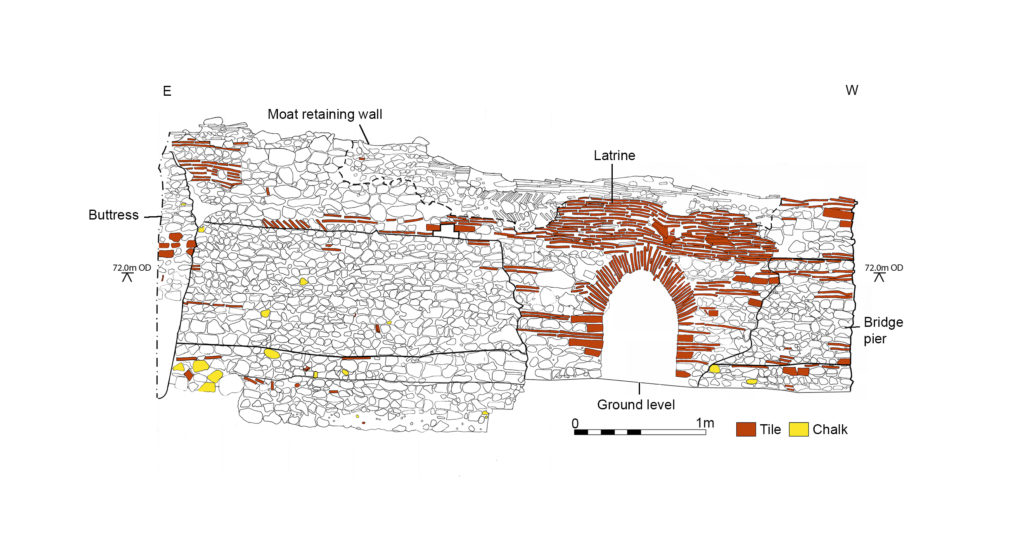
15. The plan of which castle is this, which the CST funded work on?

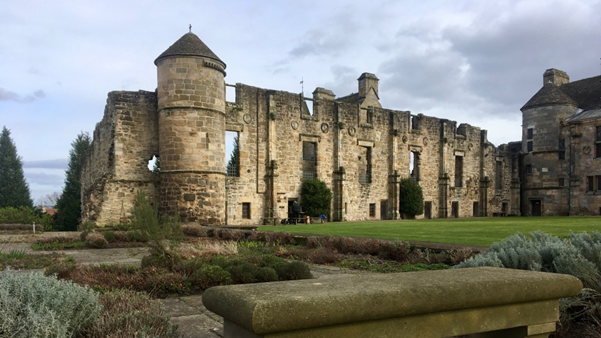
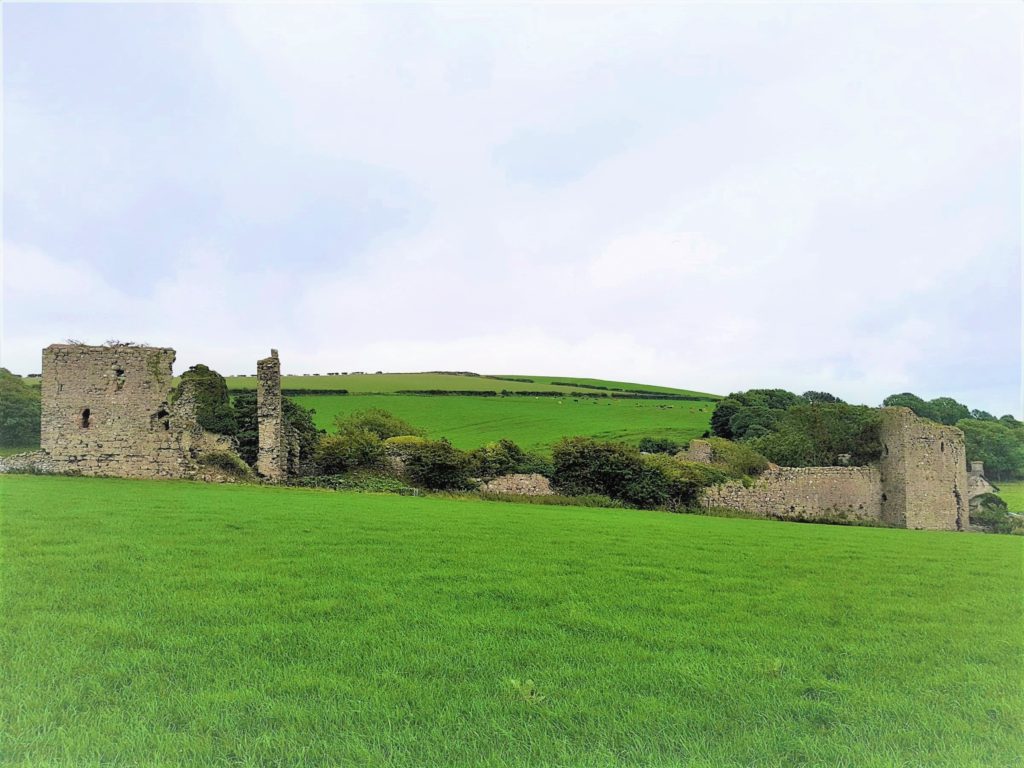
16) Which castle is this? We funded a building survey on it previously?

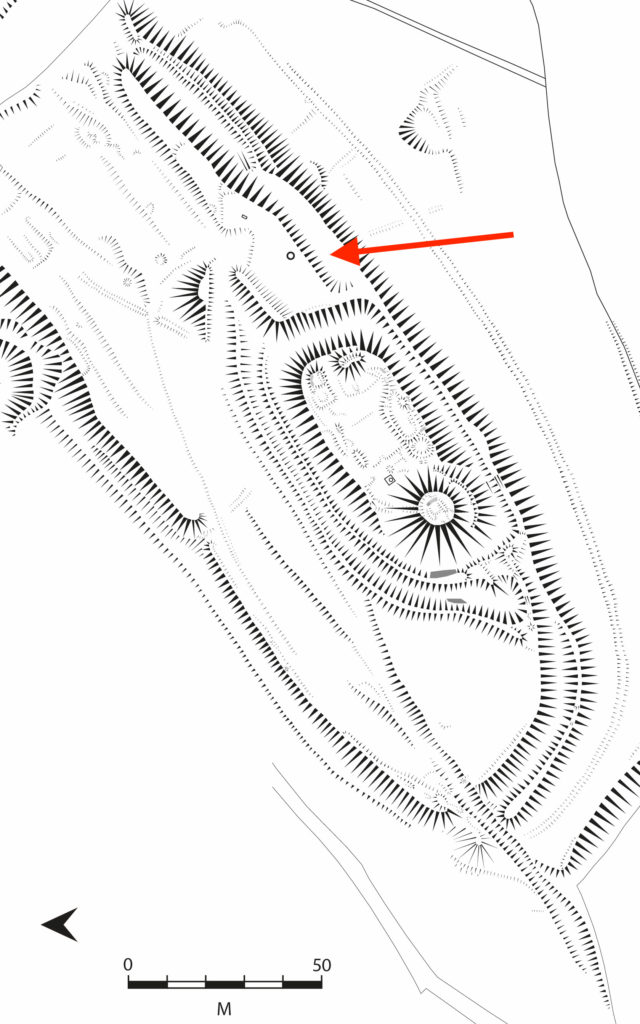
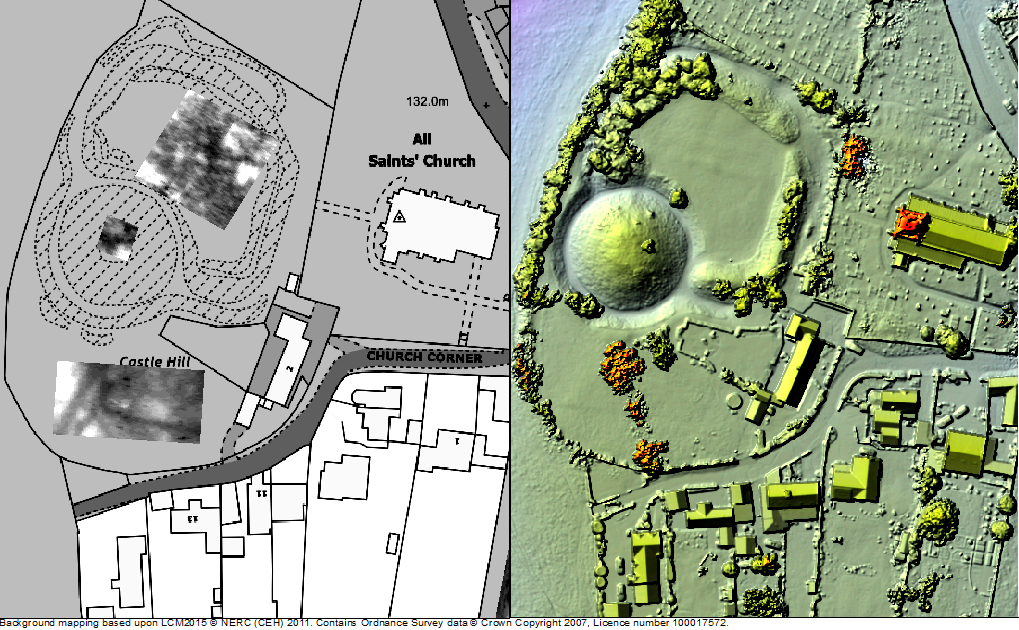
17. For which castle are these aerial images of, which include results of the geophys survey the CST funded on it?

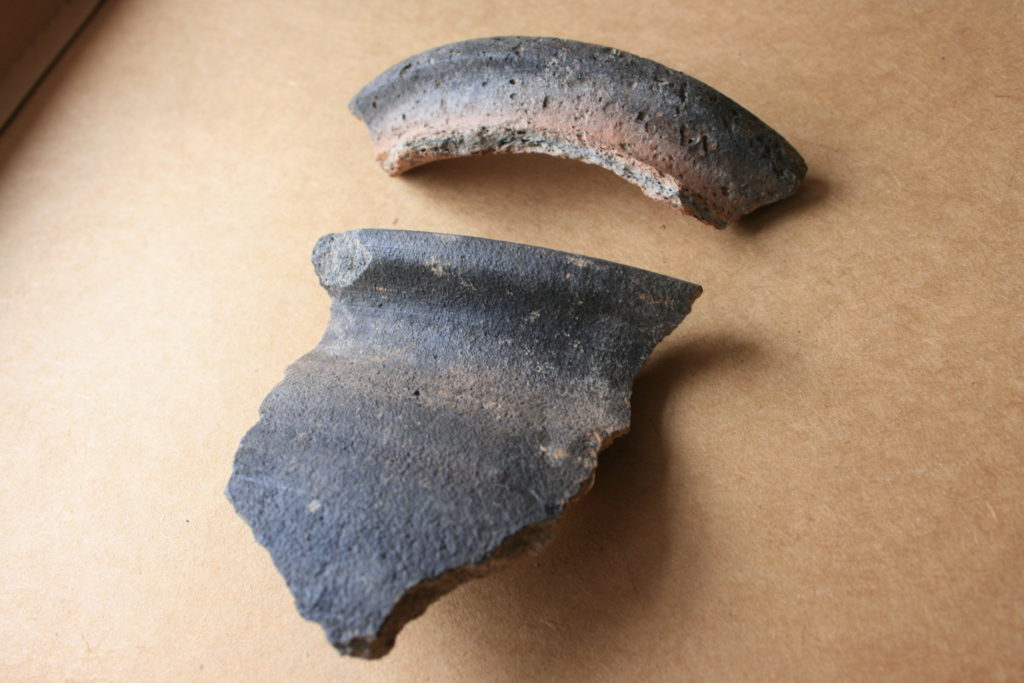
18. These pieces of Saxon pottery were found at which excavation the CST funded?

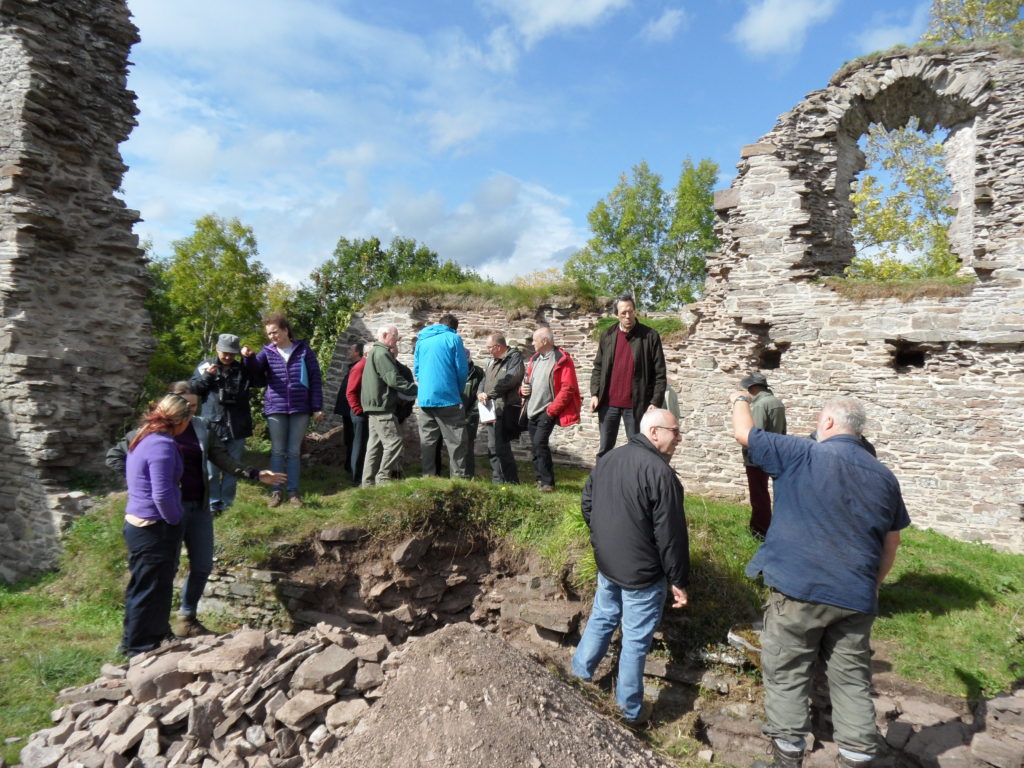
19. This is a CST study day at our first ever excavation we funded? Which castle?

20. The CST funded a buildings survey of this castle. Where is it?

Subscribe to our quarterly newsletter

James of St George and the Edwardian Castle

Malcolm Hislop, researcher and author, writes about some of the themes of his most recent book.

Often thought as a highpoint of English military architecture, the castles of Edward I and his followers in north Wales hold a special place in hearts and minds of many in this country and abroad. Scholars have spent much time and effort on researching this (relatively brief) episode of intensive castle construction. We feel we know these buildings so well, and yet, notwithstanding the many accounts of individual castles, it is strange to relate that no lengthy general survey of the architecture (as opposed to the building history) has ever been published. Nor, despite presenting an obvious opportunity for furthering our understanding of the manner in which architectural style was formulated and disseminated in the late thirteenth century, have the influences on and of the Edwardian castle been widely discussed.

Conwy. The outer gatehouse and truncated approach ramp of c. 1283 by James of St George.

Edward’s Welsh castles are inextricably linked to the technical mastermind behind the project, the Savoyard mason, James of St George. Castle builders (in the practical sense) tend to be less well known than their patrons. The ones who can be identified are far outweighed by those who remain anonymous. Moreover, a master builder whose career can be reliably reconstructed to a significant degree is a rarity to be cherished. Master James is one such exception, his reputation as an architect of international repute being established in one of the great historical detective stories of the later twentieth century, which did much to personalise the often anonymous process of medieval construction.

Beaumaris. The North Inner Gate of c. 1295 etc. by James of St George.

Master James’ star has not ridden quite so high in recent years. His architectural role questioned, his artistic contribution doubted, James now seems a slightly diminished figure, with only his organisational and planning abilities remaining unchallenged. There were certainly other master builders employed on the royal works who exercised a degree of independence; it is clear too that there were other influences on the royal works in Wales than can be accounted for by Master James’ accumulated experience in Savoy. In particular, what was the part played by Walter of Hereford, the technical and artistic master mind behind Vale Royal Abbey, and resident master at Caernarfon from 1295? These are interesting issues requiring a greater depth of enquiry, but the initial conclusions of a broader than usual sweep of the architecture are that in addition to his organisational and technical responsibilities Master James also exercised a significant creative role.

Duffus. The great tower of c. 1305 built in Moray with Edward’s assistance.

Edward’s crushing of all resistance in north Wales was swiftly followed by an attempt to subjugate Scotland. Building work in Wales was mothballed and James of St George and Walter of Hereford were redirected northwards. The impact of Edward’s invasion of Scotland on castle building in the northern kingdom tends to receive little attention. Most of the royal works were in timber, little survives above ground level, and archaeology has not yet revealed much that can enlighten the subject. On the other hand, it is becoming increasingly clear that there is a good deal more to say about the contemporary building works of his supporters, that survival of which is much greater, and that in a number of instances there was an English contribution to design and construction. The story of Edwardian castle building in Scotland is only just beginning to take shape.

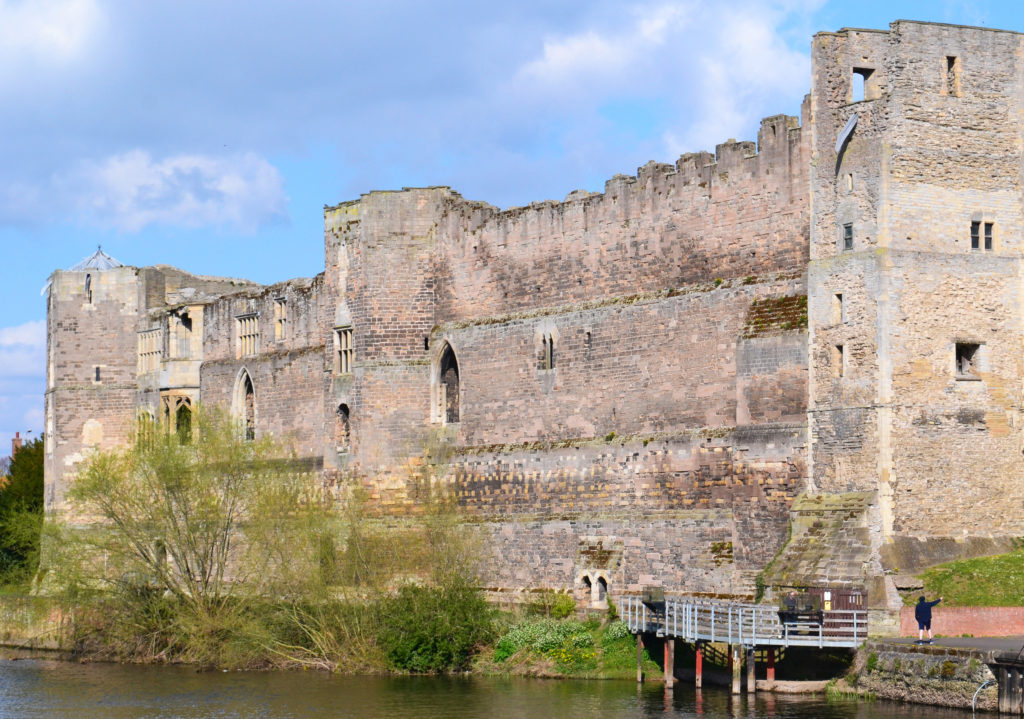
Newark. The river front of c. 1300, probably influenced by Caernarfon.

Another under-researched theme is the effect of the Edwardian castles in Wales on the architecture of England. There has been an understandable tendency to view the years immediately following the Edwardian conquest of Gwynedd as an anti-climax in English castle building, and that there is little continuity from the Welsh project. Yet the craftsmen dispersed, and building went on, not in such concentrated or dramatic fashion, but often in small quiet ways that escape the notice of the wider world. The full extent of this influence on fourteenth-century castle design is yet to be recognised, but it includes both the broader aspects and the smaller details and represents the final chapter in the story of the Edwardian castle.

Subscribe to our quarterly newsletter

Malcolm Hislop’s book James of St George and the Castles of the Welsh Wars (September 2020) is published by Pen and Sword. Hardback, 302 pages, 175 colour and monochrome illustrations.

A Large and Eclectic Crop of Fascinating Applications for the Castle Studies Trust to Consider

The deadline for grant applications passed on 1 December. We’re going through the various projects now. Altogether the 14 projects, coming from all parts of Britain, one from Ireland, are asking for £88,000. They cover not only a wide period of history but also a wide range of topics.

We will not be able to fund as many of these projects as we would like. To help us fund as many of these projects as possible please donate here: https://donate.kindlink.com/castle-studies-trust/2245

In a little more detail here are the applications we’ve received:

Caerlaverock, Dumfriesshire: The aim is to understand the chronology and geography of extreme weather events in the high medieval period, and the effects they wrought on archaeological features that led to the abandonment of the old castle in favour of the new.

Georgian Castles: This project explores two castles in County Durham—Brancepeth and Raby—that were fundamentally reshaped and transformed in the eighteenth century to become notable homes in the area, and it advances not only our understanding of these two buildings in the period, but also the afterlife the castles in the area and the layers of history that they record.

Greasley, Nottinghamshire: The production of an interpretative phased floor plan for Greasley Castle in Nottinghamshire. The castle, built in the 1340s, has an obscure history and the understanding of its architectural phasing is at best very cloudy.

Laughton-en-le-Morthen, South Yorkshire: To provide professional illustration and reconstruction which will also be integrated into the co-authored academic article. Part of the monies will be used to produce phase plans of Laughton during key stages of its development, and a small percentage will pay for a line drawing of the grave cover.

Lost medieval landscapes, Ireland: To develop a low cost method, using drone and geophysical survey to identify native Irish (also termed Gaelic Irish) medieval landscapes and deserted settlements.

Mold, Flintshire, post excavation analysis: Post-excavation analysis from excavation on Bailey Hill of the castle

Mold, Flintshire, digital reconstruction: Visual CGI reconstruction of  Mold Castle using the new-found evidence of further masonry on the inner bailey structure and using information gathered by the Bailey Hill Research Volunteers, showcasing the many changes that have happened on this site from a Motte and Bailey Castle to present time as a public park.

Old Wick, Caithness: Dendrochronological assessment of timber at the Castle of Old Wick, Caithness thought to be one of the earliest stone castles in Scotland.

Orford, Suffolk: recording the graffiti at the castle through a detailed photographic and RTI (Reflectance Transformation Imaging) survey will add to our understanding of how the building was constructed and the ways the building was used over time, particularly 1336-1805, during which the documentary history of the castle provides little evidence of how the site developed.

Pembroke, Pembrokeshire: A second season of trial-trench evaluation of the suggested late-medieval, double-winged hall-house in the outer ward at Pembroke Castle, which is of national significance. The evaluation builds on the results of the works undertaken through previous CST grants: geophysical survey (2016) and 2018 whereby two trenches were excavated across the possible mansion site. The evaluation will again establish the extent of stratified archaeological deposits that remain within the building, which was excavated during the 1930s.

Pevensey, East Sussex: GPR survey of the outer bailey and immediate extramural area and UAV (aerial) survey of the castle to build up a 3-D model of the site.

Richmond, North Yorkshire: Co-funding a 3 week excavation of Richmond Castle, one of the best preserved and least understood Norman castles in the UK. The aim is to understand better the remains of building and structures along the western side of the bailey.

Shootinglee Bastle, Peeblesshire: Funding post-excavation work from the 2019-20 excavation season in particular some charcoal deposits from a C16 burning event.

Warkworth, Northumberland: Geophysical survey to explore evidence for subsurface features in and around the field called St John’s Close in a field adjacent to the castle.

We will not be able to fund as many of these projects as we would like. To help us fund as many of these projects as possible please donate here: https://donate.kindlink.com/castle-studies-trust/2245

The applications have been sent to our assessors who will go over them and prepare their feedback for the Trustee’s who will meet in late January to decide on which grants to award.

Pleshey Castle: a gatehouse fit for royalty

Progress has continued to be made in the understanding of Pleshey Castle, as project lead Patrick Allen explains.

Subscribe to our quarterly newsletter

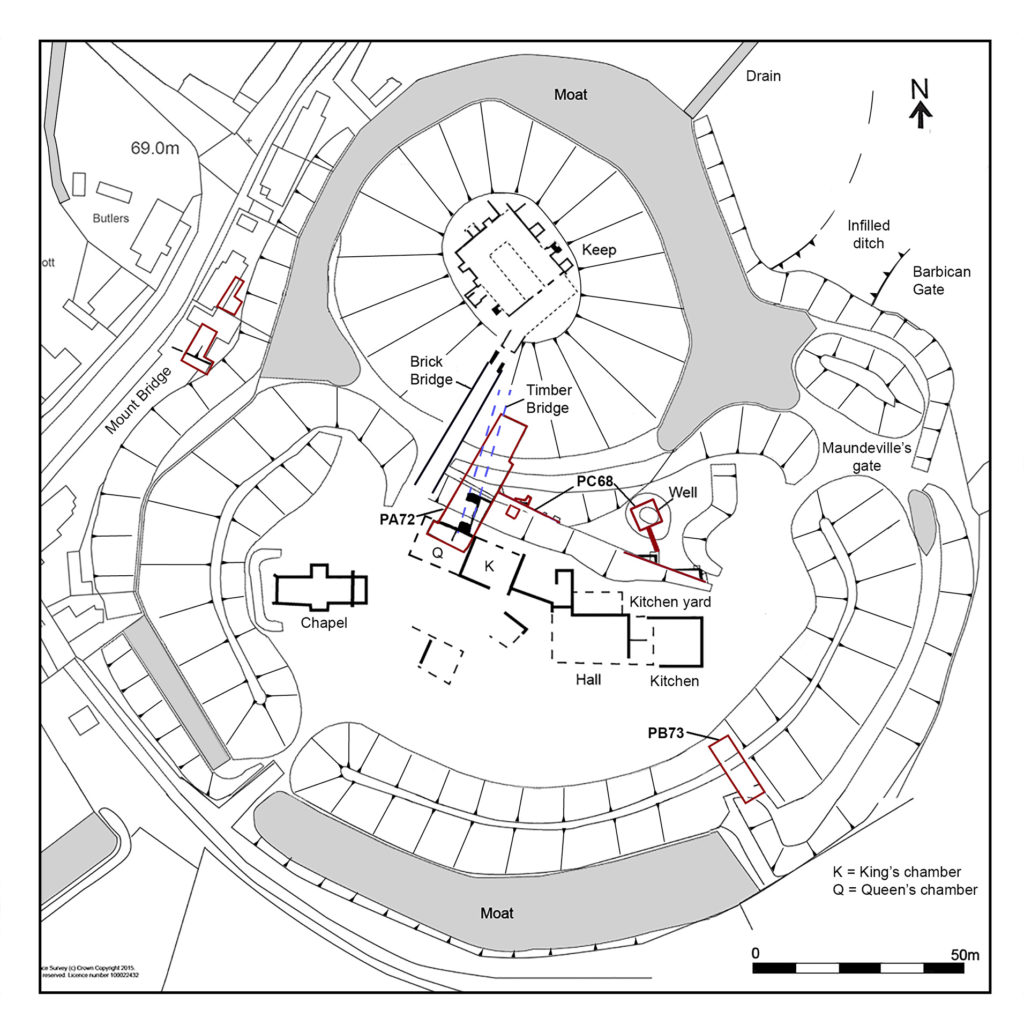
Since the publication of the article on Pleshey Castle in Current Archaeology (Issue 344, Nov. 2018, CST blog 15/09/20), we have been able to reconstruct in detail the gatehouse of the timber bridge over the motte moat, whose upper chamber is identified from building accounts for 1460-1 as the Queen’s privy chamber (‘Q’ on Fig.1). It would have been occupied by Queen Margaret of Anjou, wife of Henry VI, who held Pleshey between 1445 and 1461. Pottery dating, documentary evidence and the style of the floor tiles, however, suggest that the gatehouse was built in the 1380s by Thomas of Woodstock, duke of Gloucester, and the upper chamber would originally have been occupied by his wife, the duchess Eleanor. In the late medieval period, it was usual for accommodation to be provided above gateways. This gatehouse at Pleshey closed off the keep and the lord’s private quarters from the rest of the castle, but although it would have provided a degree of security it should not be confused with the heavily fortified gateways of castles with a more obviously military role.


FIGURE 1: Plan of the castle, with the queen’s chamber over the bridge gatehouse (Q) and the king’s chamber (K) immediately to its east, with the line of the timber bridge shown in blue. (Drawn by Iain Bell).

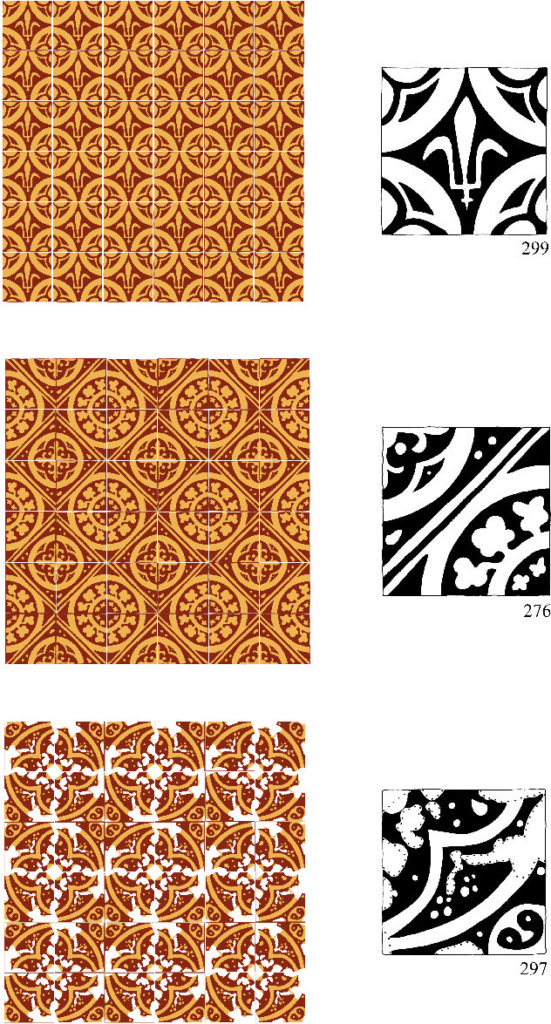
The physical character of the gatehouse can be reconstructed from specialist building material reports by David Andrews, Paul Drury and Nick Wickenden. The gatehouse was built of flint, with greensand dressings for the foundation plinth, corner stones, and door and window mouldings, with a peg-tile roof and lead gutters. Together with the chapel and the keep (which was timber but had a stone façade) it was one of the few stone buildings in the castle, as even the great hall in the bailey was of timber on stone sleeper walls. The ground floor room next to the gateway had a simple gravel floor and was probably a guardroom, but the upper chamber was luxurious. Its floor was of decorated glazed tiles made at Penn in Buckinghamshire, with three different roundel patterns (Fig. 2). Fragments of glass and lead cames show that the chamber had leaded glazed windows, while part of a chimney pot found in a spread of demolished roof tile implies that it was heated by a fireplace. The walls were plastered and decorated with simple painted designs, rather like modern wallpaper.

Three designs of Penn decorated tile floors as reconstructed by Paul Drury, based on tiles found in the demolition rubble of the bridge gatehouse. (Drawn by the Drury McPherson Partnership).

The chamber would have been dominated by a large four-poster bed with richly embroidered silk or fine wool hangings for curtains around it, as well as the tester for its canopy and the valence at its base. Several sets of these hangings are described in an inventory of goods seized from the castle following Thomas of Gloucester’s arrest and murder in 1397 (Dillon and Hope 1897). The chamber may have had tapestry wall hangings, also described in the inventory. The carpets that are mentioned would have been more like rugs and most of the decorated floor would have remained uncovered.

There was a general improvement in the private living quarters in the castle in the late 14th century, especially with the addition of fireplaces and privies. In the 1450s, when Pleshey was held by Queen Margaret of Anjou, the building accounts suggest that the keep had become guest accommodation, with the Queen’s chamber in the gatehouse and the King’s chamber next to it, approached by a ‘revealing’ or audience chamber (‘Q’ and ‘K’ on Fig. 1; Ryan 2010, 252). Queen Margaret would have been an absentee landlord as she spent most of her time at court, but these chambers would have been prepared for occasional visits. One such visit probably occurred when she ordered major building works at Pleshey early in 1458. After the defeat of the Lancastrians in 1461 Pleshey passed to the Yorkist Edward IV and, from 1465, Queen Elizabeth Woodville. Several entries in the building accounts for the 1460s record cleaning and refurbishment work before royal visits, and the gatehouse accommodation would still have been of a high standard, fit for a queen, eighty or so years after it was built.

Subscribe to our quarterly newsletter

References

Dillon, Viscount and Hope W.H.St.J. 1897, ‘Inventory of the goods and chattels belonging to Thomas, Duke of Gloucester and seized in the castle at Pleshey, Co. Essex, 21 Richard II (1397); with their value as show in the escheator’s accounts’, Archaeol. J., 54, 275-308 (transcript from PRO E 136/77/4): Available:

<https://www.archaeologicaldateservice.ac.uk/…/view/archjournal/contents.cfm?vol=54>

Ryan, P. 2010, ‘The fifteenth-century building accounts of the Duchy of Lancaster in Essex’, Essex Archaeol. Hist., 4th ser., 1, 248-60

Featured image courtesy of Chelmsford Museums Service.

Mary of Guelders and Ravenscraig Castle

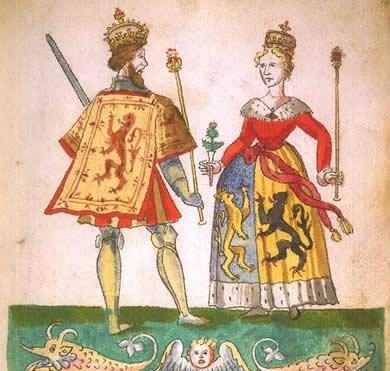
Amidst the tower blocks and industrial landscape of Kirkaldy in Fife is an unexpected sight. Perched on a triangular promontory overlooking the Firth of Forth stands the crumbling ruin of a fifteenth-century fortress. Now fiercely guarded by an abundance of resident seabirds, Ravenscraig is one of Scotland’s lesser-known medieval castles, yet it deserves a closer look, not least because it is a rare surviving example of a castle commissioned by a woman, in this case Mary of Guelders, queen of Scotland (d.1463).

Mary of Guelders and James II

Mary of Guelders first arrived in Scotland on the 18th June 1449 when she stepped onto the shores of Leith ahead of her marriage to James II at Holyrood Palace. Born in Guelders (today the province of Gelderland in Holland) and raised at the Burgundian court, Mary brought illustrious connections to her new home. The match, it seems, was met with approval on both sides: in 1457, Mary’s uncle the Duke of Burgundy sent James the gift of Mons Meg, the famous cannon which can still be seen at Edinburgh Castle today. James’ love of artillery, however, was to also be his downfall. Three years later at the Siege of Roxburgh the 29-year-old king met an untimely end when another of his cannons exploded and killed him. Mary, as this previous blog post has shown, was present at the siege, and following her husband’s tragic death, the newly widowed queen ordered for Roxburgh to be razed to the ground. From 1460 until her own death three years later, Mary acted as regent of Scotland, ruling on behalf of her young son, James III. It is also from this point that she becomes visible to us in the historical record as a prolific patron of architecture.

Mons Meg, Edinburgh Castle. Photo by Lee Sie, licensed CC-BY-SA 2.0.

The nature of the evidence means that we don’t know too much about Mary’s actions during her marriage, but the few glimpses we can glean suggest that she played a relatively active role as consort, including at her husband’s first parliament in 1450. She was also present at the siege of Blackness Castle in 1454 (which James afterwards gave her as a gift to celebrate the Scots’ victory), and she appears to have been the driving force behind the couple’s foundation of a hospital at Fale near Glasgow. It is during her brief stint as regent, however, that Mary’s enthusiasm for building projects really becomes apparent: she not only commissioned Ravenscraig, but also Trinity College Kirk in Edinburgh, as well as improvements to Falkland Palace, which included the first recorded instance of a gallery in Scotland. Recent dendrochronology carried out by Dr Coralie Mills and Hamish Darrah on the tower of St Giles’ Cathedral in Edinburgh on behalf of Historic Environment Scotland has also revealed Mary’s likely involvement in the fifteenth-century alterations there. Ravenscraig was therefore one of a number of works which Mary undertook during her regency.
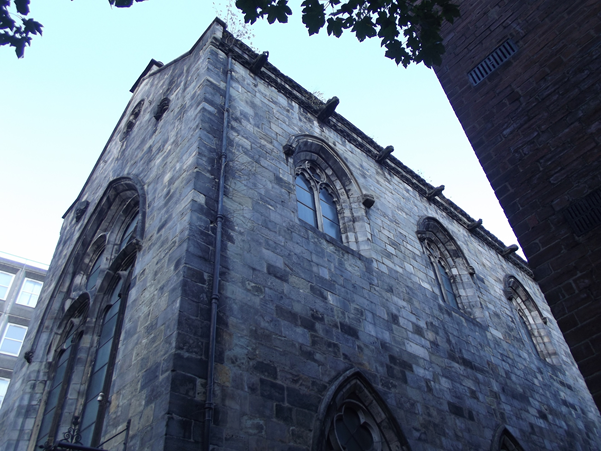
The Apse of Trinity College Kirk, Chalmers Close, Edinburgh. This is all that remains of Mary’s foundation, which once stood on the site of Waverley train station and was partially rebuilt in its new location during the nineteenth century. Photo © Rachel Delman.

Shortly before his death, James II had gifted the estate of Dysart to Mary, after which she funded her major works at Ravenscraig entirely from her own revenues. We know from the Exchequer Rolls that she spent 600 pounds Scots on the castle, but it could have been considerably more, as the accounts of the queen’s lands for the first term after the king’s death are missing. Building began in the east, but Mary died before she could see the castle finished, at which point the regular flurry of works ceased altogether. Part of the castle was inhabitable before her death, however, as in 1461, the queen’s steward was able to stay there for 25 days along with several of her servants.

A view of the east range of Falkland Palace containing the sixteenth-century royal apartments of James V and Mary of Guise. Mary of Guelders’ apartments and gallery are no longer visible, having been demolished to make way for the current buildings. Photo © Rachel Delman.

From the outset, Ravenscraig appears to have been intended to have a strong military appearance and is believed to be the first castle in Scotland designed to withstand cannon fire. For this reason, it has been treated as something of an enigma by historians and heritage professionals, who often regard the military design as being at odds with its supposedly intended use by Mary as a dower or “retirement’’ house. Yet the two are not necessarily incompatible. Mary’s decision to fortify the castle and to protect a vulnerable piece of coastline made perfect sense given the changeable nature of relations with the English at this point.
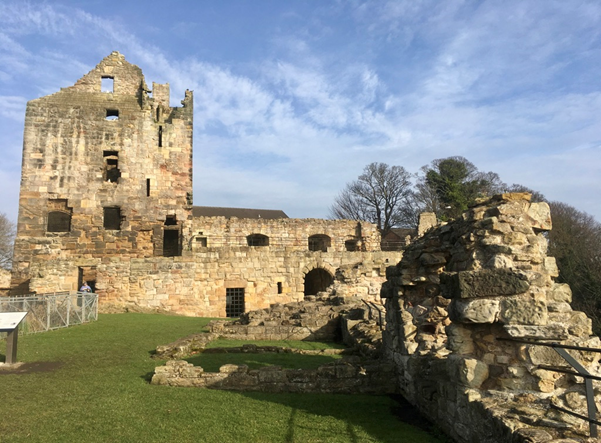
Ravenscraig Castle, looking north. Photo © Rachel Delman.

It was also not unusual for women elsewhere in Europe to be involved in military endeavours at this time. Mary’s contemporaries in Renaissance Italy, for example, frequently acted as military managers, fortifying towns and cities and supplying provisions and resources. Closer to home, Margaret of Anjou, with whom Mary negotiated terms in 1460, was also commissioning works on several English castles around this time, including the refurbishment of the keep of Pleshey Castle in brick. Equally, Mary’s aunt, Isabella of Portugal, in whose court the queen of Scots had been raised, was a politically active and energetic architectural patron. Mary therefore came from a tradition whereby architecture was commonly adopted as a language of female power. It is also possible, particularly given the circumstances of James’ death, that Mary intended for Ravenscraig to be part of a larger commemoration project for her husband, which also included her mausoleum at Trinity College Kirk in Edinburgh.

The termination of the works at Ravenscraig upon Mary’s death in 1463 suggests that she was very much the driving force behind them. James III showed little interest in his mother’s project, instead granting the castle to the Sinclair family, who completed the building. Nevertheless, the remains stand as a testament to the ways in which Mary chose to materially express her authority as regent. They also pose a challenge to the overwhelmingly male narrative that has long dominated castle studies, reminding us that women could, and did, play active and sometimes innovative roles in shaping the physical and social life of late medieval castles.

Ravenscraig Castle is now owned by Historic Environment Scotland. It is free to visit and open all year round. For updates from the Castle Studies Trust, subscribe to our quarterly newsletter.

Carreg Cennen in the Wars of the Roses

The striking ruins of Carreg Cennen Castle in south Wales have a rich history, bound up in power struggles between the Welsh and English and the Wars of the Roses. Dr. Dan Spencer takes us on a journey through its past.

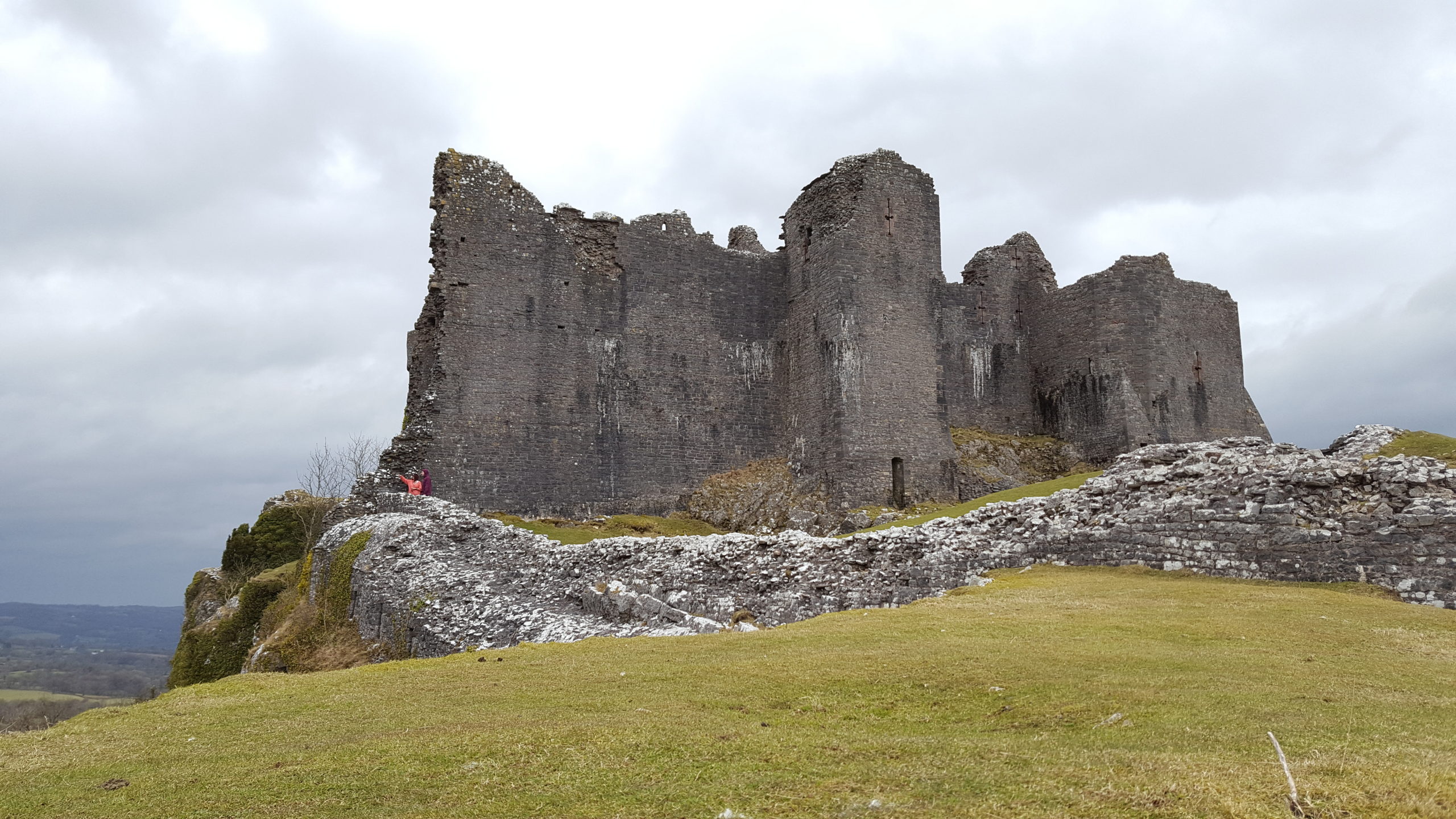
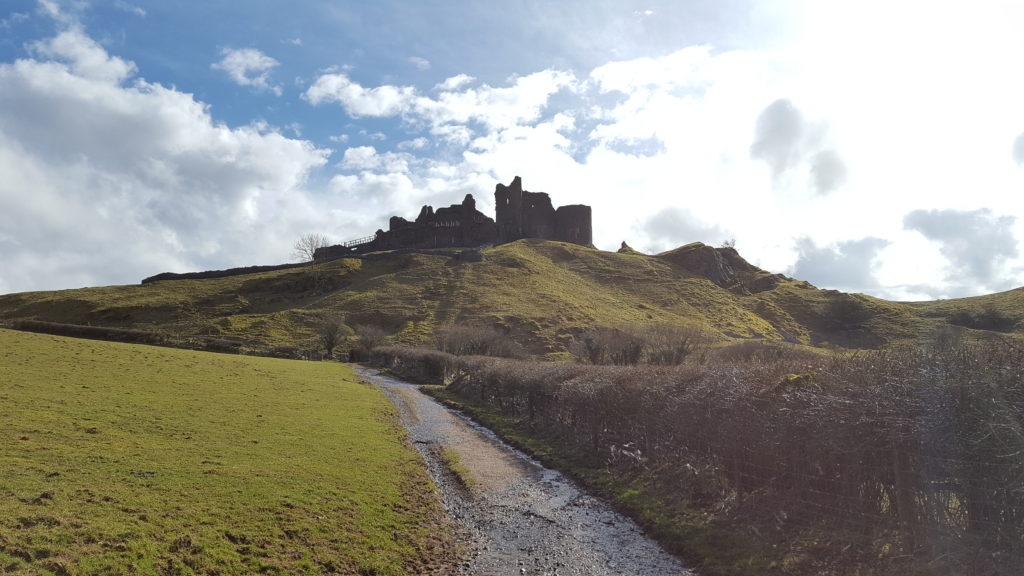
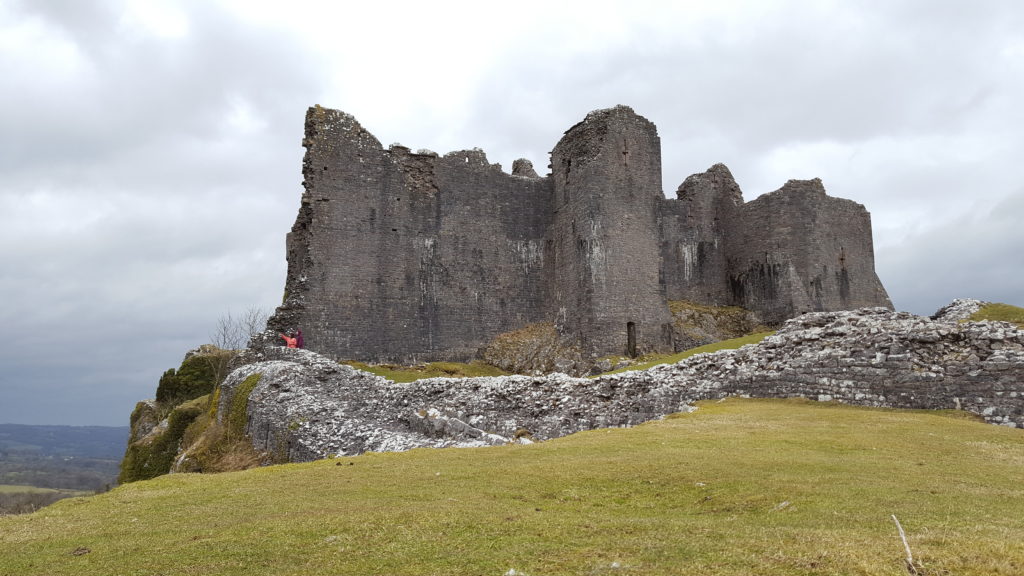
Carreg Cennen Castle on a limestone crag. © Dan Spencer

Carreg Cennen was most probably founded by the Welsh prince of Deheubarth, Rhys ap Gruffydd, in the late twelfth century. It is situated in a prominent position on a high limestone crag overlooking the River Cennen. Carreg Cennen was later captured by the English during the conquest of north Wales in the late thirteenth century. Edward I granted the castle to John Giffard, Lord Giffard of Brimpsfield, who extensively rebuilt the castle. Carreg Cennen was acquired by Henry, duke of Lancaster, in 1340, and thereafter by marriage to his son-in-law, John of Gaunt, duke of Lancaster, son of Edward III. The duchy of Lancaster subsequently passed into royal ownership, upon the accession of Henry IV, Gaunt’s eldest son, to the throne in 1399. Carreg Cennen was captured by the rebels of Owain Glyn Dŵr in the early fifteenth century, with repairs carried out during the reign of Henry V.1

The main approach to the castle © Dan Spencer

In 1455, Welsh landowner Gruffydd ap Nicolas seized the castle, taking advantage of a power vacuum in south Wales, where many of the principal royal offices were held by absentee officials. This move was not welcomed by the government of Henry VI. Gruffydd subsequently came into conflict with Edmund Tudor, earl of Richmond, a half-brother of the king, in the following year. Richmond eventually emerged victorious from the struggle in the late summer of 1456, at which time it appears that Gruffydd relinquished control of Carreg Cennen.2 The earl died of the plague later that year, with the task of maintaining royal authority in southern Wales thereafter entrusted to his brother, Jasper Tudor, earl of Pembroke.

In 1459, civil war broke out when the Yorkist lords, Richard, duke of York, Richard Neville, earl of Salisbury, and his son Richard Neville, earl of Warwick, attempted to seize power. This development prompted Jasper to install a garrison in the castle, which remained in place until at least the following year.3 It is not known how large the garrison was, and Carreg Cennen appears not to have seen any military action at this time. This is not surprising, as potential attackers would have been deterred by its strong defences. It was also in a relatively isolated location, far removed from the main areas of conflict.

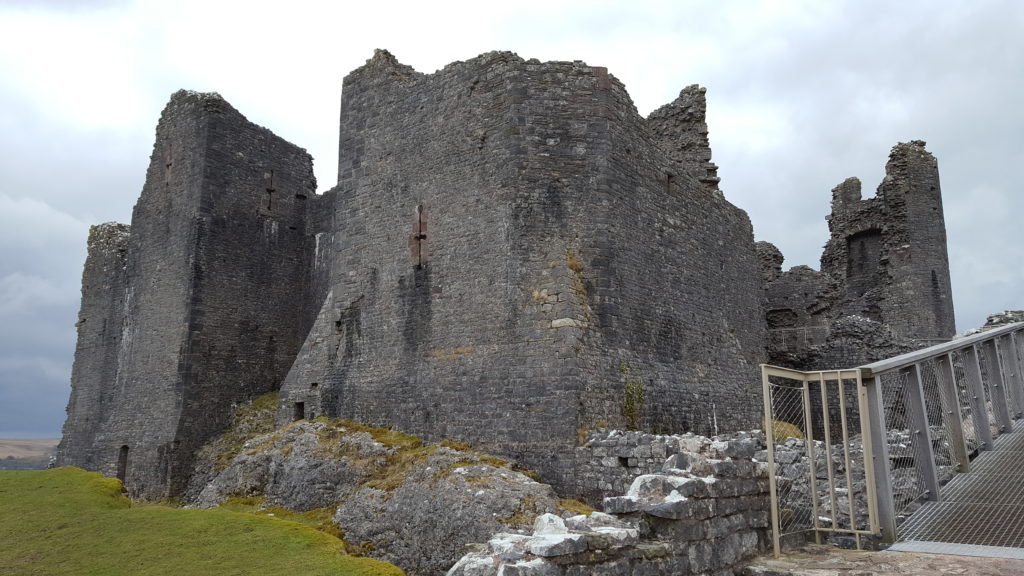
One of the towers, with buttresses at the base © Dan Spencer

Instead the fate of Carreg Cennen was decided by events elsewhere. The decisive clash of the conflict took place at the Battle of the Towton on 29 March 1461, the largest engagement of the Wars of the Roses. The Yorkists led by Edward IV were victorious, with Henry VI and his remaining supporters forced to take refuge in Scotland. Later that summer, Edward delegated the task of subduing Wales to some of his trusted supporters, who included William, Lord Herbert.4

By the end of 1461, the Yorkist commanders had succeeded in conquering almost all of Wales (with the main exception of Harlech in the north-west), and Jasper Tudor fled overseas. This left Carreg Cennen as the last remaining Lancastrian fortress in the south. In the spring of 1462, Lord Herbert instructed his half-brother, Sir Richard Herbert, and another member of the gentry, Sir Roger Vaughan, to take control of the castle. They set off from Raglan Castle, Herbert’s ancestral seat, with a force of 200 gentlemen and yeomen and soon reached Carreg Cennen. The defence of the latter was led by Thomas and Owen ap Gruffydd, sons of the recently deceased Gruffydd ap Nicolas. It is unclear whether they had been given this responsibility by Jasper Tudor, or if they had exploited the situation to take control of the castle. Either way, the brothers were said to have a large force under their command and had a strong defensive position. Nevertheless, the futility of the Lancastrian cause prompted them to surrender under terms. They were pardoned in return for pledging allegiance to Edward IV.5

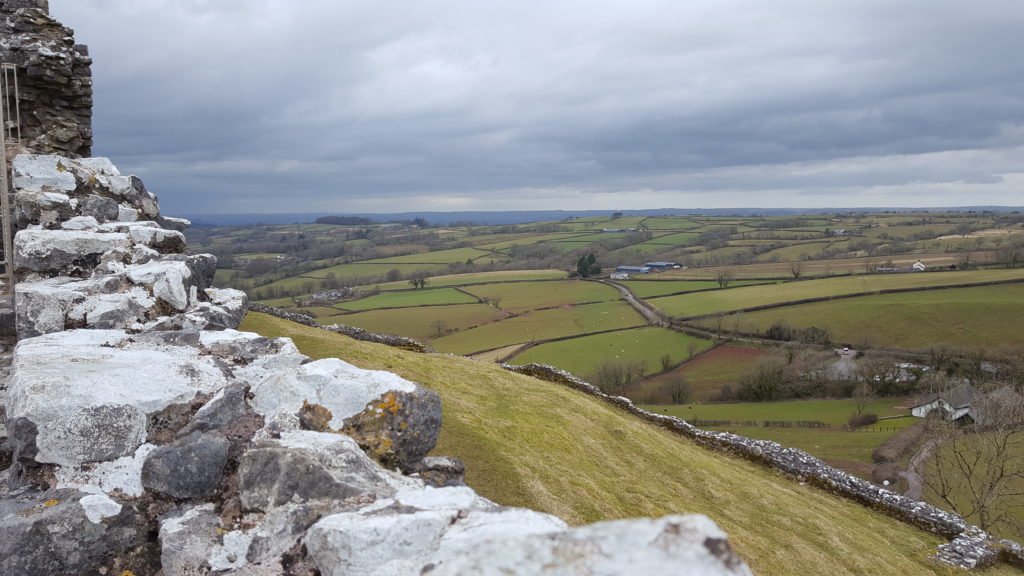
The view from the castle © Dan Spencer

On Lord Herbert’s instructions, the castle was provisioned, and a garrison was installed for its safeguard. This consisted of a small force of nine men, who served there from the beginning of May until mid-August. These men each received 4d. per day in wages, the standard rate for footmen or archers at this time, as well as 1s. 10d each per week to pay for their expenses.6 The garrison was required, as is explained in a surviving letter from Edward IV, because ‘the said castle was of such strength that all the misgoverned men of that country there intended to have inhabited the same castle and to have lived by robbery and spoiling our people of the country’. However, as the letter went on to explain ‘we soon after were advised that the said castle should be thrown down and destroyed’ to avoid the inconvenience of expending money on maintaining its defence. The source of this advice is unspecified, but it could have been from Lord Herbert, who, as chamberlain of south Wales, was acutely aware of the financial burden of paying for its garrison. This was an extraordinary decision, as no other castle was slighted  by royal command at this time, which may have reflected Yorkist concerns about its potential as a formidable fortress in an area with Lancastrian sympathies. It could also have stemmed from more general unease about law and order in the region. The king therefore issued orders to Herbert to oversee its destruction. A labour force of 500 men was recruited who used a variety of tools to ‘break and throw down’ the castle.7 The extent of the destruction is unclear, but at the very least the labourers made the place uninhabitable, with Carreg Cennen thereafter falling into ruin.

Subscribe to our quarterly newsletter

Dr. Dan Spencer is the author of The Castle in the Wars of the Roses, published by Pen & Sword, which is due for release on 30 October: https://www.pen-and-sword.co.uk/The-Castle-in-the-Wars-of-the-Roses-Hardback/p/18426


Footnotes

[1] J. M. Lewis, Carreg Cennen (Cardiff: Cadw, 2016), p 1; H. M. Colvin, The History of the King’s Works, volume 2 (London: H.M.S.O, 1963), p. 602.

[2] For Gruffydd’s seizure of the castle and conflict with Edmund Tudor see, William Rees, ed., Calendar of Ancient Petitions relating to Wales (Cardiff: University of Wales Press, 1975), pp. 184-6; PL, I, pp. 392-3.

[3] For the garrisoning of Carreg Cennen by Jasper see, TNA, DL 29/584/9249; DL 29/596/9558.

[4] For an overview of these events see, Anthony Goodman, The Wars of the Roses (London: Routledge & Kegan Paul, 1991).

[5]. For the occupation of the castle by the sons of Gruffydd ap Nicolas and its surrender see, TNA, SC 6/1224/6; SC 6/1224/7.

[6] TNA, SC 6/1224/6.

[7] Quoted from TNA, SC 6/1224/7, whose Middle English text has been modernised.